
GST registration in India is a mandatory legal requirement for many types of businesses and companies, yet it remains one of the most misunderstood compliance processes. Whether you are an individual proprietor, a service provider, an online seller, or a registered company, understanding GST rules is essential to operate legally and avoid penalties.
Many businesses face GST application rejections or delays due to incorrect eligibility assessment, document errors, or improper filing. This complete guide explains GST registration in India step by step, covering who needs registration, turnover limits, documents required, fees, timelines, and common mistakes to help you apply correctly the first time.
Before applying for GST, it is important to understand how GST fits into overall business registration in India and how different registrations work together to ensure legal compliance and smooth operations.
Table of Contents
What is GST Registration in India?
GST registration refers to enrolling a business or company under India’s Goods and Services Tax law. Once registered, a unique GSTIN (Goods and Services Tax Identification Number) is issued, allowing the business to collect GST from customers and claim input tax credit on eligible purchases.
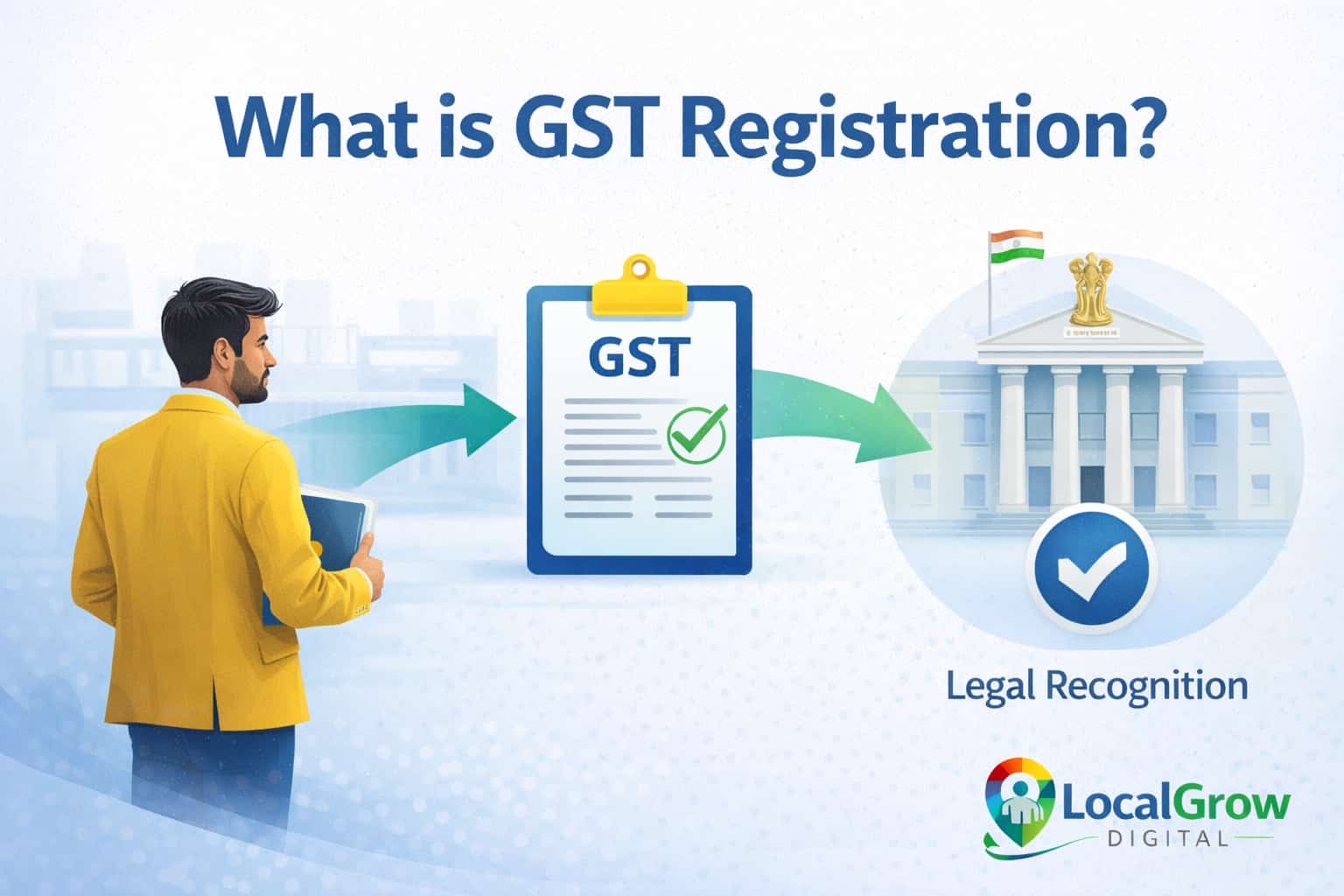
GST registration provides legal recognition and improves credibility with customers, suppliers, banks, and government authorities. Businesses must register under GST before charging tax on invoices, as collecting GST without registration is a violation of the law.
GST registration is not just a tax requirement — it is a legal identity for businesses operating in India, enabling compliance, transparency, and long-term growth.
— Goods and Services Tax Framework, Government of India
Who Needs GST Registration in India?
GST registration is compulsory for many business categories, even when turnover is below the prescribed threshold. Certain business activities require mandatory registration regardless of income.
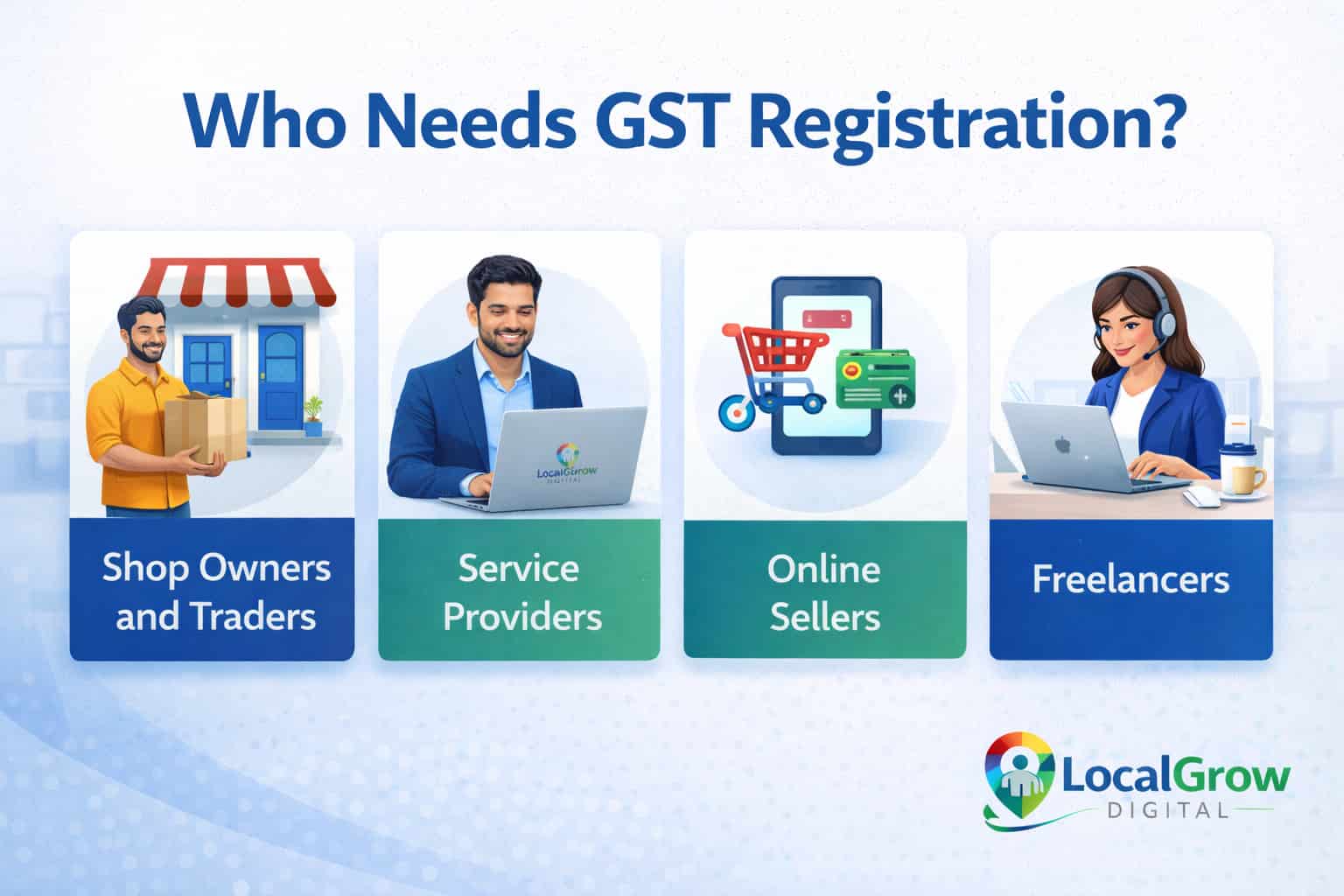
- Individual proprietors and professionals
- Service providers and agencies
- Online sellers on Amazon, Flipkart, Meesho, and similar platforms
- Companies involved in inter-state supply
- Importers and exporters
- Businesses covered under reverse charge mechanism
GST registration applies to all scales of operations, from individual professionals to large enterprises, depending on the nature of business and transaction type.
GST Turnover Limit for Registration in India
GST registration becomes mandatory once a business crosses the annual turnover limit specified by the government. These limits differ based on whether the business supplies goods or services.
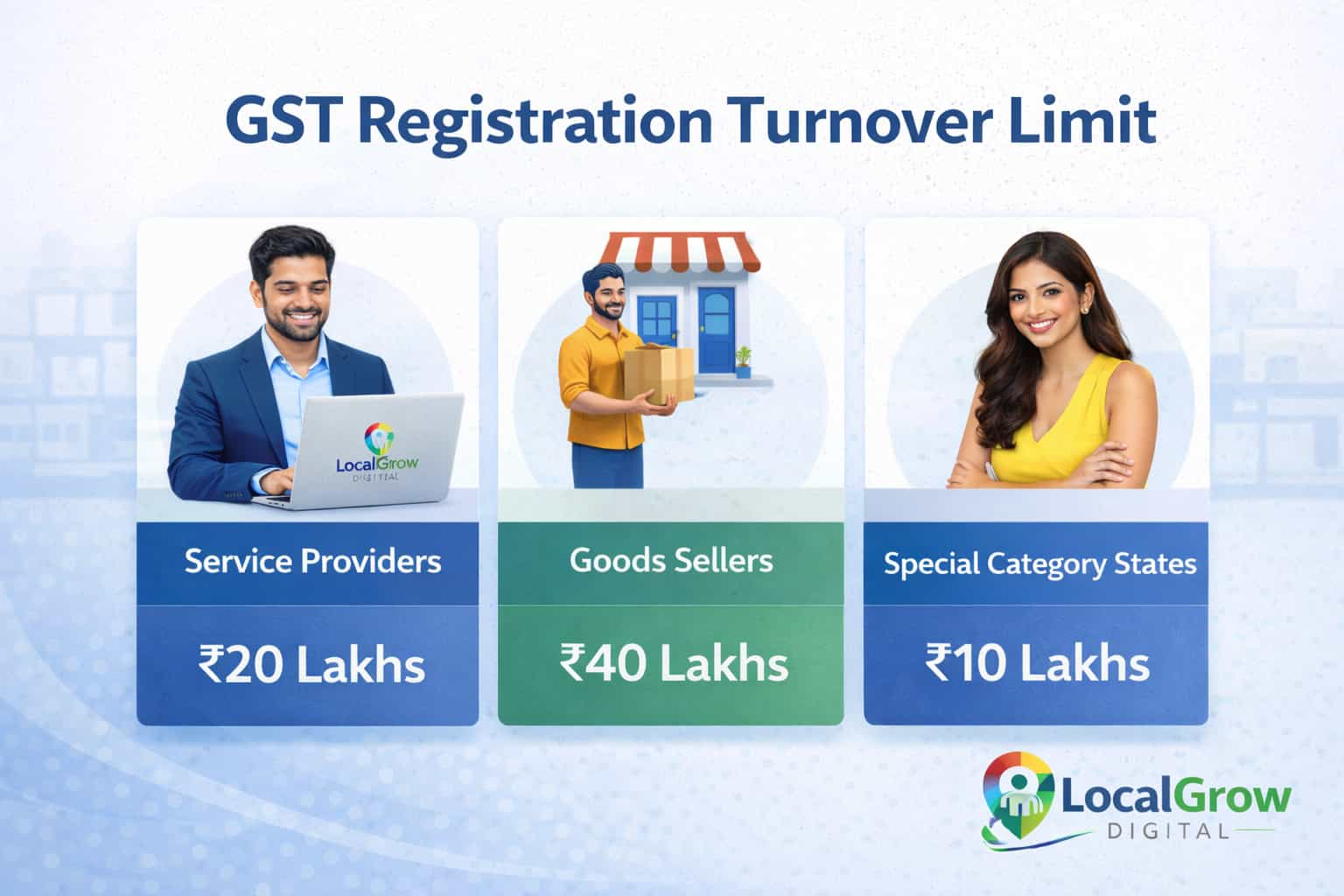
Service providers must register under GST when annual turnover exceeds ₹20 lakhs, while goods suppliers must register after crossing ₹40 lakhs. For special category states, the threshold is ₹10 lakhs. Even below these limits, GST registration is compulsory for online sellers and inter-state service providers.
Benefits of GST Registration for Businesses & Companies
GST registration offers several advantages beyond compliance. It supports expansion, improves financial transparency, and strengthens business credibility.
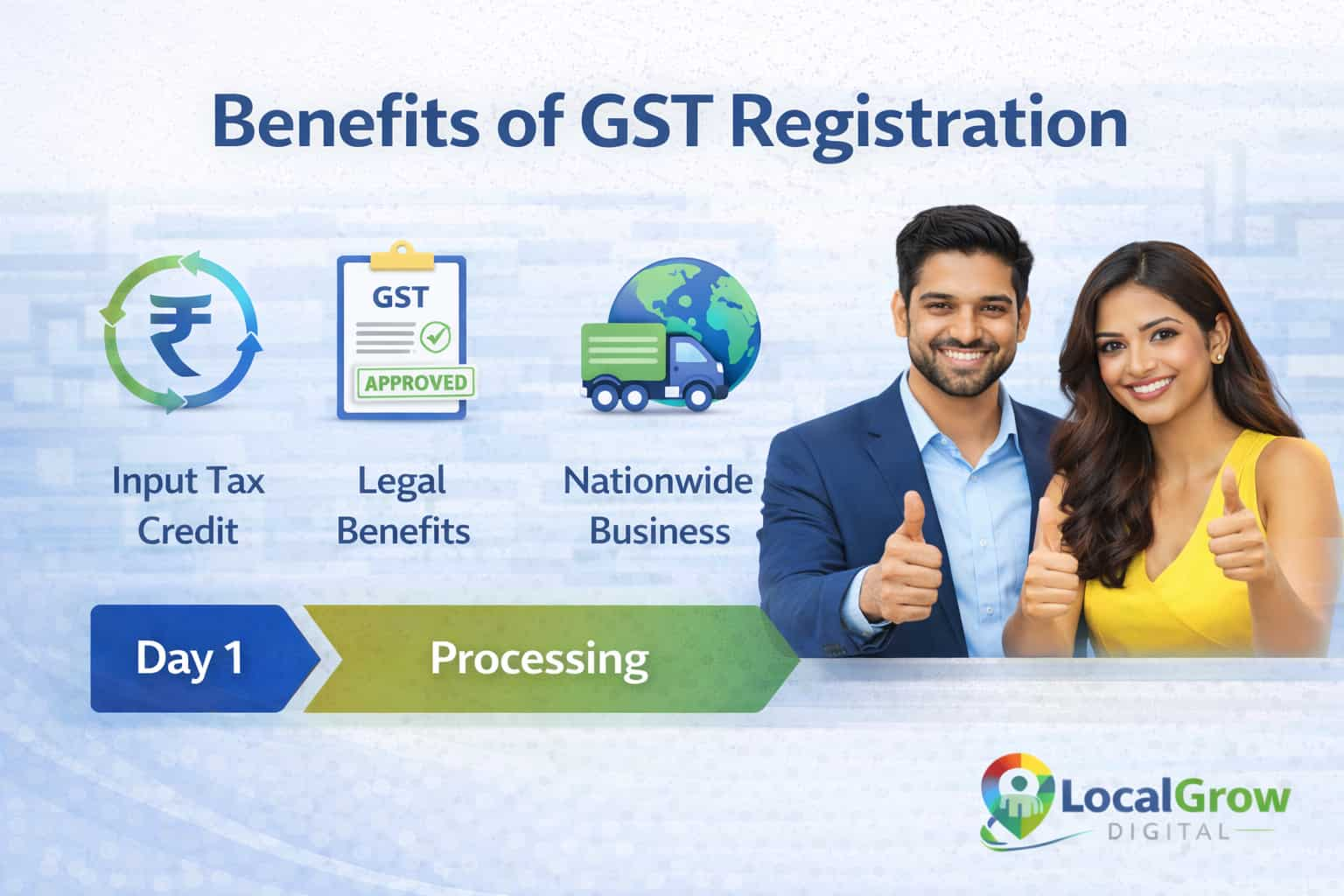
- Legal recognition and tax compliance
- Input tax credit on purchases
- Eligibility to sell on e-commerce platforms
- Easier access to funding and loans
- Nationwide business operations
- Improved trust with customers and partners
Businesses With GST Registration
- Legally compliant operations
- Eligible for input tax credit
- Accepted by banks and institutions
- Allowed to sell on e-commerce platforms
- Easier expansion across India
Businesses Without GST Registration
- Risk of penalties and notices
- No input tax credit benefits
- Restricted access to marketplaces
- Difficulty in loans and funding
- Limited long-term growth
Documents Required for GST Registration in India
Submitting correct and complete documents is one of the most important steps in the GST registration process. Incorrect or unclear documents are a common reason for application delays and rejections.
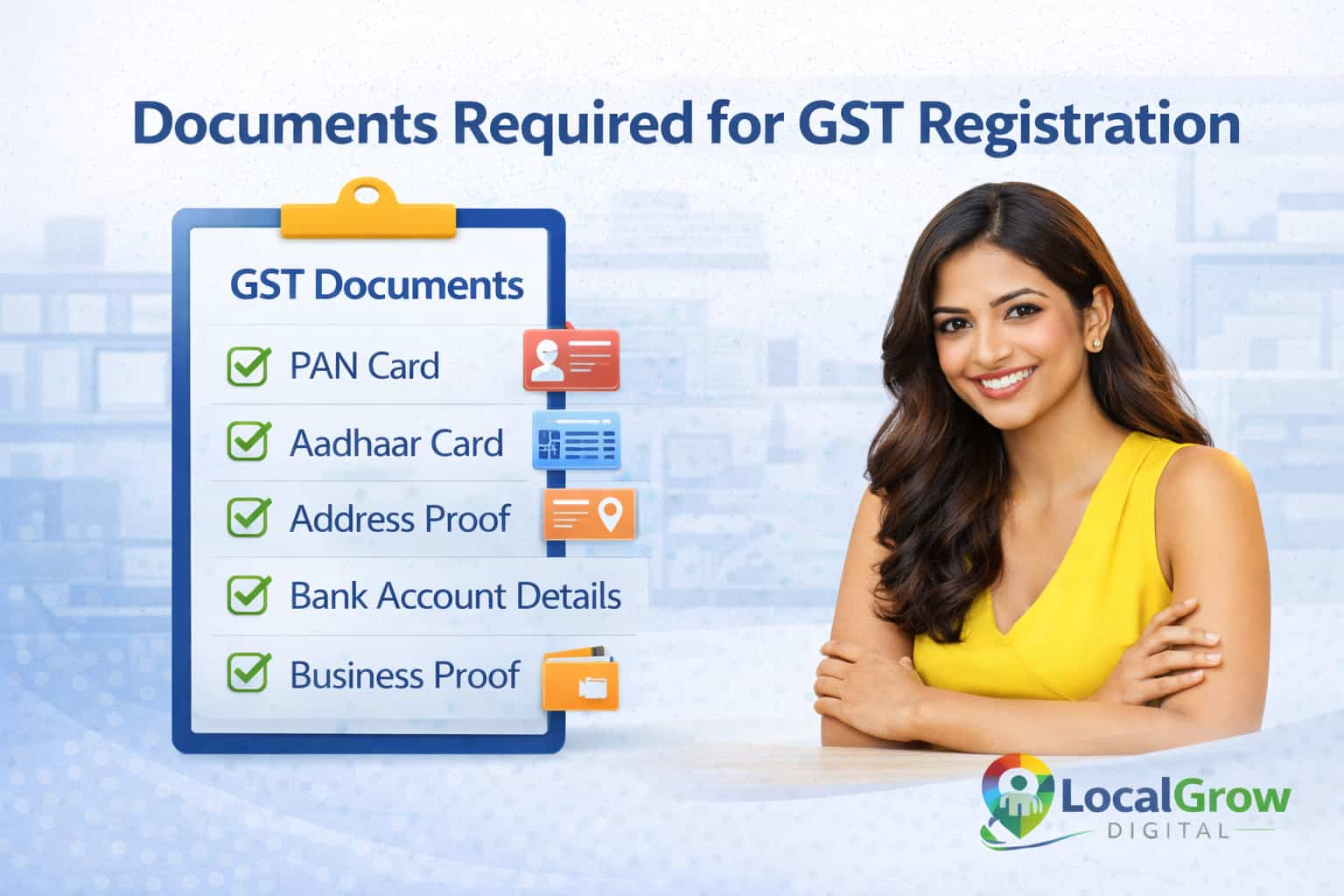
- PAN card of the applicant or company
- Aadhaar card of proprietor, partners, or directors
- Passport-size photograph
- Business address proof (rent agreement, electricity bill, etc.)
- Bank account details (passbook or cancelled cheque)
- Business proof such as incorporation certificate or registration documents
To avoid rejection, it is important to follow the exact documents required for GST registration in India and ensure that all uploaded proofs match official records.
GST Registration Process – Step by Step
The GST registration process in India is completely online and handled through the official GST portal. If all details and documents are correct, registration is usually completed without physical visits.
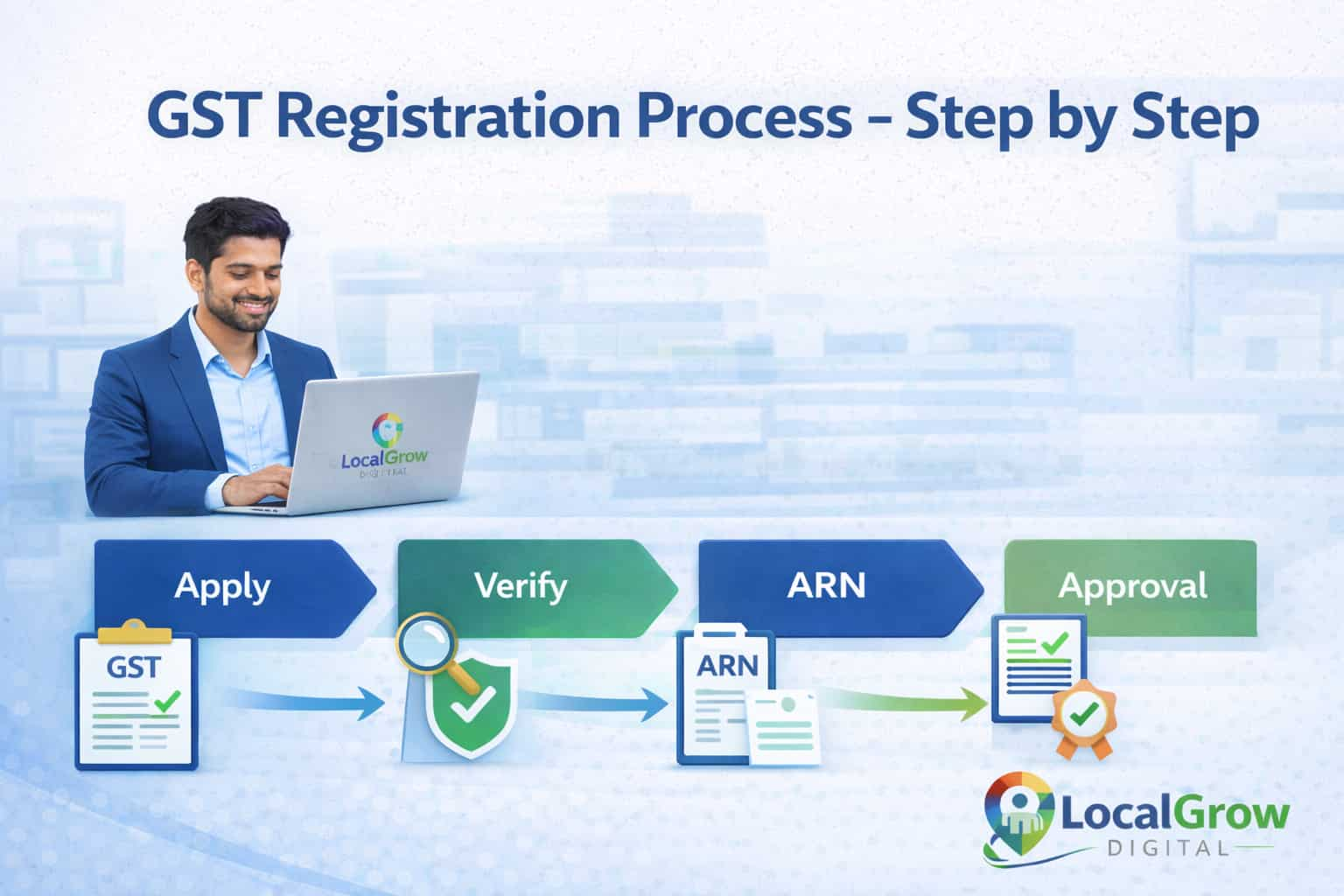
- Submit GST application with accurate business details
- Complete Aadhaar and mobile verification
- Respond to officer verification if required
- Receive GSTIN and GST registration certificate
For a detailed walkthrough, you can follow this step-by-step guide on how to apply for GST registration online in India without making common filing mistakes.
GST Registration Fees and Cost in India
The Government of India does not charge any official fee for GST registration. Businesses can apply directly on the GST portal without paying any government charges.
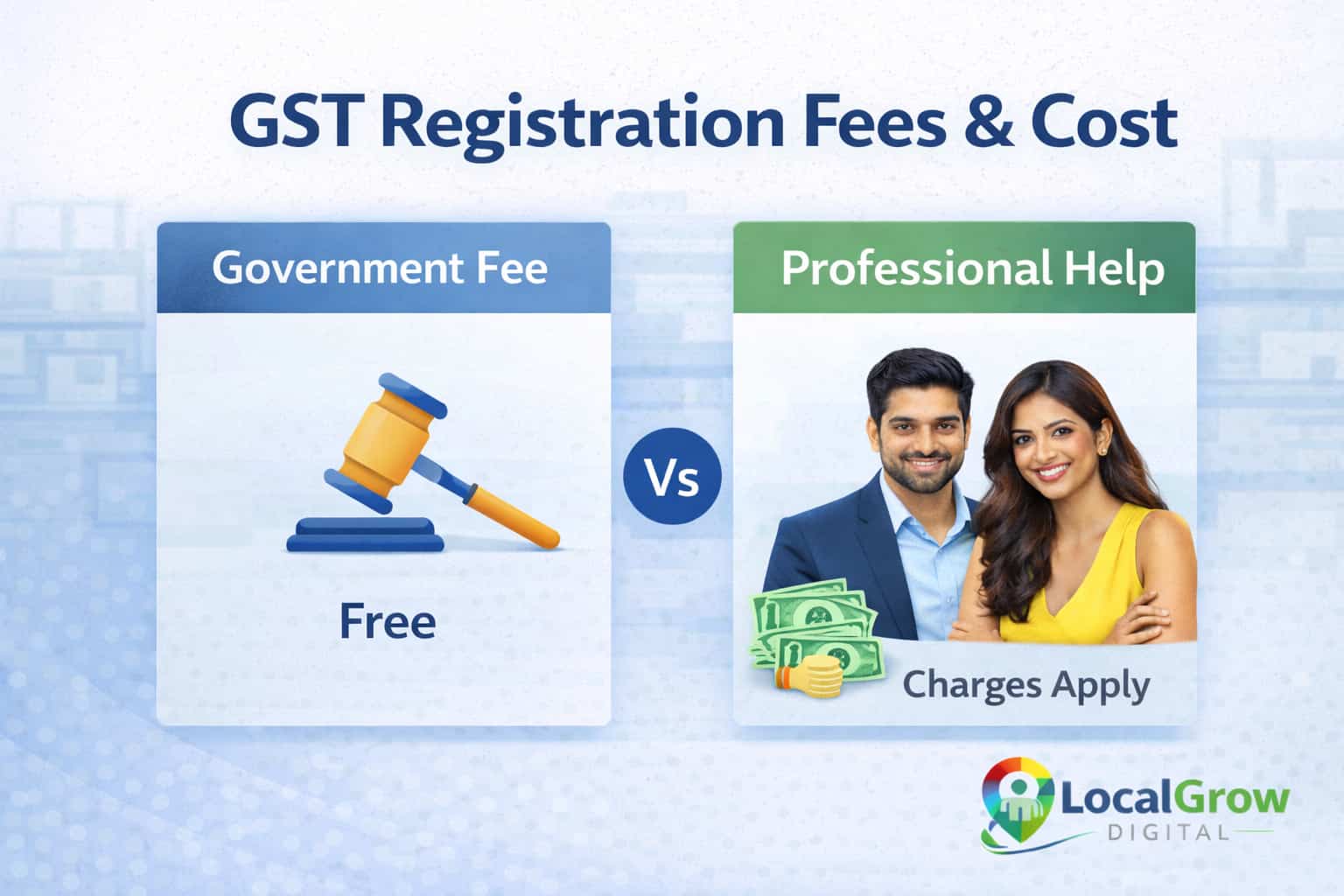
However, many businesses prefer professional assistance to avoid classification errors, document mismatches, or rejection. Professional service charges vary depending on business structure, number of locations, and additional compliance requirements.
How Long Does GST Registration Take in India?
GST registration timelines depend on document accuracy and Aadhaar authentication. In most cases, approval is granted within a few working days.
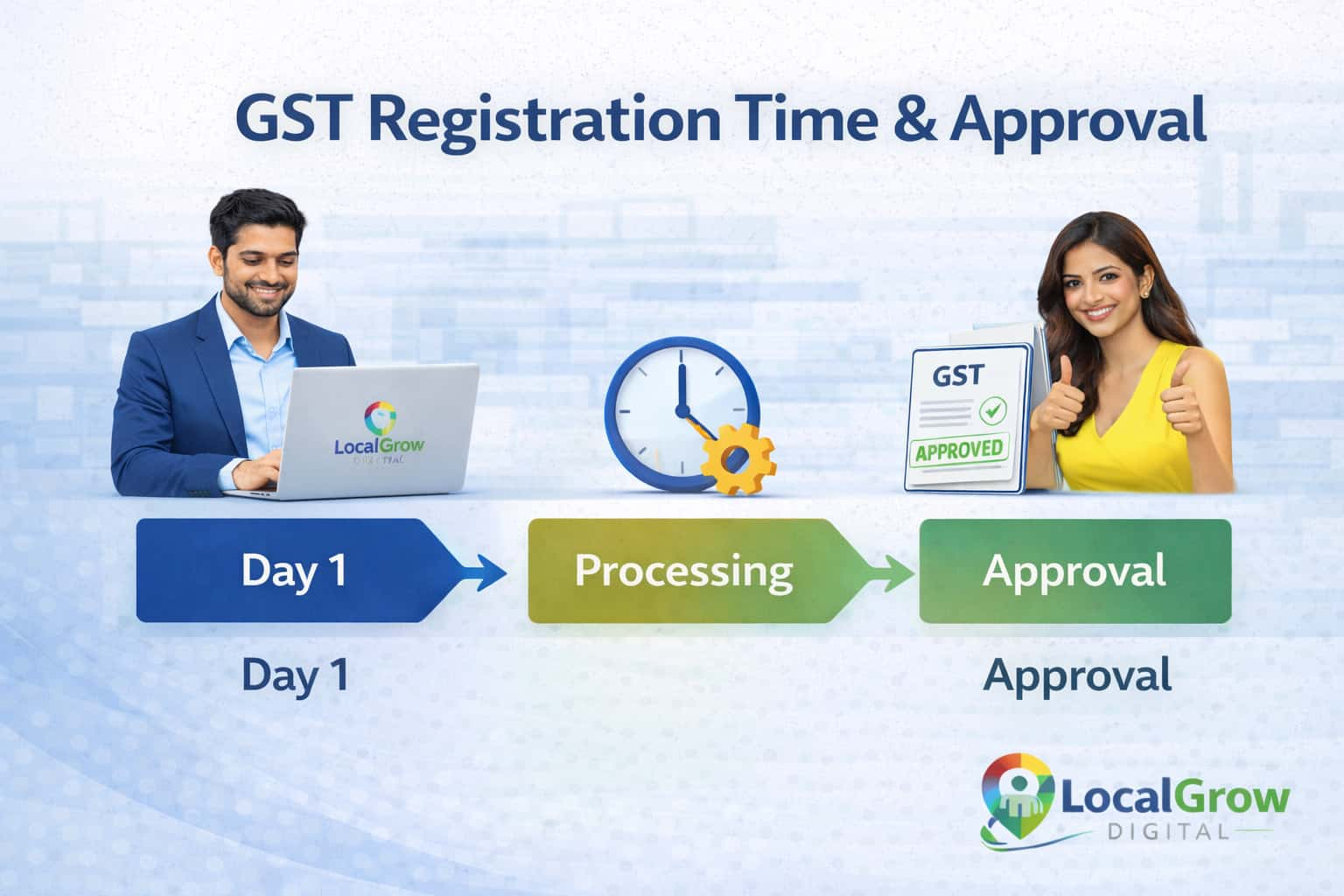
Typically, GST registration is completed within 3 to 7 working days. Delays may occur if additional clarification or officer verification is required.
The official GST portal clearly explains eligibility rules, documentation, and timelines, and businesses can verify registration guidelines directly from the government GST website.
Penalty for Not Registering Under GST When Required
Failing to register under GST when legally required can lead to serious financial and legal consequences. Many businesses ignore GST compliance until they receive notices from the tax department.
- Heavy monetary penalties
- Payment of tax along with interest
- Blocking of business bank accounts
- Difficulty in future registrations or licenses
- Legal action for continued non-compliance
Frequently Asked Questions (FAQs) on GST Registration in India
What is GST registration in India?
GST registration is the process of registering a business or company under India’s Goods and Services Tax law to legally collect tax and claim input tax credit.
Who is required to register under GST in India?
Proprietors, service providers, companies, online sellers, importers, exporters, and inter-state suppliers must register under GST based on activity and turnover rules.
Is GST registration mandatory for all businesses?
No, GST registration depends on turnover limits and business activity, but it is compulsory for online sellers and inter-state service providers regardless of turnover.
What is the GST turnover limit for registration?
₹20 lakhs for service providers, ₹40 lakhs for goods suppliers, and ₹10 lakhs for special category states.
Can I apply for GST registration without a shop or office?
Yes, home-based businesses and professionals can apply using residential address proof.
Is Aadhaar mandatory for GST registration?
Yes, Aadhaar authentication is mandatory for faster processing and approval.
How long does GST registration take in India?
Typically 3–7 working days if documents are correct and Aadhaar verification is completed.
Is GST registration free from the government side?
Yes, the government does not charge any registration fee.
Why do GST applications get rejected?
Common reasons include incorrect PAN details, address mismatch, unclear documents, or wrong business category selection.
Can GST registration be cancelled later?
Yes, GST registration can be cancelled legally if the business closes or becomes ineligible.
Do freelancers and consultants need GST registration?
Yes, if turnover crosses ₹20 lakhs or if services are provided across states.
Is GST compulsory for Amazon, Flipkart, or Meesho sellers?
Yes, GST registration is mandatory for all e-commerce sellers.
Can I apply for GST registration myself?
Yes, but incorrect filing often leads to rejection or delays.
What documents are required for GST registration?
PAN, Aadhaar, address proof, bank details, and business proof documents.
What happens after GST registration approval?
Businesses must issue GST invoices, file returns, and maintain records.
Is GST registration a one-time process?
No, it involves ongoing compliance such as return filing and updates.
Can a business operate without GST registration?
Only if GST is not legally required; otherwise, penalties apply.
What are penalties for not registering under GST?
Penalties include fines, interest, account blocking, and legal notices.
Does GST registration help in business loans?
Yes, banks prefer GST-registered businesses for loans and funding.
Can multiple businesses be registered under one PAN?
Yes, separate GST registrations are required for each business location.
Can foreign companies register for GST in India?
Yes, under Non-Resident Taxable Person category.
Is MSME registration required with GST?
Not mandatory, but MSME registration offers additional benefits.
Do food businesses need GST registration?
Yes, along with mandatory FSSAI registration.
Does GST registration improve business credibility?
Yes, it increases trust with customers, suppliers, and institutions.
Can GST registration be amended later?
Yes, business details can be updated on the GST portal.
Is GST registration state-wise or PAN-wise?
GST registration is state-wise but linked to one PAN.
Can startups apply for GST registration?
Yes, startups must register if they meet eligibility criteria.
What is GSTIN?
GSTIN is a unique identification number issued after registration.
Can GST registration be transferred?
No, GSTIN cannot be transferred between entities.
Is professional help recommended for GST registration?
Yes, it reduces errors, rejections, and compliance risks.
Can LocalGrow Digital help with GST registration across India?
Yes, LocalGrow Digital provides PAN-India GST registration support.
Along with GST registration, many businesses also require MSME registration for government benefits, FSSAI registration for food-related activities, and Google Business Profile setup to improve online visibility and customer trust.
Apply for GST Registration Online with Expert Assistance
Applying for GST registration without proper guidance often leads to rejection, delays, or future compliance issues. Expert assistance ensures accurate filing, correct classification, and faster approval.