
GST turnover limit in India is the minimum annual aggregate turnover threshold prescribed by the government after which GST registration becomes mandatory for a business.
Understanding the GST turnover limit in India correctly can prevent late registration, financial penalties, and compliance issues that many businesses face due to misinterpretation of turnover rules.
Many businesses assume that GST registration applies only to large companies, but GST rules are based on annual turnover and business activity, not company size. Even businesses with lower income may be required to register under certain conditions.
Before checking eligibility, it is important to understand the complete GST registration process in India, including documents, timelines, and post-registration compliance.
The GST turnover limit in India is reviewed periodically by the government to balance tax compliance with economic growth.
Table of Contents
What Is GST Turnover Limit?
GST turnover limit is the minimum annual aggregate turnover after which GST registration becomes mandatory. The government has defined separate limits for goods suppliers and service providers to regulate tax compliance fairly.
The turnover limit exists to reduce unnecessary compliance for businesses with lower revenue while ensuring that businesses crossing the threshold contribute to the GST system.
GST turnover limit is designed to balance compliance and economic activity — ensuring that growing businesses contribute to tax systems while avoiding unnecessary burden on low-revenue operations.
— GST Council Framework Notes
What is Considered as Turnover Under GST?
GST turnover is calculated using aggregate turnover, which includes the total value of taxable supplies, exempt supplies, exports, and inter-state supplies under the same PAN.
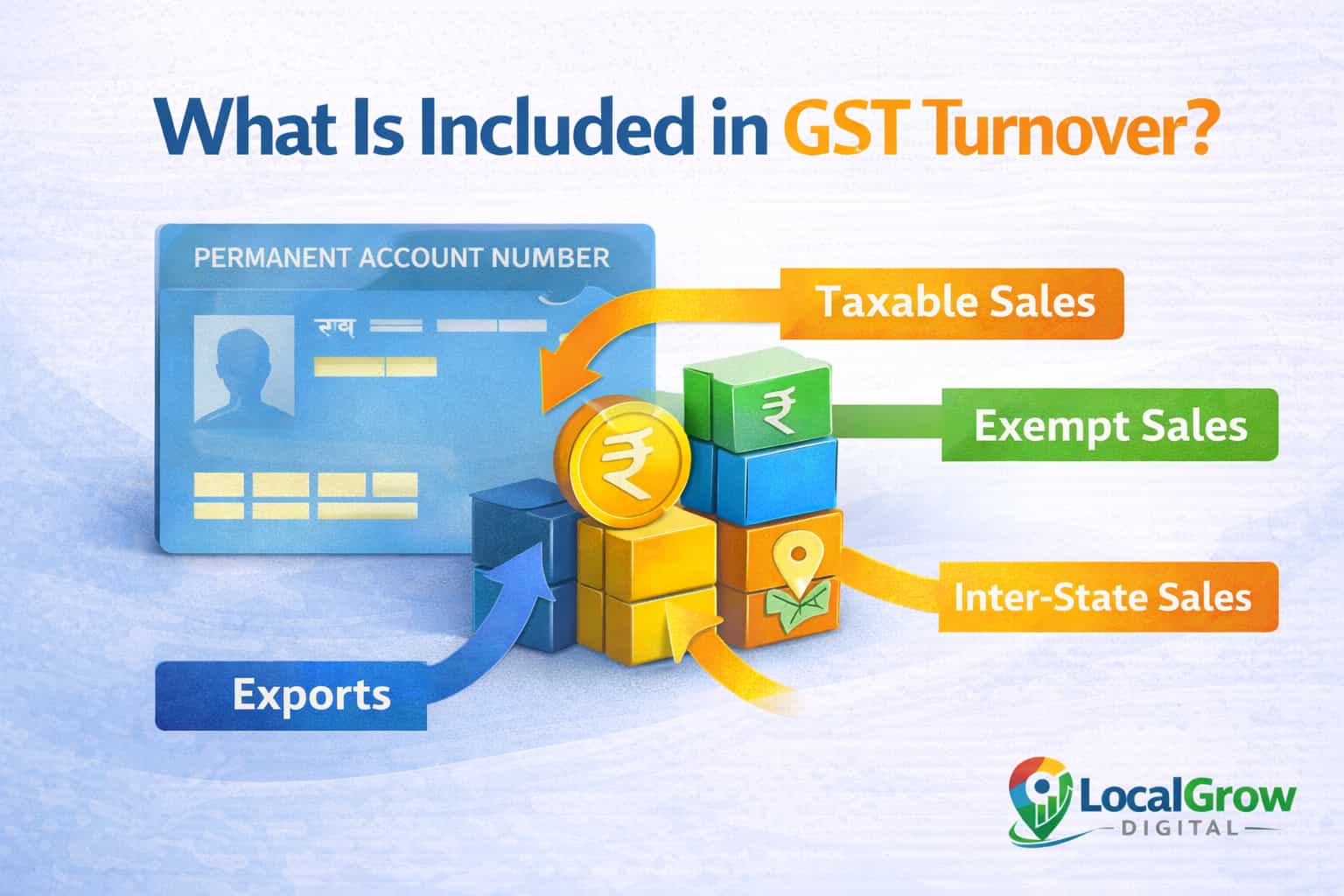
If multiple businesses are operated under one PAN, the combined income of all such businesses is used to calculate the GST turnover limit. Many businesses unknowingly cross the limit due to this rule.
Current GST Turnover Limit in India (Latest Updated)
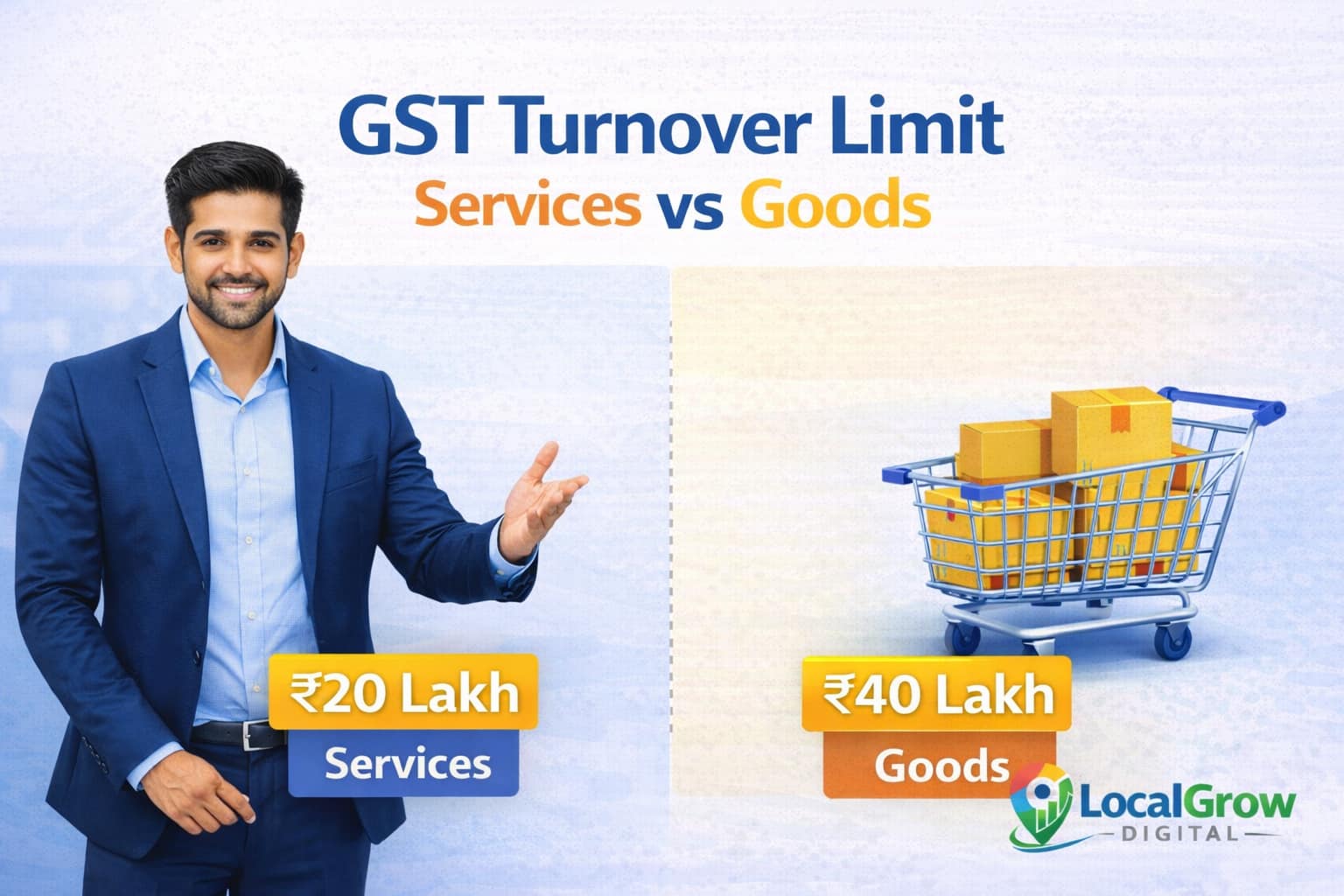
- Service Providers: ₹20 lakh per year
- Goods Sellers: ₹40 lakh per year
- Special Category States: ₹10 lakh per year
- Quick Summary:
- ₹20 lakh – Service providers
- ₹40 lakh – Goods sellers
- ₹10 lakh – Special category states
These prescribed figures define the GST turnover limit in India and apply uniformly across most states, subject to special category exceptions.
These limits apply to the total turnover of all businesses under the same PAN across India, not per business or per state.
Is GST Registration Mandatory Below 20 Lakh Turnover in India?
GST registration is normally not mandatory below ₹20 lakh turnover for service providers and ₹40 lakh for goods sellers. However, if a business provides inter-state services, sells through e-commerce platforms, or engages in specific notified activities, GST registration becomes compulsory regardless of turnover.
Does GST Turnover Limit Differ by State?
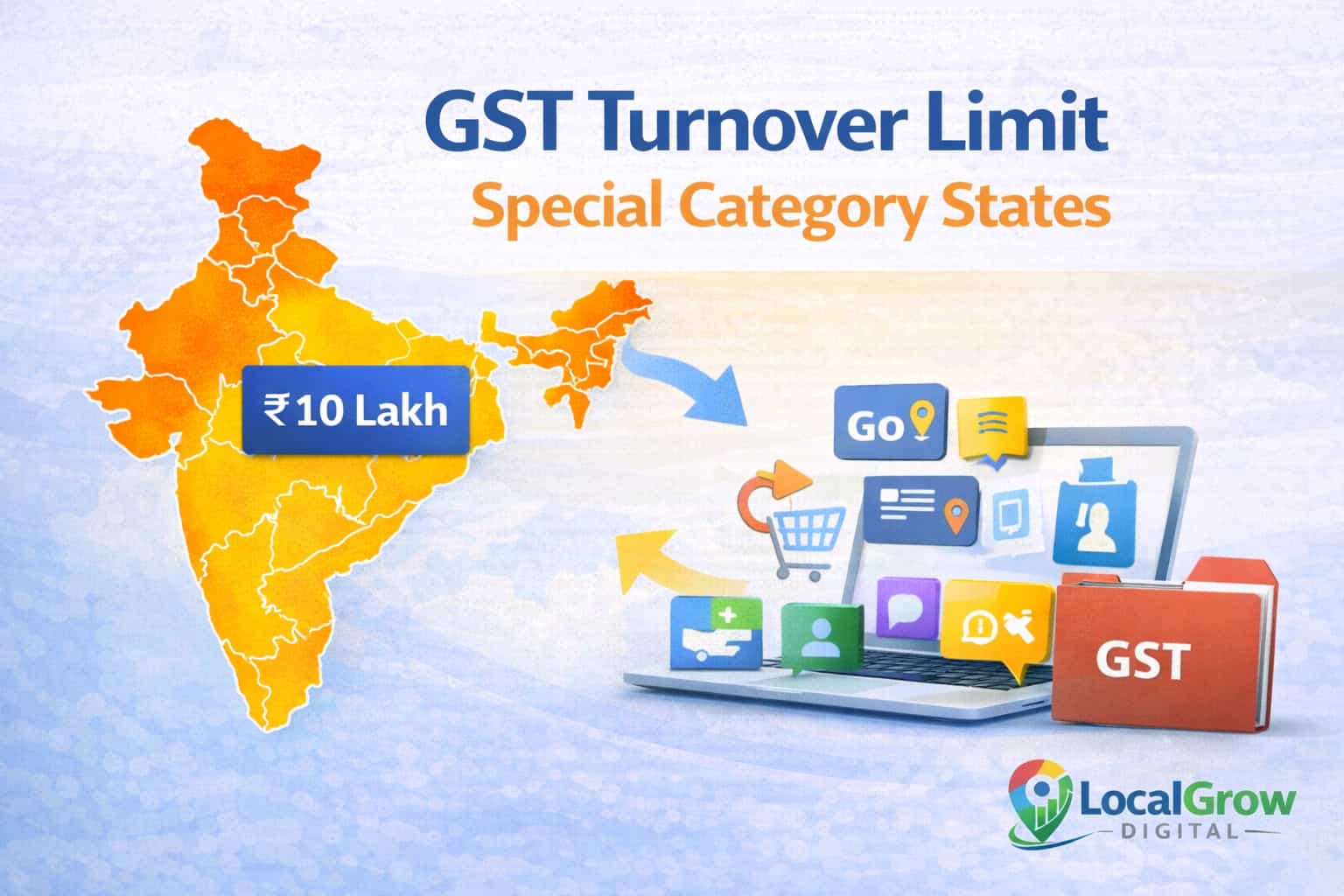
In most states, GST turnover limits remain the same. However, special category states have lower thresholds to support regional economic conditions.
Businesses supplying from or operating in special category states must monitor their turnover carefully, as late registration can attract penalties even if the delay was unintentional.
When Is GST Registration Mandatory Even Below Turnover Limit?
In certain cases, GST registration becomes compulsory even if your turnover is below the GST turnover limit in India. For example, businesses selling through e-commerce platforms, providing inter-state services, or operating without a commercial office setup may still require registration, especially in cases related to GST registration without business address.
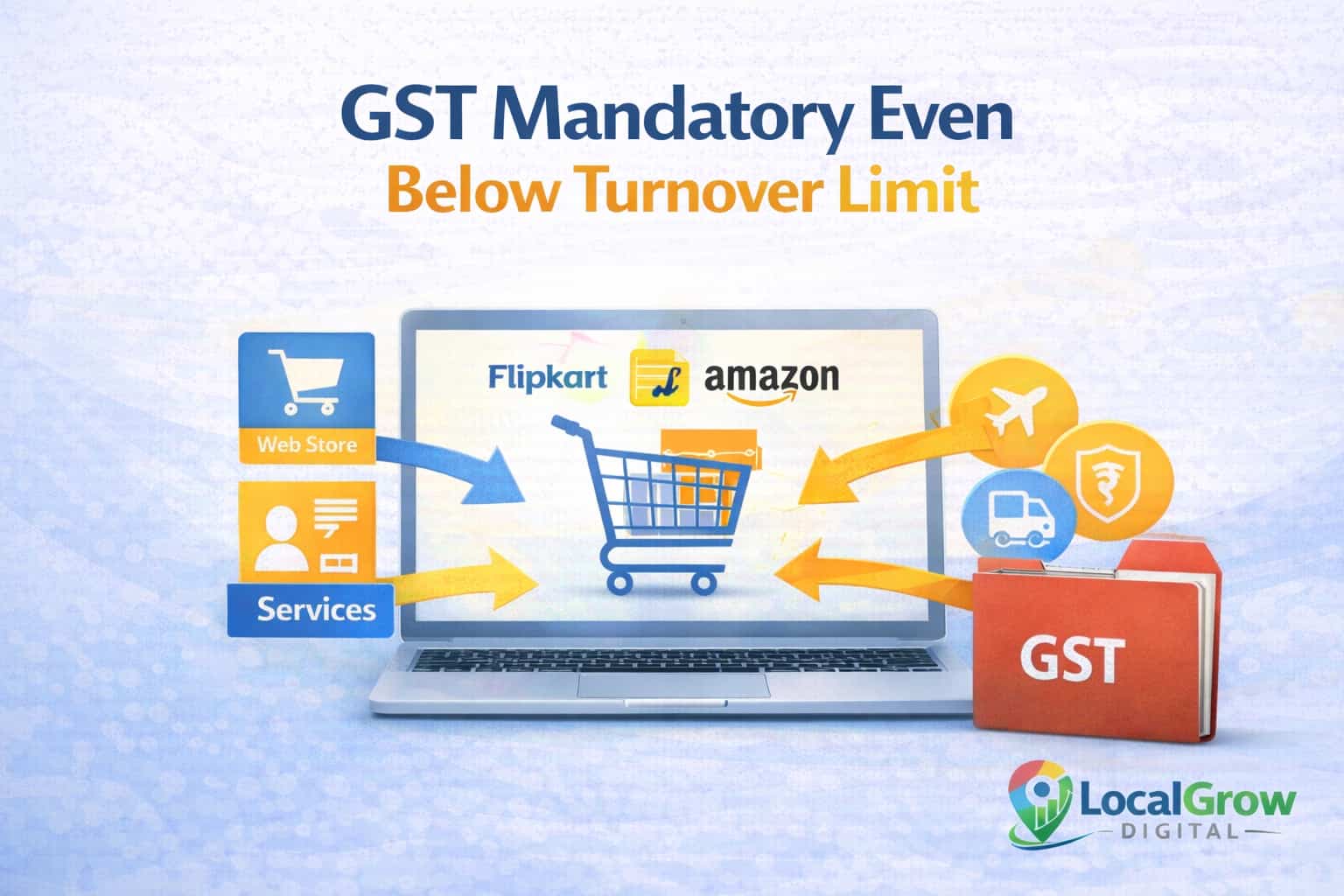
- Selling through e-commerce platforms like Amazon, Flipkart, or Meesho
- Providing inter-state services
- Importing or exporting goods or services
- Supplying through e-commerce operators
- Businesses covered under reverse charge mechanism
GST registration requirements are based on activity and supply nature, not just annual turnover. Businesses must evaluate both income and transaction type.
— Official GST Registration Guidelines
If you sell products online, you should understand the detailed GST rules for online sellers in India, as turnover limits may not protect you from mandatory registration.
Even if your income is below the GST turnover limit in India, certain business activities override the exemption and require compulsory registration.
GST Turnover Limit Practical Examples
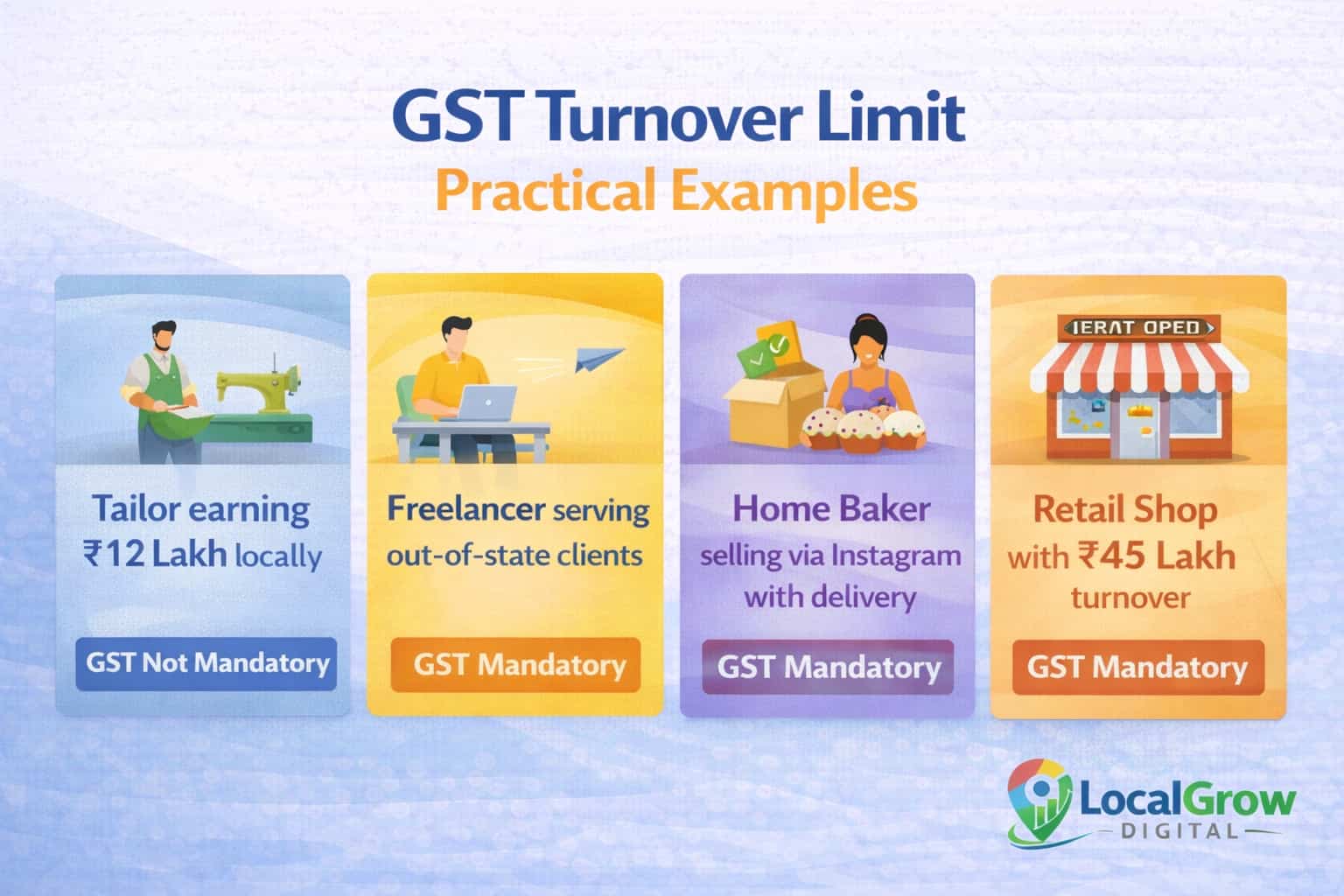
Understanding turnover limits becomes easier when applied to real-life scenarios. Below are practical examples that clarify when GST registration becomes compulsory.
- A local tailor earning ₹12 lakh within one state → GST not mandatory
- A freelancer providing services across states → GST mandatory
- A home baker selling through online platforms → GST mandatory
- A retail store with ₹45 lakh turnover → GST mandatory
Service professionals should also review GST requirements for freelancers and service providers in India to ensure compliance when working with clients across multiple states.
How to Calculate GST Turnover Correctly (Step-by-Step Method)
Calculating GST turnover correctly is essential to determine whether registration is mandatory. Many businesses either underestimate or miscalculate aggregate turnover, leading to delayed registration or unexpected penalties.
GST turnover is calculated based on aggregate turnover under one PAN across India. It includes taxable supplies, exempt supplies, exports, and inter-state supplies, but excludes GST collected.
- Calculate total sales revenue (excluding GST charged)
- Add exempt supplies value
- Add export supplies
- Add inter-state supplies
- Combine income from all businesses under the same PAN
- Compare the total against the prescribed GST turnover limit
Incorrect GST turnover calculation is one of the most common compliance mistakes that results in late registration penalties.
— GST Compliance Advisory Note
Regularly tracking cumulative turnover during the financial year helps businesses avoid crossing the GST threshold unnoticed.
Common Mistakes Businesses Make About GST Turnover Limit
Many businesses misunderstand GST turnover rules, which leads to either unnecessary registration or serious compliance risk. Avoiding these common mistakes can prevent penalties and operational disruption.
- Assuming GST applies only to large companies
- Ignoring inter-state service rules
- Forgetting to include exempt supplies in turnover
- Calculating turnover business-wise instead of PAN-wise
- Believing online marketplace sales are exempt
- Registering late after crossing the threshold
Incorrect Assumption
GST applies only after ₹20 lakh in all cases.
Correct Rule
GST may be mandatory below ₹20 lakh if inter-state supply or e-commerce selling is involved.
Does GST Turnover Include Exempt and Export Supplies?
Yes. Under GST law, aggregate turnover includes taxable supplies, exempt supplies, exports, and inter-state supplies under the same PAN. It does not include GST collected but includes the total value of outward supplies.
What Happens If You Cross the GST Limit and Don’t Register?
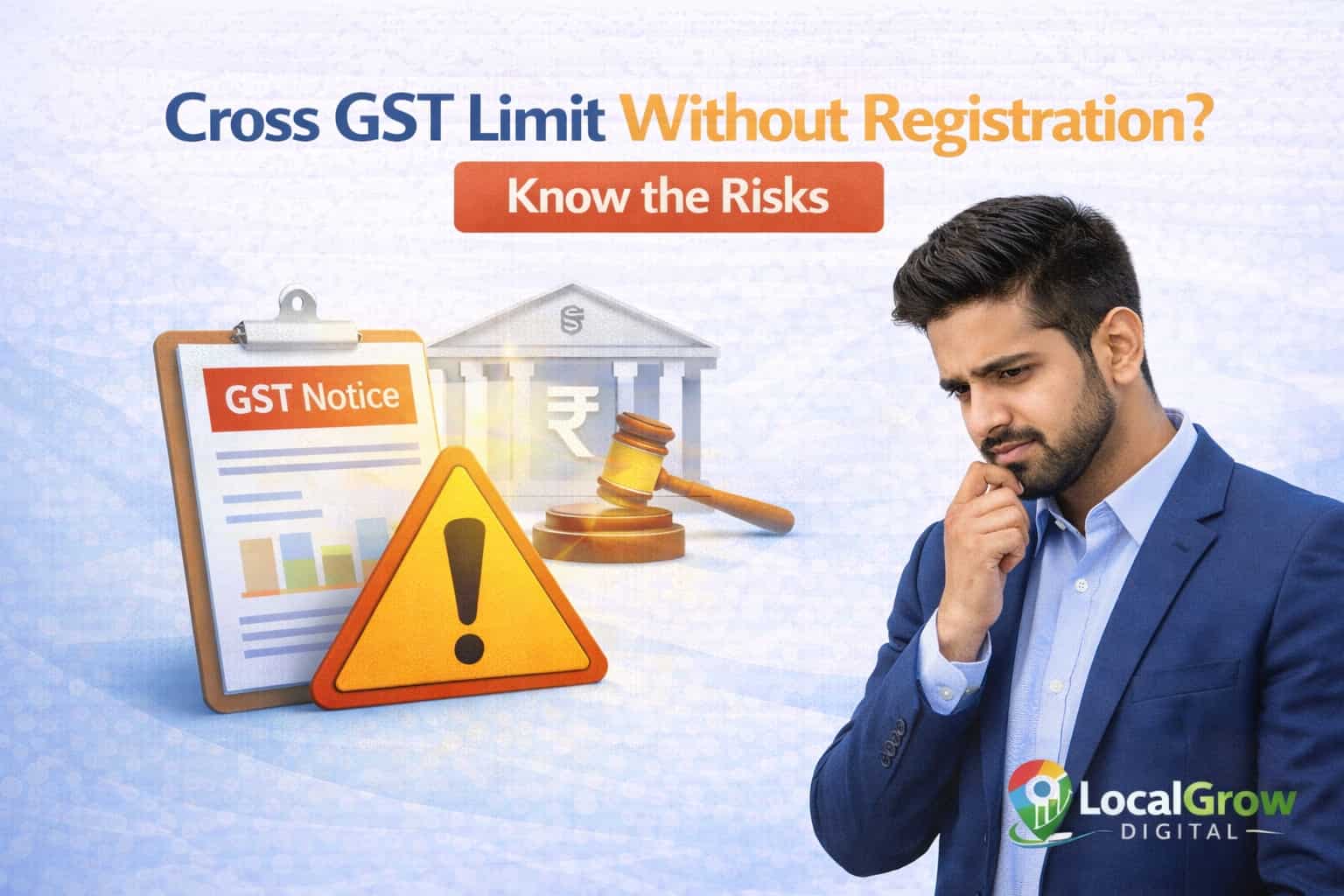
Continuing business operations after crossing the GST turnover limit without registering can lead to significant financial penalties and compliance complications.
- Penalty equal to tax due
- Interest on unpaid tax
- Notices from the GST department
- Possible bank account complications
- Increased scrutiny in future registrations
GST Turnover Limit vs Composition Scheme Eligibility
Businesses often confuse GST turnover limit for registration with eligibility for the Composition Scheme. While registration thresholds determine whether GST registration is required, the Composition Scheme has separate turnover limits and compliance conditions.
- Registration limit determines when GST is mandatory
- Composition scheme has its own turnover ceiling
- Composition scheme restricts inter-state supply
- Input tax credit is not available under composition
To understand the full legal consequences, you should review what happens if you don’t register for GST in India and the penalties that may apply.
GST Registration Required
- Turnover exceeds prescribed limit
- Inter-state service supply
- Online marketplace selling
- Import or export activity
- Reverse charge applicability
GST Registration Not Required (If)
- Turnover below threshold
- No inter-state supply
- No e-commerce platform selling
- No reverse charge obligations
- Operating within eligible exemption rules
Official turnover thresholds and registration rules can be verified directly on the government GST portal to ensure compliance with the latest notifications.
How to Check If You Need GST Registration
Instead of guessing, businesses should evaluate eligibility based on turnover, business activity, supply type, and operational state. Even a minor change in supply pattern can trigger mandatory GST registration.

Professional guidance ensures correct interpretation of turnover rules and prevents unnecessary registration or penalty risk.
Because the GST turnover limit in India affects legal compliance, taxation, and business continuity, it is important to evaluate eligibility carefully before crossing the prescribed threshold.
For a detailed checklist of documents required for GST registration in India, you can refer to this complete GST document checklist guide.
Frequently Asked Questions on GST Turnover Limit in India
What is the GST turnover limit in India?
The GST turnover limit is ₹20 lakh for service providers and ₹40 lakh for goods suppliers in most states.
Is GST required below ₹20 lakh turnover?
Generally no, unless the business supplies inter-state services or sells through e-commerce platforms.
Does GST turnover include exempt supplies?
Yes, aggregate turnover includes taxable and exempt supplies under the same PAN.
Is GST mandatory for online sellers regardless of turnover?
Yes, GST registration is compulsory for sellers operating through e-commerce platforms.
Is GST registration state-wise or PAN-wise?
GST registration is state-wise but calculated under one PAN.
What happens if turnover crosses the GST limit mid-year?
GST registration must be applied for within the prescribed time after crossing the threshold.
Do freelancers need GST registration?
Yes, if turnover exceeds ₹20 lakh or services are provided inter-state.
Are exports included in GST turnover?
Yes, export supplies are included in aggregate turnover.
What is aggregate turnover under GST?
Aggregate turnover includes total taxable, exempt, export, and inter-state supplies under one PAN.
Does GST turnover reset every financial year?
Yes, turnover is calculated annually based on the financial year.
Can a business voluntarily register below turnover limit?
Yes, voluntary registration is allowed.
What is the penalty for crossing GST limit without registration?
Penalty may equal tax due along with interest and possible notices.
Is GST mandatory for home-based businesses?
Yes, if turnover crosses threshold or inter-state supply applies.
Does composition scheme have different turnover limit?
Yes, composition scheme has separate eligibility conditions.
How do I calculate GST turnover?
Add total taxable, exempt, and export supplies under one PAN.
What is aggregate turnover under GST with example?
Aggregate turnover under GST includes the total value of taxable supplies, exempt supplies, exports, and inter-state supplies under one PAN across India. For example, if a business earns ₹15 lakh from services and ₹8 lakh from exempt supplies under the same PAN, the aggregate turnover becomes ₹23 lakh, which may trigger GST registration.
Is GST registration mandatory for inter-state services even below turnover limit?
Yes. Businesses providing inter-state services are required to register under GST even if their turnover is below ₹20 lakh, unless specific exemptions apply.
Does GST turnover include income from multiple businesses under one PAN?
Yes. If multiple businesses operate under the same PAN, their total income is combined to calculate GST aggregate turnover.
Can I avoid GST registration by splitting business under different names?
No. GST turnover is calculated based on PAN, not trade names. Artificial splitting to avoid GST may attract penalties.
What happens if I register for GST late after crossing turnover limit?
Late registration may result in penalties, interest on unpaid tax, and possible scrutiny from the GST department.
Is GST turnover calculated on profit or total sales?
GST turnover is calculated on total sales (gross revenue), not profit.
Are advances received included in GST turnover?
Yes, advances received for supplies are included in aggregate turnover calculations.
Do exports count toward GST turnover limit?
Yes. Export supplies are included in aggregate turnover even though they may be zero-rated.
Is GST registration compulsory for Instagram or WhatsApp sellers?
If goods are sold through e-commerce operators or inter-state supply is involved, GST registration may be mandatory even below turnover limit.
Does GST turnover include income from commission or brokerage?
Yes. Commission, brokerage, and service income are included while calculating aggregate turnover.
What is the GST turnover limit for special category states?
In special category states, the GST turnover limit is ₹10 lakh for mandatory registration.
Can I voluntarily register for GST below turnover limit?
Yes. Businesses may voluntarily register under GST to claim input tax credit or expand operations.
Is GST turnover calculated monthly or yearly?
GST turnover is calculated on an annual basis based on the financial year.
How do I check whether I crossed GST turnover limit?
Businesses must track cumulative annual turnover across all taxable, exempt, export, and inter-state supplies under the same PAN.
How can I check GST turnover eligibility accurately without risking penalties?
The safest way to check GST turnover eligibility is to evaluate your total annual aggregate turnover, business activity type, and supply pattern. Consulting GST experts helps avoid incorrect self-assessment, late registration penalties, or unnecessary compliance costs.
Businesses evaluating GST turnover limits should also consider MSME registration for government benefits, FSSAI registration for food activities, and Google Business Profile setup for stronger online visibility and customer trust.
Check Your GST Turnover Eligibility with Expert Guidance
Understanding GST turnover rules incorrectly can lead to penalties or unnecessary compliance. Professional assistance ensures accurate evaluation and smooth registration.
Our experts can help you evaluate whether the GST turnover limit in India applies to your specific business model and ensure timely compliance.