

GST for online sellers in India is mandatory in most cases, even if your income is low. If you sell products through Amazon, Flipkart, Meesho, Shopify, Instagram, Facebook, or your own website, GST registration is usually required under special e-commerce provisions of GST law.
Many sellers assume that GST applies only after crossing ₹20 lakh or ₹40 lakh turnover. That rule applies to certain offline businesses. However, e-commerce sellers fall under different GST provisions where turnover exemption may not apply.
Before listing products on any marketplace, it is essential to understand GST registration rules, marketplace compliance requirements, and legal risks involved in selling without GST. If you are planning to sell online in India, understanding GST for online sellers in India can protect your business from suspension and legal penalties.
To understand the complete legal framework including documents, process, timelines, and approval rules, read our detailed GST Registration in India: Complete Guide for Businesses & Companies before applying.
Table of Contents
Who Is Considered an Online Seller Under GST?
An online seller under GST is any person supplying goods or services through digital platforms instead of operating solely through a physical shop.

- Amazon sellers
- Flipkart sellers
- Meesho resellers
- Shopify and website store owners
- Instagram and Facebook sellers
- Dropshipping businesses
- Home-based online resellers
Even if you operate from home using your residential address, GST law treats you as an online seller if you supply through an e-commerce operator.
Is GST Registration Mandatory for Online Sellers in India?
Yes. Under GST law, sellers supplying goods through e-commerce operators must obtain GST registration in most cases, regardless of turnover limits.
- Turnover exemption usually does not apply
- Inter-state supply makes GST compulsory
- Marketplaces require GSTIN before activating seller accounts
- GST registration is verified during marketplace onboarding
Even if you earn only a few thousand rupees per month, GST registration may still be mandatory when selling through Amazon, Flipkart, or Meesho.
If you are confused about exemption thresholds, read GST Turnover Limit in India – When Is Registration Mandatory? to understand when the limit applies and when it does not.
Benefits of GST Registration for Online Sellers
GST registration is not only about compliance. It enables structured business growth, marketplace stability, and long-term scalability.

- Legal activation of marketplace accounts
- Access to nationwide customers
- Input tax credit on business purchases
- Improved brand credibility
- Eligibility for business loans and schemes
- Smooth payment settlements from marketplaces
Many scaling online businesses combine GST registration with MSME Registration in India to unlock government schemes and financial benefits.
Documents Required for GST Registration for Online Sellers
Online sellers must submit accurate documents to avoid rejection or clarification notices.
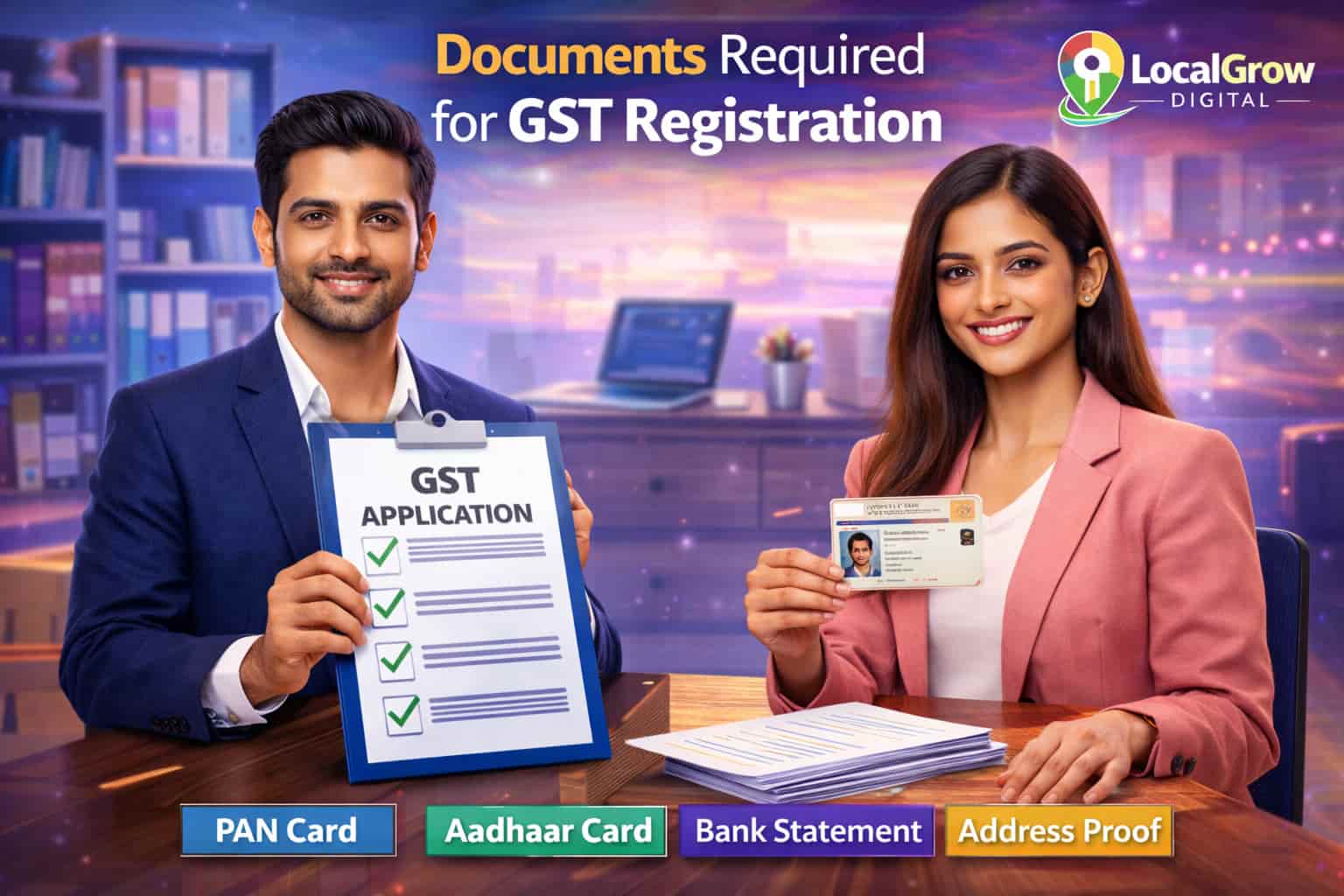
- PAN Card
- Aadhaar Card
- Photograph
- Address proof (home or office)
- Bank account details
- Business activity details
Understanding GST for online sellers in India is critical before launching products on Amazon, Flipkart, or Meesho. Many new entrepreneurs assume that small-scale or home-based selling qualifies for exemption, but marketplace facilitation changes compliance requirements significantly.
Home-based sellers can apply using residential address proof. If you sell food products online, FSSAI Registration in India may also be required along with GST.
What Happens If You Sell Online Without GST?
Selling through marketplaces without mandatory GST registration can lead to serious financial and operational risks.
- Seller account suspension by marketplace
- Payment hold or payout freeze
- GST department penalty notice
- Ineligibility for TCS reconciliation
- Risk of permanent marketplace ban
- Marketplace account suspension
- Payment holds
- Removal of product listings
- Legal notices from GST department
- Financial penalties and interest
If GST registration is legally required and not obtained, you may also face penalties explained in What Happens If You Don’t Register for GST in India? Penalties & Risks Explained.
Why GST Is Mandatory for Online Sellers – Legal Basis Under Section 24
Under Section 24, sellers supplying goods through e-commerce platforms are required to register for GST irrespective of turnover threshold in most cases. This overrides the normal ₹20 lakh or ₹40 lakh exemption applicable to certain offline businesses.
- Compulsory registration for e-commerce sellers
- Turnover exemption may not apply
- Marketplace onboarding requires GSTIN
- Non-compliance may lead to legal consequences
If you are unsure whether turnover exemptions apply to your case, review our detailed explanation of GST turnover limit in India to understand threshold rules clearly.
Understanding TCS Under Section 52 for Marketplace Sellers
Section 52 of the GST Act introduces Tax Collected at Source (TCS) for e-commerce operators. Marketplaces like Amazon, Flipkart, and Meesho collect a percentage of tax on behalf of sellers and deposit it with the government.

When you sell through a marketplace, the platform deducts TCS from your sales and reports it under your GSTIN. Without GST registration, proper tax reconciliation becomes impossible.
- TCS collected by marketplace
- Reflected in GSTR-2A / GSTR-8
- Requires valid GSTIN
- Impacts monthly GST return filing
Understanding TCS and filing compliance becomes easier after reviewing the complete GST return and registration framework explained in GST Registration in India: Complete Guide for Businesses & Companies.
Amazon Sellers
- Mandatory GSTIN for most categories
- GST verification before activation
- TCS deduction applicable
- Strict compliance checks
Flipkart Sellers
- GSTIN required during onboarding
- TCS deducted on sales
- Account suspension if GST invalid
- GST returns required regularly
Meesho Sellers
- GST mandatory for most sellers
- TCS reporting structure
- Compliance verification
- Suspension risk without GST
Can You Sell Online Without Business Address or Office?
Many new sellers believe GST requires a commercial office. In reality, home-based sellers can apply using residential address proof.
If you do not have a shop or office, read GST Registration Without Business Address: Is It Possible in India? to understand how home sellers can apply legally.
What If You Stop Selling Online? Can GST Be Cancelled?
If you permanently stop selling through marketplaces, GST registration can be legally cancelled. However, cancellation must follow proper compliance procedure.
You can review the step-by-step cancellation process in How to Cancel GST Registration in India – Step-by-Step Guide before submitting application.
Suppliers making taxable supplies through an electronic commerce operator are required to obtain compulsory registration under GST.
— Central Goods and Services Tax Act, Section 24
Common Misunderstandings About GST for Online Sellers
- GST is required only after ₹20 lakh turnover
- Small home sellers are exempt
- Dropshipping does not require GST
- Instagram sellers are not covered
- GST can be added later after sales start

These assumptions often lead to account suspension, financial penalties, and legal notices. It is always safer to verify eligibility before listing products online.
Need Help With GST Registration for Online Selling?
If you want to avoid rejection, suspension, or compliance confusion, our GST experts can handle your registration process safely and accurately across India.
We verify eligibility, prepare documents, complete filing, and assist in marketplace GST linking to ensure smooth account activation.

Before listing products on Amazon, Flipkart, or Meesho, it is always safer to confirm whether GST registration is mandatory for your exact business model. A quick eligibility check can prevent account suspension, payment holds, and unnecessary legal complications later.
If you are unsure whether GST for online sellers in India applies to your specific business model, it is safer to verify eligibility before listing products. Correct registration ensures smooth marketplace onboarding and avoids unexpected suspension or tax penalties.
Key Takeaway: GST for online sellers in India is compulsory when supplying goods through e-commerce operators. Registration before listing products prevents suspension, penalties, and compliance risks.
Why GST for Online Sellers in India Is Different from Offline Business Rules
GST for online sellers in India operates under different compliance rules compared to traditional offline businesses. While offline sellers may benefit from turnover-based exemption thresholds, online sellers supplying goods through e-commerce operators often fall under compulsory registration provisions under Section 24 of the CGST Act.
Is GST Mandatory for Online Sellers in India?
Yes, GST for online sellers in India is mandatory in most cases when goods are supplied through e-commerce operators like Amazon, Flipkart, or Meesho. Under Section 24 of the CGST Act, compulsory registration applies even if turnover is below the normal exemption limit.
Does Turnover Limit Apply to Online Sellers?
No, the standard turnover exemption limit does not apply when selling through e-commerce platforms. GST for online sellers in India becomes compulsory because marketplace supply overrides normal threshold benefits under GST law.
Can You Sell on Amazon or Meesho Without GST?
Most marketplaces require valid GSTIN before activating seller accounts. Selling without GST can lead to account suspension, payment holds, and compliance notices. In regulated marketplace selling, GST registration is generally required before listing products.
Frequently Asked Questions About GST for Online Sellers in India
Is GST mandatory for online sellers in India?
Yes. In most cases, GST registration is mandatory for sellers supplying goods through e-commerce operators such as Amazon, Flipkart, and Meesho. Under Section 24 of the CGST Act, compulsory registration applies to many online sellers irrespective of turnover threshold.
Does turnover limit apply to Amazon and Flipkart sellers?
For many e-commerce sellers, turnover exemption does not apply in the same way it does for certain offline businesses. Sellers supplying goods through e-commerce operators are often required to obtain GST registration even if their annual turnover is below ₹20 lakh or ₹40 lakh.
Can I sell on Meesho without GST registration?
In most product categories, Meesho requires a valid GSTIN for account activation and tax compliance. Attempting to sell without GST may lead to account suspension or payment holds.
Is GST required for Instagram sellers in India?
If an Instagram seller supplies goods across states or uses logistics partners that involve inter-state supply, GST registration may become mandatory depending on the business structure and activity type.
Is GST compulsory for dropshipping businesses?
Yes. Dropshipping businesses operating through e-commerce platforms generally require GST registration because the supply is facilitated through digital platforms and often involves inter-state transactions.
What is Section 24 of GST for online sellers?
Section 24 of the CGST Act mandates compulsory GST registration for persons supplying goods through e-commerce operators, overriding normal turnover exemption in many scenarios.
What is TCS under GST for Amazon and Flipkart sellers?
Under Section 52, e-commerce operators collect Tax Collected at Source (TCS) on behalf of sellers. This tax is reported under the seller’s GSTIN and must be reconciled while filing GST returns.
What happens if I sell online without GST registration?
Selling without mandatory GST registration can result in marketplace suspension, financial penalties, interest liability, and legal notices from the GST department.
Can home-based online sellers apply for GST?
Yes. Home-based sellers can apply for GST registration using residential address proof, provided documents are valid and compliance requirements are fulfilled.
Is GST registration free for online sellers?
The government does not charge an official fee for GST registration. However, professional service providers may charge a consultation or filing fee.
How long does GST registration take for e-commerce sellers?
If documents are correct and Aadhaar authentication is successful, GST registration is typically approved within a few working days.
Can Amazon block my account without GST?
Yes. Marketplaces verify GST details during onboarding and periodic compliance checks. Invalid or missing GSTIN can lead to suspension.
Does GST apply if I sell only within my state?
If you sell exclusively within your state and not through an e-commerce operator, turnover exemption may apply depending on the business model. However, marketplace selling usually changes this scenario.
Do I need FSSAI along with GST for food selling online?
Yes. If you sell food products online, FSSAI registration or license is required in addition to GST registration.
Can I update GST details later after starting sales?
Most marketplaces require GST verification before product listing. Updating GST later may not prevent suspension if compliance is already required.
What is aggregate turnover under GST for online sellers?
Aggregate turnover includes taxable supplies, exempt supplies, exports, and inter-state supplies under the same PAN across India.
Is GST mandatory for resellers on Meesho?
Yes. Resellers supplying goods through e-commerce operators are generally required to obtain GST registration irrespective of turnover.
Can I cancel GST if I stop selling online?
Yes. GST registration can be legally cancelled if business operations permanently stop, following proper cancellation procedure.
Does GST apply to digital products sold online?
GST applicability depends on the nature of supply and whether it qualifies as taxable supply under GST law.
Is GST required for Shopify website sellers?
If you supply goods across states or meet conditions under compulsory registration, GST registration may be required even for self-hosted websites.
How does GST affect profit margin for online sellers?
GST allows input tax credit on purchases, which can reduce effective tax burden if properly managed and reconciled.
Do marketplace commissions include GST?
Marketplace service fees generally attract GST, which is reflected in invoices and can be claimed as input tax credit by registered sellers.
Is GST mandatory for Amazon FBA sellers?
Yes. Since FBA involves inter-state stock movement and marketplace facilitation, GST registration is typically required.
What GST returns must online sellers file?
Registered sellers must file periodic GST returns such as GSTR-1 and GSTR-3B, depending on turnover and scheme selected.
Can GST registration be rejected for online sellers?
Yes. Incorrect documents, address mismatch, or classification errors can lead to rejection or clarification notices.
Is GST mandatory for handmade product sellers?
If handmade products are sold through e-commerce platforms, GST registration is generally required regardless of scale.
Do I need GST for selling on multiple marketplaces?
A single GST registration per state is sufficient, but all marketplace accounts must be linked to valid GSTIN.
Does GST registration improve marketplace trust?
Yes. Verified GST sellers are considered more credible and compliant by both platforms and customers.
What penalties apply for not registering under GST?
Penalties may include tax liability, interest, monetary fines, and possible prosecution for continued non-compliance.
Why is GST for online sellers in India compulsory even for small businesses?
GST for online sellers in India becomes compulsory in many cases because Section 24 of the CGST Act overrides normal turnover exemption when goods are supplied through e-commerce operators.
Can I operate multiple online brands under one GST number?
Yes, provided they are under the same PAN and state registration, but proper invoicing and reporting must be maintained.
What is the safest way to comply with GST for online sellers in India?
The safest approach is to apply for GST registration before activating marketplace accounts, maintain proper invoicing, reconcile TCS deductions under Section 52, and file returns regularly.