
The documents required for GST registration in India must be prepared carefully before applying on the GST portal, as incorrect or incomplete documentation can lead to rejection under GST verification rules.
Documents required for GST registration in India must be prepared correctly before applying on the GST portal, otherwise applications may face rejection, delay or clarification notices. Many businesses assume GST registration is only about turnover limits, but documentation accuracy plays an equally critical role in approval.
Submitting incomplete documents required for GST registration in India is one of the primary reasons applications are rejected during officer scrutiny.
Whether you are a retail shop owner, freelancer, trader, online seller or private limited company, submitting the correct GST registration documents checklist ensures faster approval and avoids unnecessary compliance complications.
Understanding the documents required for GST registration in India is essential for shop owners, freelancers, online sellers and small businesses applying for GSTIN.
Before preparing your documents required for GST registration in India, it is important to understand the complete registration structure, eligibility criteria and timelines. You can review our detailed guide on GST registration in India – complete process, fees and approval guide
If you are unsure whether registration is mandatory for your business, especially based on annual turnover or interstate supply, you should first check GST turnover limit in India: when registration becomes compulsory
Table of Contents
Basic Documents Required for GST Registration
The basic documents required for GST registration in India apply to almost every applicant regardless of business type. These form the foundation of identity verification and GST portal authentication.
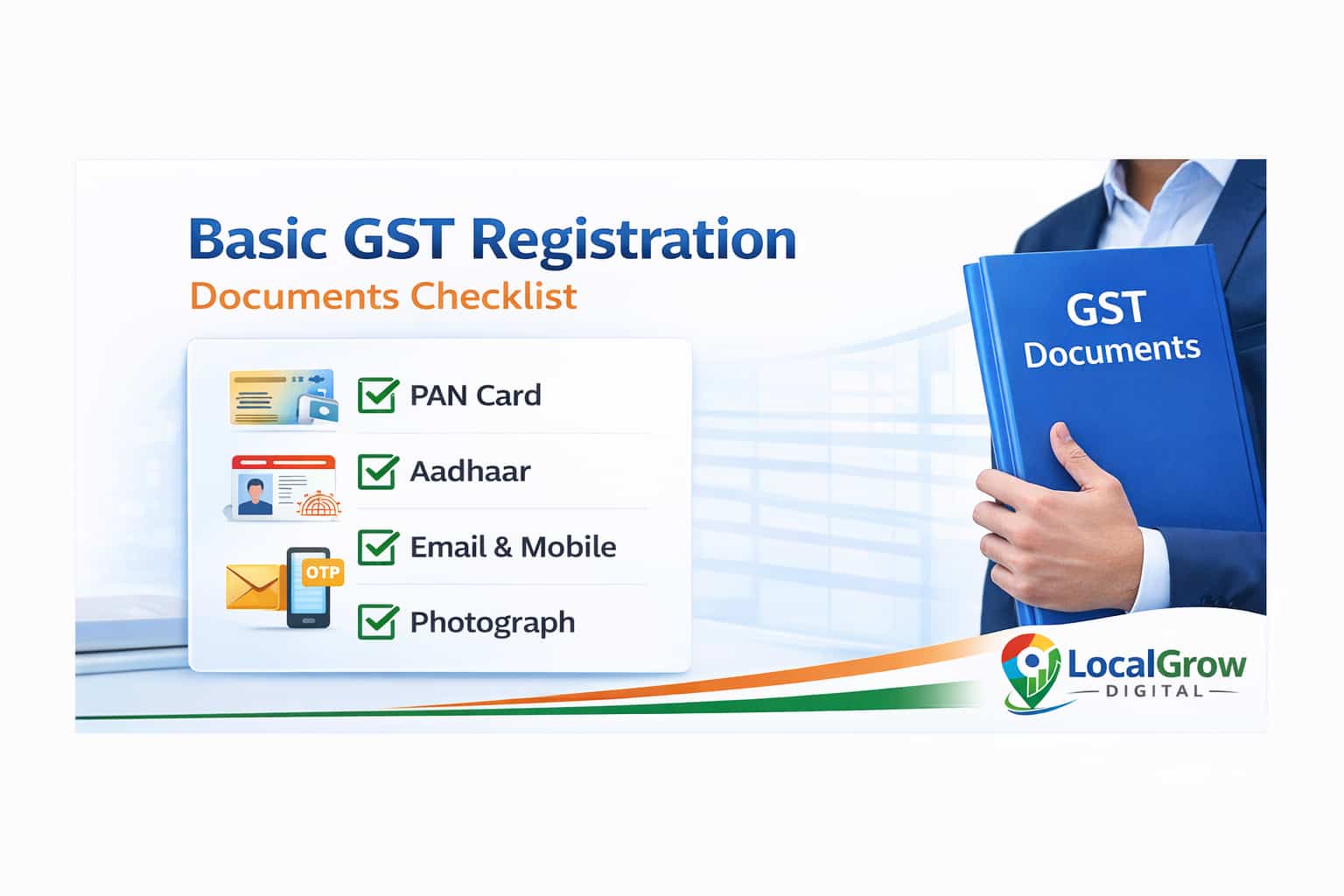
Every GST applicant must submit the following mandatory documents:
• PAN card of applicant or business entity
• Aadhaar card (linked with active mobile number)
• Passport-size photograph
• Valid mobile number for OTP verification
• Active email ID for GST portal communication
Without PAN, GST registration is legally not possible under GST law. Identity details must exactly match across PAN, Aadhaar and bank records to prevent verification notices.
GST registration applications are verified under Rule 8 and Rule 9 of the CGST Rules, where officers examine identity proof, address proof and bank details before granting GSTIN approval.
— GST Registration Verification Framework
Address Proof Documents for GST Registration
Address verification is one of the most sensitive parts of GST document scrutiny. Incorrect or unclear address proof is among the top reasons for GST registration rejection in India.
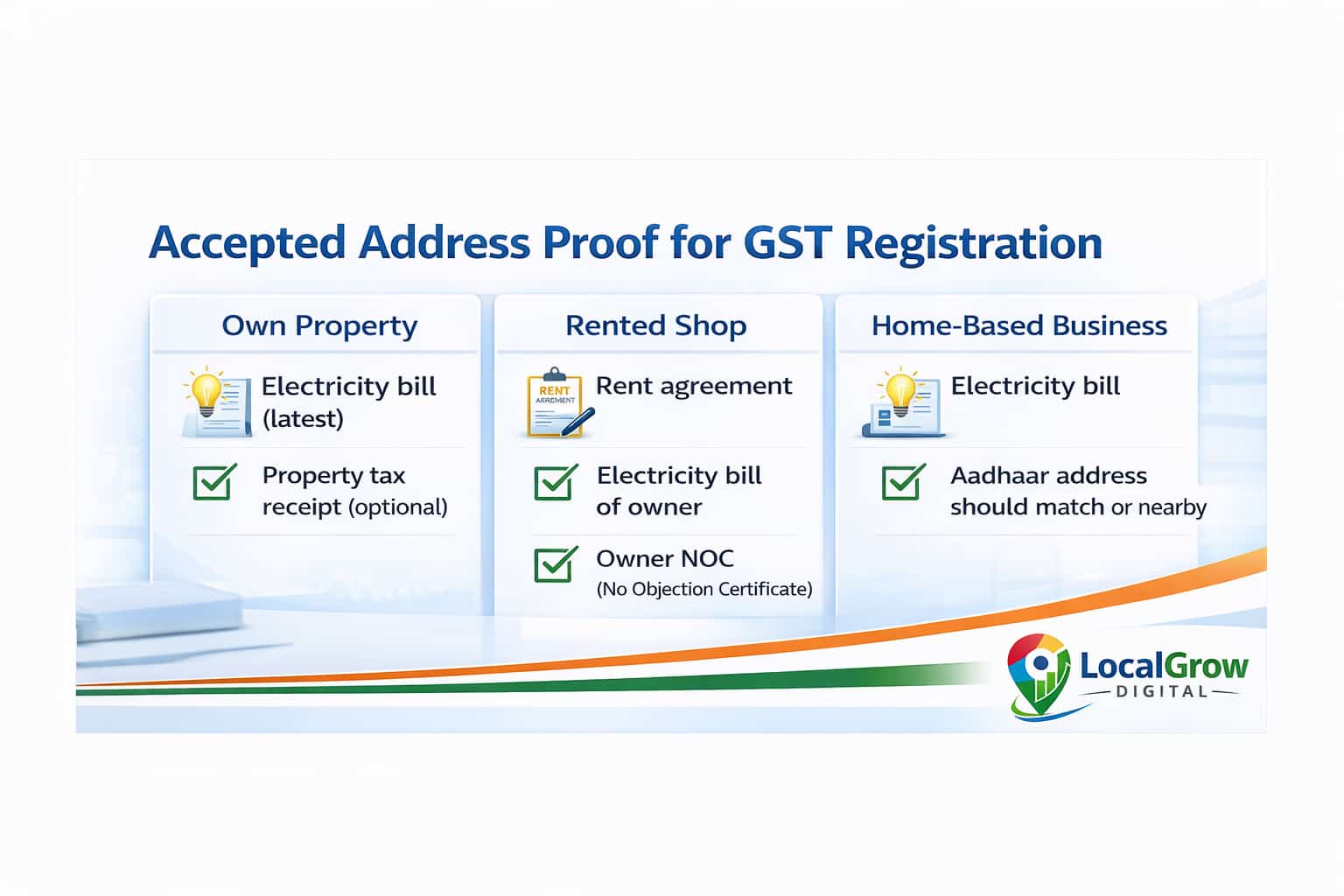
GST officers require documentary evidence of business location under Section 22 compliance. Accepted address proof depends on business structure:
✔ If Business Is in Own Property:
• Latest electricity bill
• Property tax receipt (optional but helpful)
✔ If Business Is in Rented Shop or Office:
• Rent agreement
• Owner’s electricity bill
• No Objection Certificate (NOC)
✔ If Business Is Run From Home:
• Electricity bill
• Aadhaar address consistency
Inconsistent address proof may trigger physical verification under GST rules.
Correct address proof is a critical component of documents required for GST registration in India, especially for rented or home-based businesses.
Incorrect or insufficient address proof is one of the leading causes of GST registration rejection in India, especially for rented premises and home-based businesses.
— GST Compliance Observation
Bank Account Proof for GST Registration
Bank verification ensures financial traceability of the business applying for GST registration. Bank details must match the applicant’s PAN and business name.
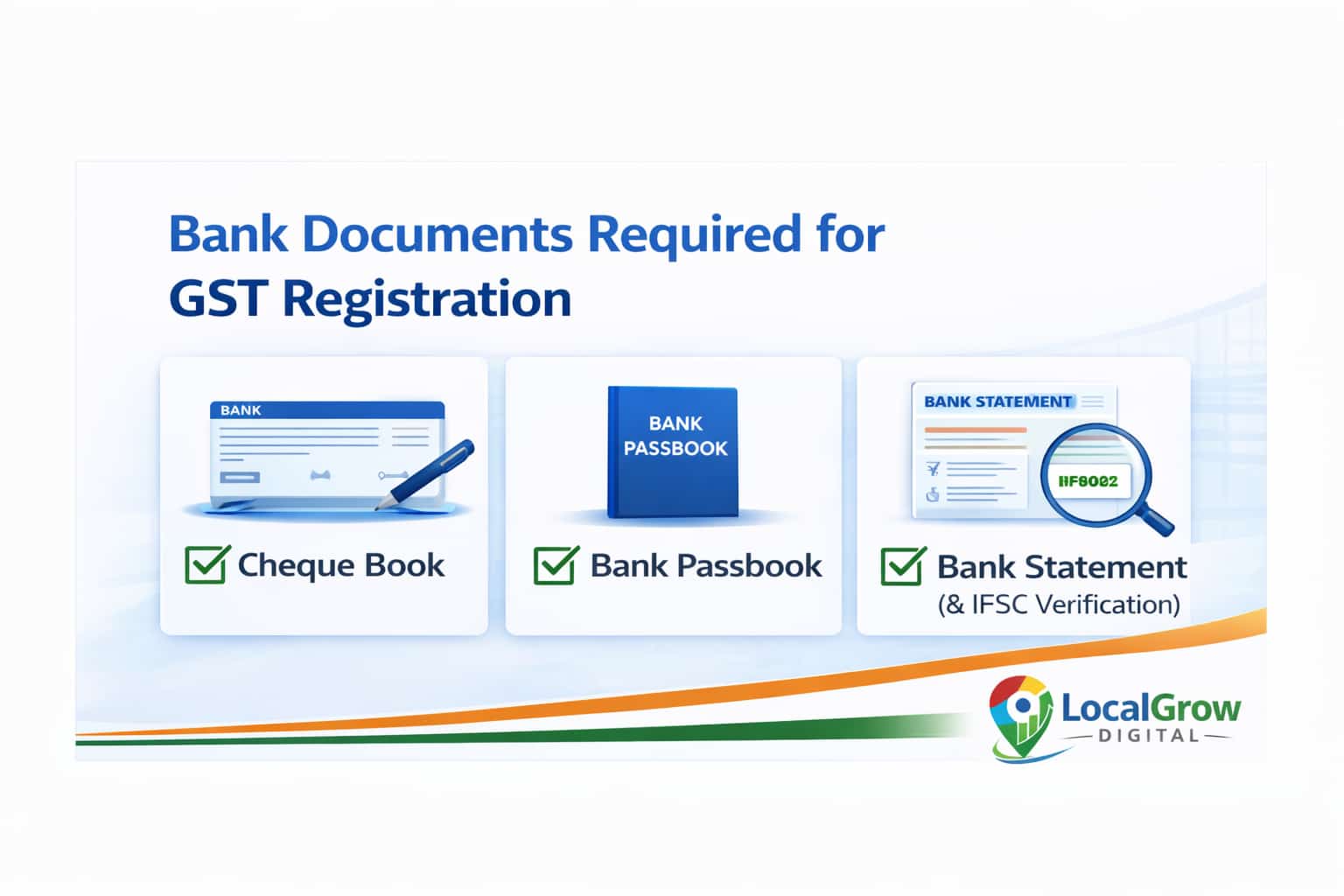
Accepted bank documents include:
• Cancelled cheque
• First page of bank passbook
• Bank statement showing account holder name, account number and IFSC
Proprietors may use personal bank accounts. However, partnership firms and companies must use business bank accounts for GST registration compliance.
Bank verification forms an essential part of documents required for GST registration in India, as financial traceability is mandatory under GST compliance.
Accurate bank documentation is an essential component of documents required for GST registration in India because financial verification is mandatory before GSTIN approval.
Business Type–Wise GST Documents
Documents required for GST registration in India vary depending on business structure. Entity-specific documents help verify legal constitution.
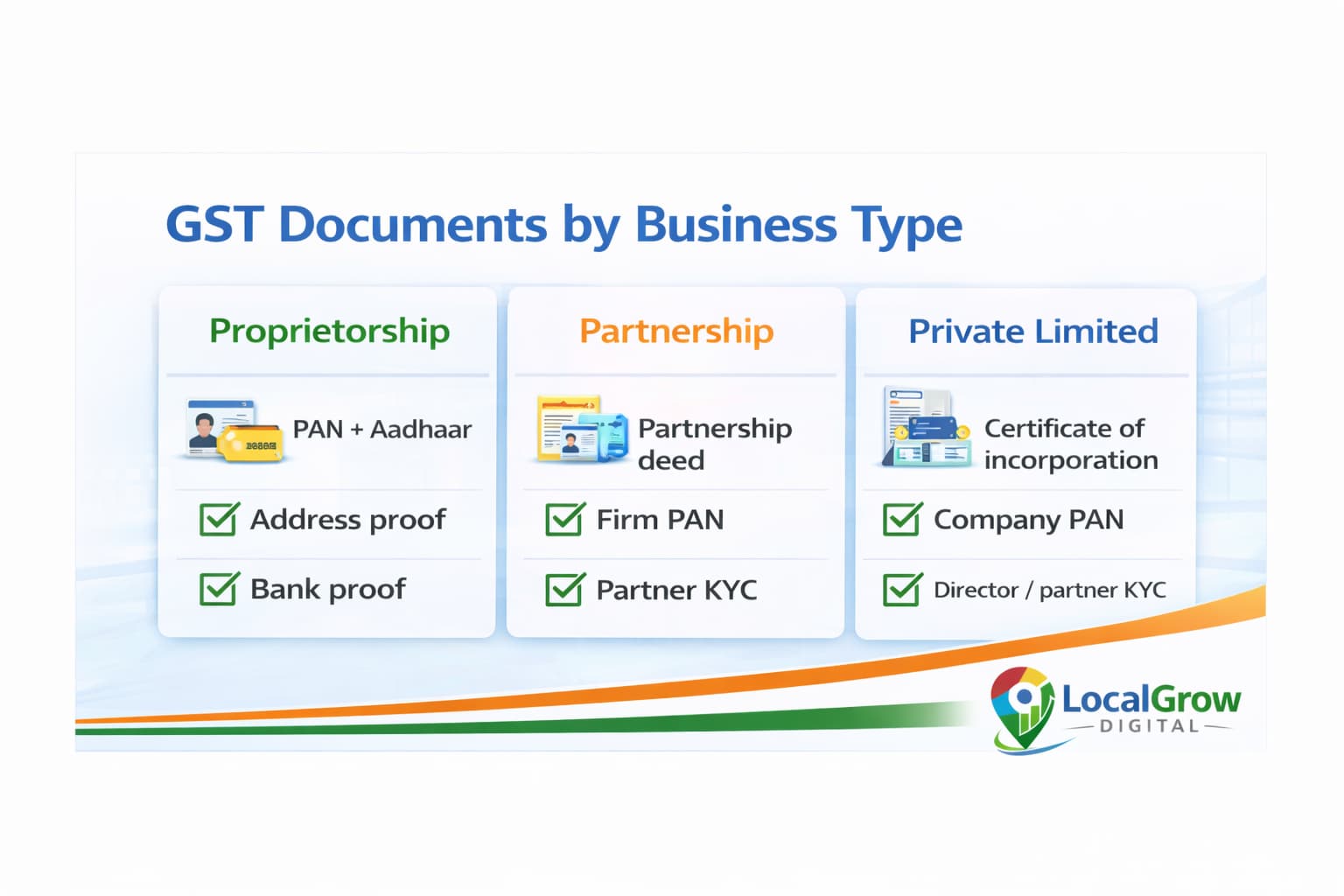
🟢 Proprietorship Firm
• PAN
• Aadhaar
• Address proof
• Bank proof
(No additional incorporation document required)
🟡 Partnership Firm
• Partnership deed
• Firm PAN
• Partner KYC documents
🔵 Private Limited / LLP
• Certificate of incorporation
• Company PAN
• Director / Partner KYC
• Authorization letter
Who Must Submit GST Registration Documents?
Every business exceeding GST threshold limit India or engaging in interstate supply or online selling must submit proper GST registration documents checklist before applying.
If you are applying as an online seller, review compliance rules under GST for online sellers in India
Documents Required for GST Registration in India: Mistakes to Avoid
Common Document Mistakes That Cause GST Registration Rejection
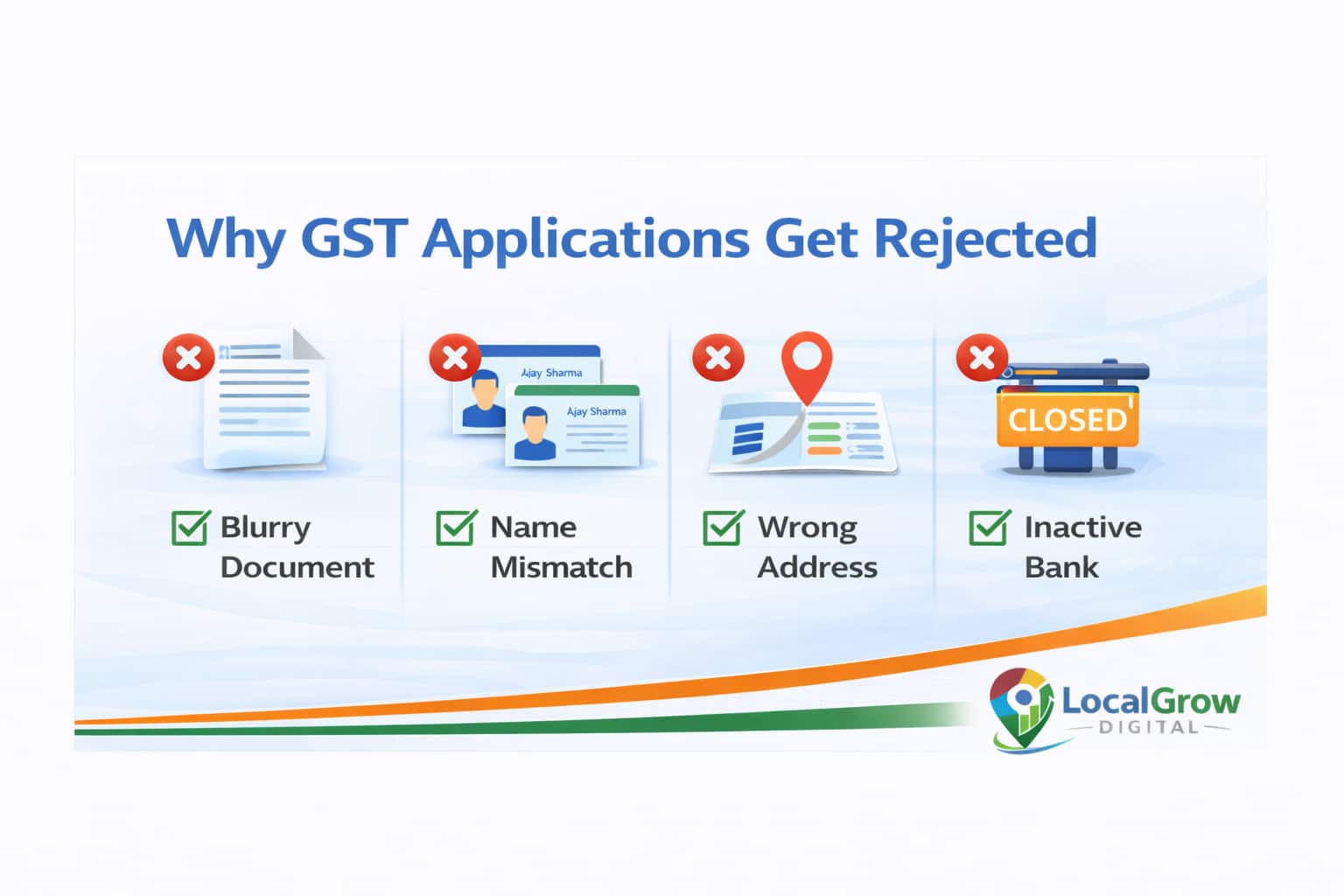
Many GST registration applications in India are rejected not because the business is ineligible, but because the documents required for GST registration in India are submitted incorrectly or contain mismatched details.
GST officers review applications under Rule 9 of CGST Rules, and discrepancies can trigger clarification notices or rejection.
If your GST application gets rejected, you should review GST registration rejected in India – top reasons and solutions
Most Common Mistakes:
• Blurry or cropped PAN / Aadhaar copy
• Electricity bill older than 2 months
• Name mismatch between PAN and bank account
• Incomplete rent agreement
• No owner NOC in rented property
• Bank account not linked properly
Even small mismatches in identity or address proof can delay approval by several weeks.
Most GST application delays occur due to mismatched PAN details, incomplete bank proof or unclear scanned documents during verification.
— GST Application Review Insights
As per Section 22 of the CGST Act, registration becomes mandatory once prescribed threshold limits are crossed. Further, Rule 8 and Rule 9 of CGST Rules govern document submission and officer verification procedures during GST registration processing.
As per GST portal guidelines, failure to respond to document clarification within prescribed timeline may result in application rejection under Rule 9.
Official GST registration guidelines can be verified directly from the Government portal under GST Registration – CBIC Official Portal
As per Section 25 of the CGST Act, every liable person must apply for registration within prescribed timelines, and documentation verification forms a mandatory part of GSTIN approval under statutory compliance norms.
Is Any Business License Required Before GST Registration?
The GST portal does not mandate additional business licenses such as shop license, trade license or MSME certificate for basic GST registration approval.
However, while MSME registration is not mandatory, it strengthens business credibility and improves loan eligibility, vendor onboarding and government scheme access.
You may explore MSME registration service for business growth and government benefits
Business Type–Specific GST Compliance Considerations
While documents required for GST registration in India differ by entity type, compliance risk also varies based on supply structure.
For example:
• Online sellers must comply with TCS provisions
• Interstate suppliers must register regardless of turnover
• Service providers must evaluate ₹20 lakh threshold
The GST registration documents checklist differs slightly depending on whether the applicant is a sole proprietor, partnership firm, LLP or private limited company. Reviewing the GST document requirements carefully before filing prevents unnecessary delay.
Preparing documents required for GST registration in India according to your legal structure reduces rejection risk and speeds up GSTIN approval.
If you are operating as a freelancer or service provider, review GST for freelancers and service providers in India
Additional GST Documentation Requirements for Online Sellers
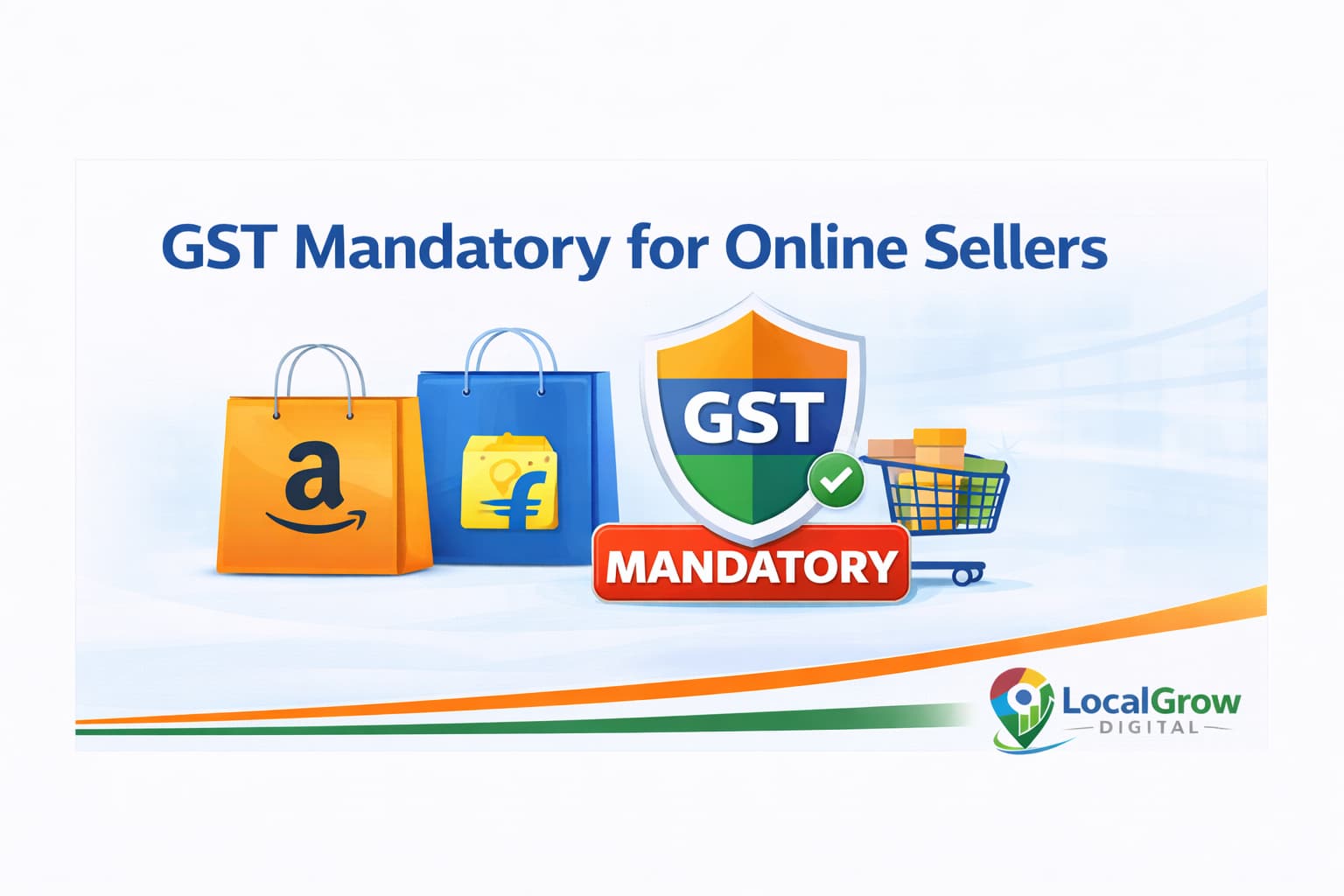
E-commerce sellers operating through Amazon, Flipkart or Meesho must register under the Regular GST scheme irrespective of turnover limits.
Marketplace platforms collect Tax Collected at Source (TCS), making GST registration compulsory before account activation.
Sellers should review complete compliance under GST for online sellers in India
Applications Approved Faster When:
- Documents are clear and uncropped
- PAN and Aadhaar names match
- Address proof is recent
- Bank account details match PAN
- Business description is accurate
Applications Delayed or Rejected When:
- Electricity bill outdated
- Rent agreement incomplete
- Owner NOC missing
- Bank proof unclear
- Incorrect mobile for OTP
Online marketplace sellers must ensure all documents required for GST registration in India are verified before platform onboarding, as e-commerce operators collect TCS under GST provisions.
How to Apply for GST Registration Without Documentation Errors
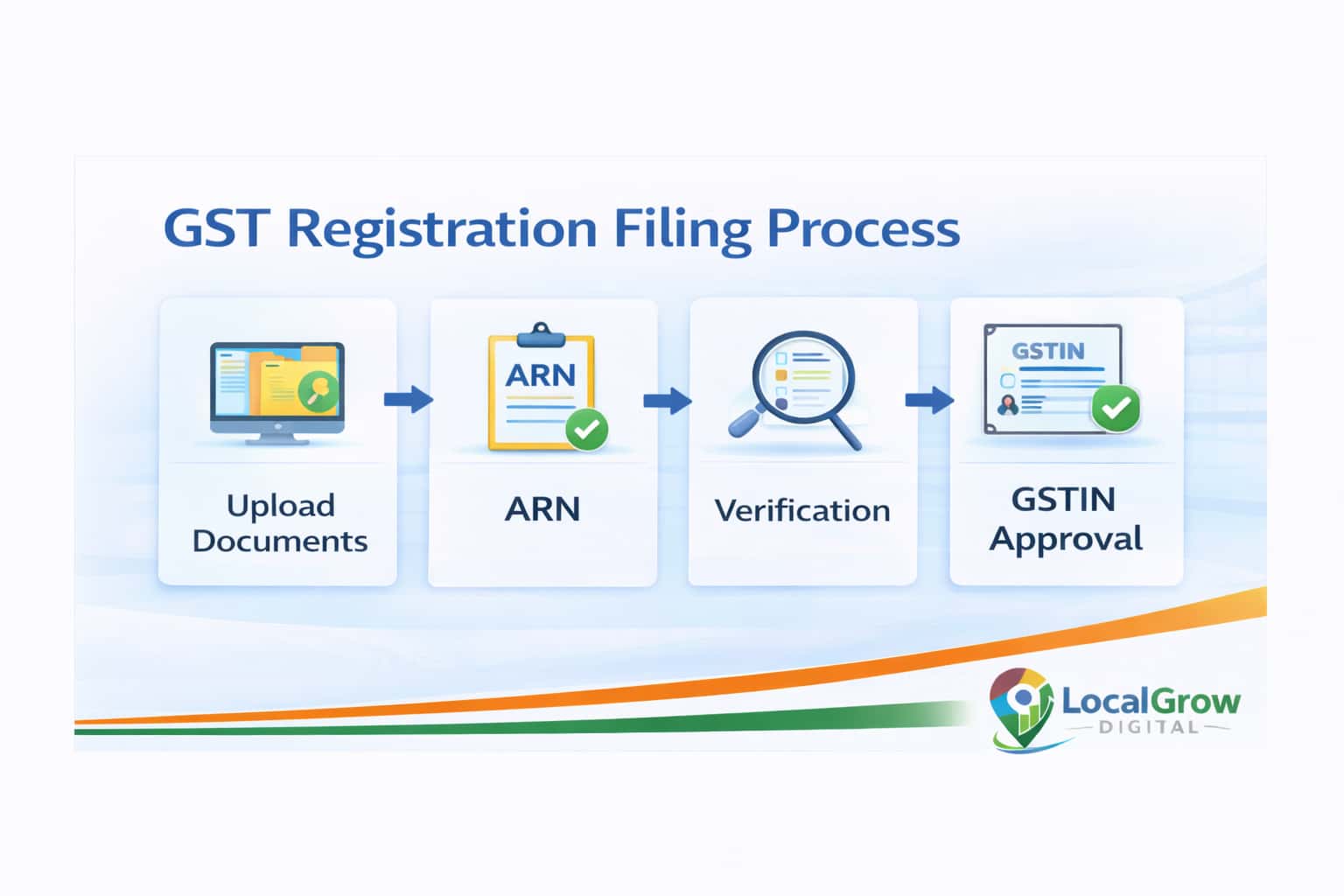
While GST registration can be filed directly on the portal, incorrect documentation often results in rejection or clarification notices.
GST officers may seek additional documents or conduct physical verification if discrepancies arise.
Using expert-assisted filing reduces compliance risk, ensures document accuracy and accelerates approval timelines.
Before filing, businesses should also review GST for retail shops and local businesses in India
And if unsure about cancellation procedures, refer to How to cancel GST registration in India – step-by-step guide
Why Accurate GST Documents Matter for Approval
Preparing accurate documents required for GST registration in India reduces clarification notices, speeds up verification and minimizes rejection risk under GST law.
Complete GST Registration Documents Checklist in India
This complete GST registration documents checklist in India summarizes all identity proof, address proof, bank documents and business-type specific documents required before applying on the GST portal.
Frequently Asked Questions on Documents Required for GST Registration in India
What are the basic documents required for GST registration in India?
The basic documents required for GST registration in India include PAN card, Aadhaar card, address proof of business location, bank account proof and a passport-size photograph. These documents help verify identity, business legitimacy and financial traceability. Without accurate PAN and matching bank details, the GST application may be rejected or delayed.
Is PAN mandatory for GST registration?
Yes. PAN is compulsory under GST law. The GST portal links registration directly with PAN. Without a valid PAN, GST registration cannot proceed under Section 22 of the CGST Act.
Is Aadhaar mandatory for GST registration?
Aadhaar authentication is required for faster approval. If Aadhaar is not authenticated, the application may undergo physical verification by GST officers, which increases processing time.
Can I apply for GST without electricity bill?
No. Address proof is mandatory. If operating from rented premises, the owner’s electricity bill and rent agreement are required. Without valid location proof, GST registration will be rejected.
Can a residential address be used for GST registration?
Yes. Home-based businesses, freelancers and small shop owners can use residential address, provided valid electricity bill and address consistency are maintained.
What bank documents are required for GST registration?
You must submit either a cancelled cheque, first page of passbook or bank statement showing account holder name, account number and IFSC code. Bank details must match PAN records.
Can I use personal bank account for GST registration?
Proprietors may use personal bank accounts. However, partnership firms and companies must use business bank accounts for compliance.
Are documents different for proprietorship and company?
Yes. Proprietorship requires PAN, Aadhaar and address proof. Companies and LLPs must submit incorporation certificate, company PAN, director KYC and authorization letter.
Is MSME registration required before GST?
No. MSME (Udyam) registration is not mandatory for GST approval. However, MSME improves loan eligibility and vendor credibility. You may also read our detailed guide on MSME registration benefits for businesses.
Do online sellers need additional GST documents?
Online sellers must submit standard GST documents, but GST registration is compulsory even if turnover is zero when selling through Amazon, Flipkart or Meesho.
What are common reasons for GST document rejection?
Common reasons include mismatched PAN details, blurry documents, old electricity bills, incomplete rent agreements and incorrect bank information.
How long does GST registration take after document submission?
If documents are correct and Aadhaar authentication is successful, GST approval typically takes 3–7 working days. Physical verification may extend this period.
Can GST application be rejected permanently?
No. Applications may be rejected due to document issues, but you can reapply with corrected documents.
Is physical verification compulsory for GST?
Physical verification is triggered when Aadhaar authentication fails or documents raise suspicion. Proper documentation reduces this risk.
Do freelancers need additional documents for GST?
Freelancers need the same basic documents but must ensure service activity description is accurate to avoid classification errors.
Are digital copies accepted for GST registration?
Yes. GST portal accepts scanned copies in prescribed format. However, documents must be clear and readable.
What size or format should documents be uploaded in?
GST portal requires specific file size limits (usually under 1 MB per file) and supports PDF/JPEG formats. Oversized files may cause upload errors.
Is shop license mandatory for GST?
No. GST portal does not mandate shop license for registration approval.
Can GST registration be cancelled later?
Yes. If business closes, GST registration can be cancelled by filing cancellation application on the portal.
Do service providers need different address proof?
No. Address proof rules remain same for service providers and traders.
Is electricity bill mandatory for rented property?
Yes. Rent agreement alone is insufficient. Owner’s electricity bill plus NOC is required.
Can I update documents after GST approval?
Yes. Amendments can be filed through GST portal if business address or bank details change.
Do multiple branches require separate documents?
Yes. Each branch must provide address proof. However, registration is PAN-based.
Is GST mandatory for online marketplace sellers even with zero turnover?
Yes. E-commerce selling triggers compulsory registration regardless of turnover exemption.
Does GST require business logo or letterhead?
No. Business logo or letterhead is not mandatory for GST registration.
Can mismatched bank account cause GST notice?
Yes. Name mismatch between PAN and bank account frequently triggers clarification notice.
Is partnership deed compulsory for partnership GST registration?
Yes. Partnership deed is mandatory for verification of legal constitution.
Is GST required for small shops below turnover limit?
Not always. If operating purely intra-state and below threshold, registration may not be mandatory.
Can GST application be tracked online?
Yes. Application status can be tracked using ARN number on GST portal.
Where can official GST document rules be verified?
Official documentation requirements can be verified on the Government GST Portal (gst.gov.in).
What happens if wrong documents are submitted during GST registration?
Submitting incorrect documents required for GST registration in India can trigger a clarification notice under Rule 9. The applicant must respond within the prescribed timeline. Failure to reply can lead to application rejection, requiring fresh filing and delaying business compliance.
What documents are required for GST registration for proprietorship in India?
For a proprietorship business, the documents required for GST registration in India include the proprietor’s PAN card, Aadhaar card (linked with mobile number for OTP verification), recent passport-size photograph, and active email ID. Address proof of the business place is mandatory — such as electricity bill (for own property) or rent agreement with owner NOC (for rented premises).
In addition, bank account proof must be submitted in the form of a cancelled cheque, bank statement, or first page of passbook showing account holder name, account number, and IFSC code. Since proprietorship and individual PAN are the same, no separate incorporation certificate is required. However, all documents must match PAN details to avoid GST ARN rejection under Rule 9 of CGST Rules.
Can GST registration be approved without bank documents?
No, GST registration in India cannot be approved without valid bank account proof. The GST portal requires submission of a cancelled cheque, bank statement, or passbook copy to verify the financial identity of the applicant. The bank account must reflect the name of the applicant or business entity and should match PAN details.
If bank proof is missing, mismatched, inactive, or unclear, the GST officer may issue a clarification notice or reject the application. Proper bank verification ensures smoother GSTIN approval and reduces the risk of delays during document scrutiny. Therefore, correct bank documents required for GST registration in India are mandatory for successful approval.
Most GST rejections are not due to eligibility issues but due to incorrect documents required for GST registration in India.
— Compliance Advisory Note
Start Your GST Registration with Proper Documents
Preparing the correct documents required for GST registration in India ensures faster approval and prevents costly delays or rejections.
At LocalGrow Digital, we verify every document before submission, handle portal filing and provide support until GST number is approved.