
Local SEO for businesses depends on how Google decides local rankings on Google Maps when customers search for nearby services. When customers search for nearby services, Google evaluates multiple local ranking factors to decide which businesses appear in the Map Pack and local search results.
Understanding Google Maps ranking factors helps businesses improve visibility, attract nearby customers, and generate consistent calls and leads without relying only on paid advertising.
To understand local SEO strategies in depth, businesses should first learn how local SEO works for improving Google Maps visibility and long-term local growth.
A properly optimized Google Business Profile plays a foundational role in how businesses rank on Google Maps and local search results.
Table of Contents
What Are Local SEO Ranking Factors for Businesses on Google Maps?
Google Maps local rankings are determined by a combination of signals that help Google show the most relevant and useful businesses for a local search query. These signals are designed to match user intent while prioritizing proximity and trust.
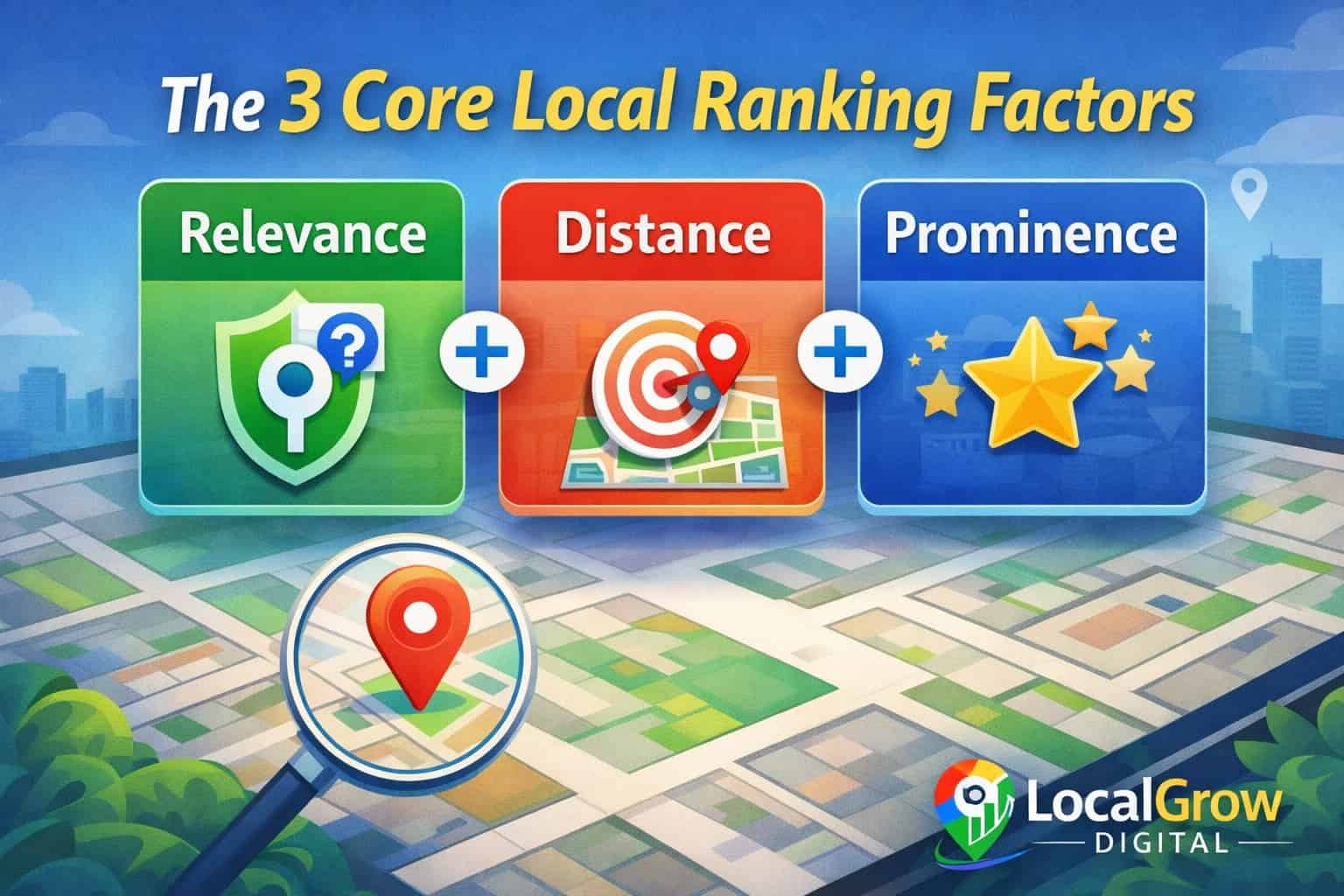
While Google uses hundreds of signals behind the scenes, most local rankings are influenced by three core factors that form the backbone of Google Maps ranking logic.
The 3 Core Factors Google Uses to Rank Businesses Locally
- Relevance
- Distance
- Prominence
According to Google, local search rankings are primarily based on relevance, distance, and prominence to ensure users see the most helpful nearby results.
How Relevance Affects Google Maps Rankings
Relevance refers to how well a business matches what a user is searching for. Google analyzes business categories, services, descriptions, and website content to determine relevance for local queries.
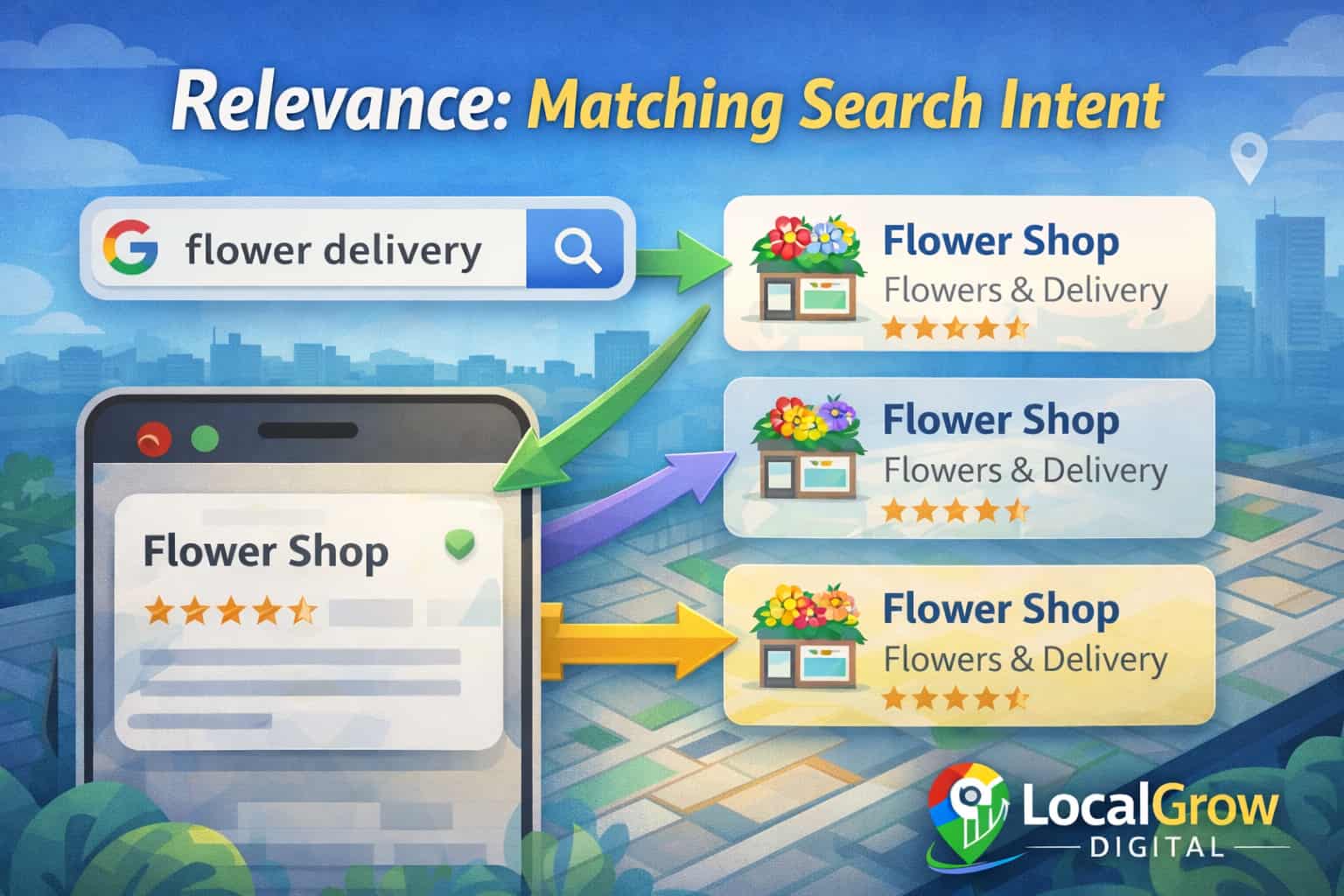
Businesses that clearly define their services and categories are more likely to appear for relevant Google Maps searches. Poor relevance signals can limit visibility even if a business is nearby.
Relevance Optimization Checker (Tool)
This tool will help businesses evaluate whether their Google Business Profile and website content are aligned with relevant local search intent.
How Distance and Proximity Influence Google Maps Visibility
Distance measures how close a business is to the location implied in a search query. When a user does not specify a location, Google calculates distance based on known location data.
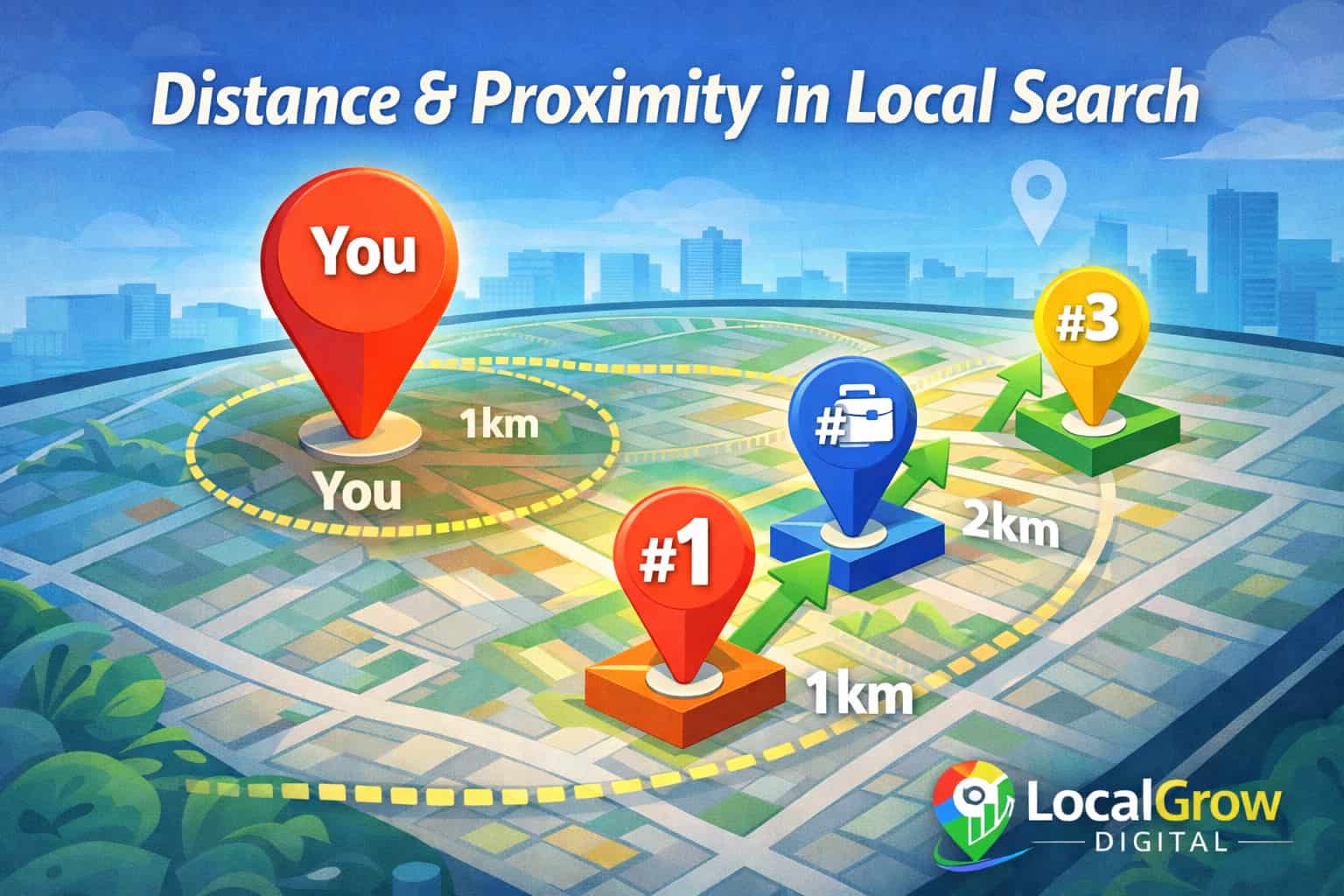
Distance is not something businesses can directly control, but strong relevance and prominence signals can help offset proximity limitations in competitive areas.
What Prominence Means in Google Maps Rankings
Prominence reflects how well-known and trusted a business is online. Google evaluates prominence using reviews, citations, brand mentions, backlinks, and overall digital authority.
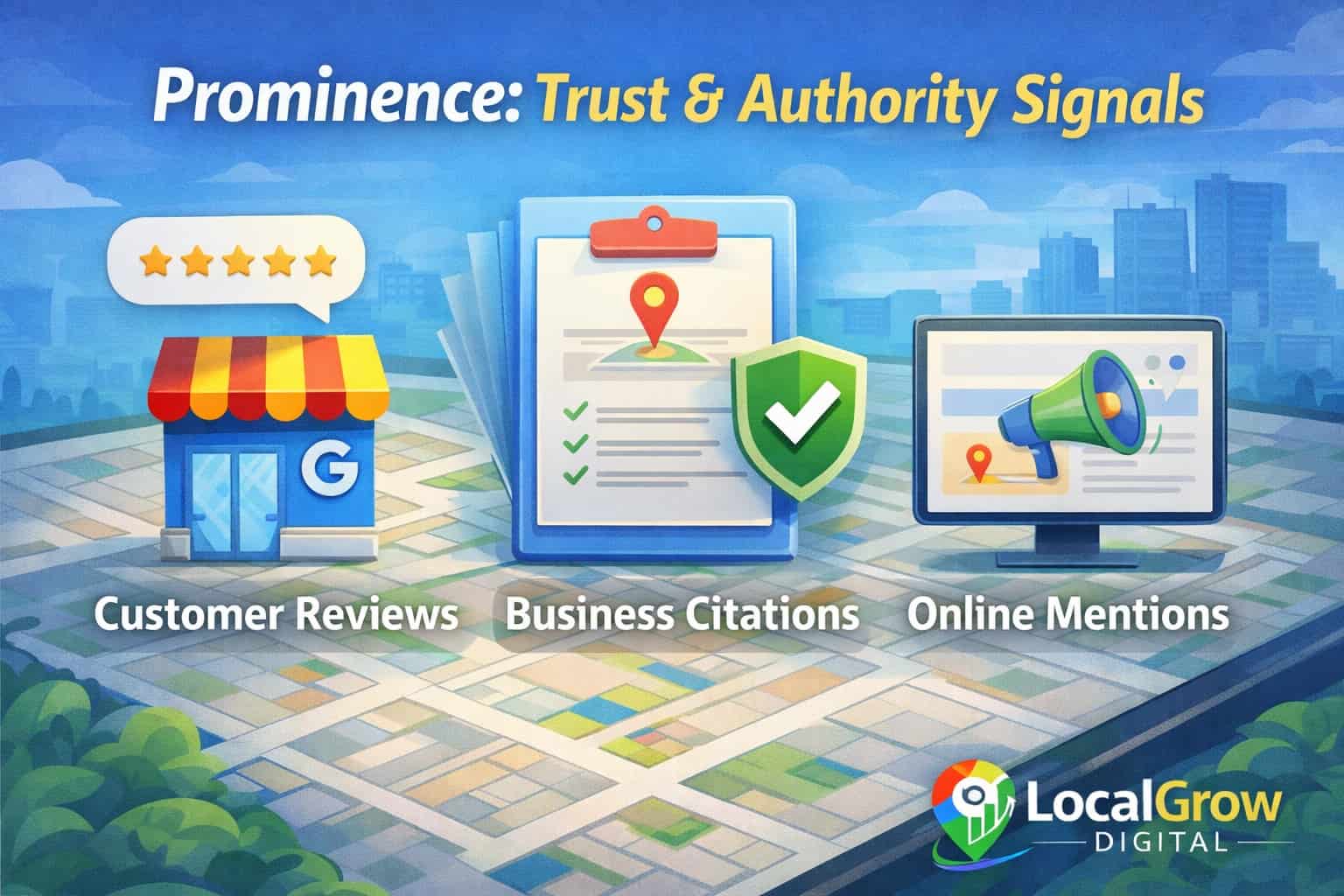
Businesses with consistent reviews, accurate business information, and strong online presence often rank higher on Google Maps, even when competing with closer businesses.
Review Velocity & Trust Score Tool
This tool will measure review growth patterns and trust signals affecting local rankings.
Why Some Businesses Rank Higher on Google Maps
Competitors often rank higher due to stronger category selection, better review consistency, higher prominence, and better alignment with Google’s local ranking factors.
Common Myths About Google Maps Rankings
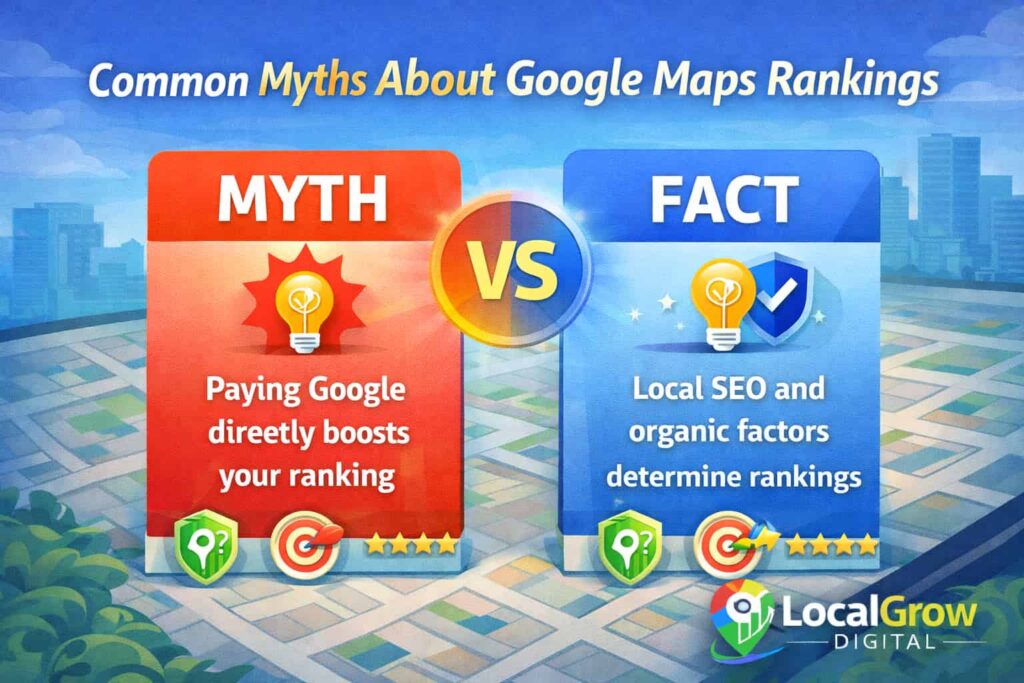
Many businesses believe myths such as frequent keyword stuffing or fake reviews can improve rankings. In reality, these tactics often reduce trust and visibility.
Related Google Maps Ranking Guides
If your business is facing specific Google Maps issues, the following detailed guides explain common ranking problems and practical solutions.
business ranking dropped on Google Maps
get more calls from Google Maps listing
Google Business Profile reviews not showing
If your business is struggling to appear on Google Maps or attract local customers, professional optimization can help improve visibility and long-term local search performance.
Frequently Asked Questions About Google Maps Local Rankings
How does Google decide local rankings on Google Maps?
Google decides local rankings on Google Maps using relevance, distance, and prominence to show the most useful businesses for a local search query.
What is local SEO for businesses and why does it matter?
Local SEO for businesses is the process of optimizing a business to rank higher on Google Maps and local search results to attract nearby customers.
What are the main Google Maps ranking factors?
The main Google Maps ranking factors are relevance, distance, and prominence, which together determine local visibility.
How does relevance affect Google Maps rankings?
Relevance affects Google Maps rankings by matching business categories, services, and content with what users are searching for.
What does prominence mean in Google Maps rankings?
Prominence refers to how well-known and trusted a business is online through reviews, citations, and brand mentions.
Can local SEO for businesses improve Google Maps visibility?
Yes, local SEO for businesses improves Google Maps visibility by optimizing Google Business Profile, reviews, and website signals.
Why do some businesses rank higher on Google Maps than others?
Some businesses rank higher due to stronger local SEO signals, better reviews, higher prominence, and accurate business information.
Is Google Business Profile required for local SEO for businesses?
Yes, Google Business Profile is essential for local SEO for businesses because it directly affects Google Maps rankings.
How important are reviews for Google Maps rankings?
Reviews are important because they build trust and prominence, which strongly influence Google Maps rankings.
Does replying to reviews help local SEO?
Yes, replying to reviews shows engagement and trust, which supports local SEO for businesses.
Can a business rank on Google Maps without a website?
A business can appear on Google Maps without a website, but a website strengthens local SEO and long-term rankings.
How long does local SEO for businesses take to show results?
Local SEO results usually take a few weeks to a few months depending on competition and optimization level.
What mistakes hurt Google Maps local rankings?
Common mistakes include incorrect categories, inconsistent business details, fake reviews, and keyword stuffing.
How does website SEO support Google Maps rankings?
Website SEO supports Google Maps rankings by providing relevance, authority, and location signals.
How does local SEO for businesses help generate leads?
Local SEO helps generate leads by improving visibility when customers search for nearby services on Google Maps.
What is the difference between local SEO and traditional SEO?
Local SEO focuses on ranking for location-based searches and Google Maps, while traditional SEO targets broader search results.
Can small businesses compete with big brands using local SEO?
Yes, small businesses can compete using local SEO by optimizing relevance, reviews, and prominence.
How often should Google Business Profile be updated?
Google Business Profile should be updated regularly to maintain accuracy and improve local SEO performance.
Is local SEO for businesses a one-time process?
No, local SEO for businesses is an ongoing process that requires continuous optimization and monitoring.