
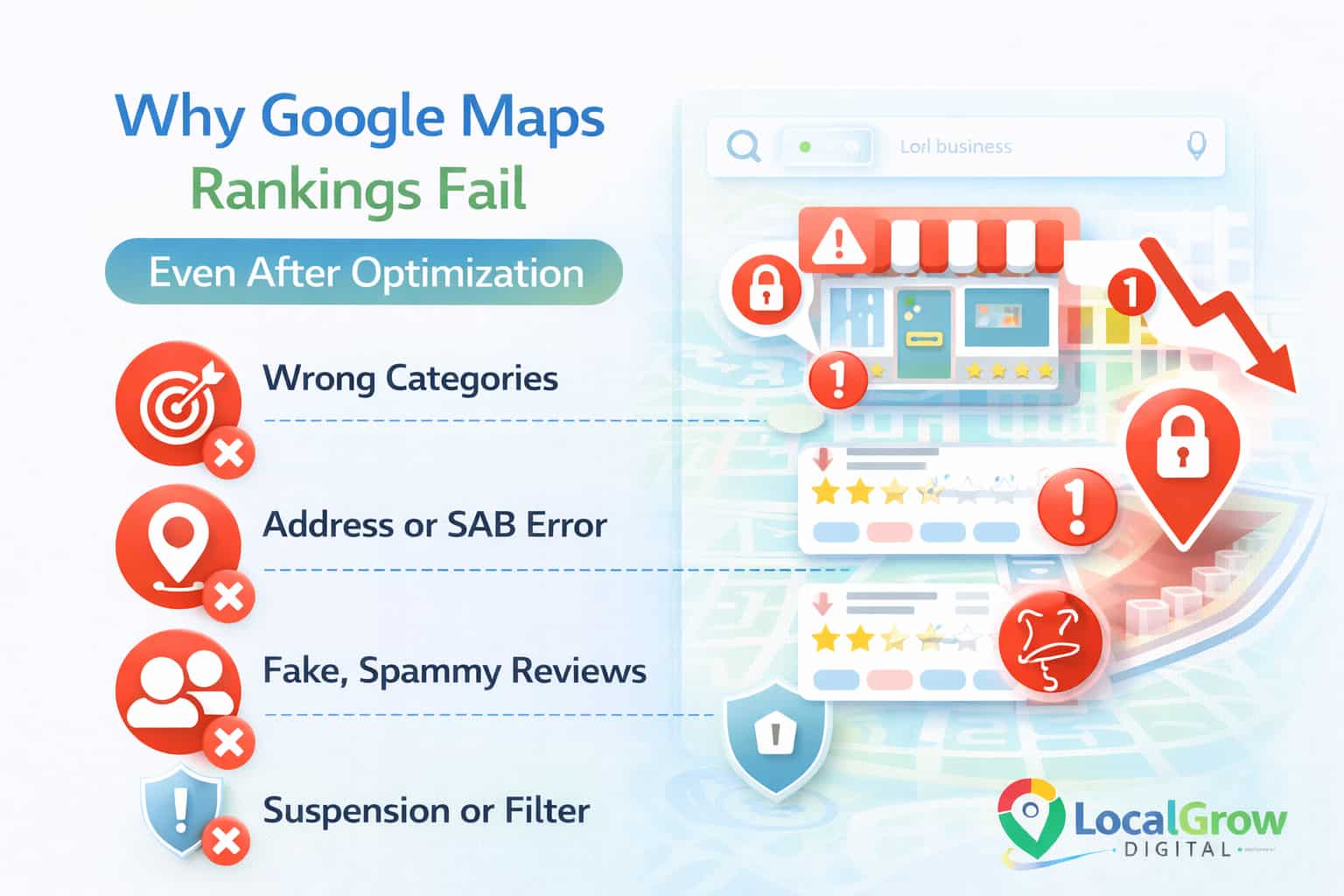
Google Maps ranking not improving is one of the most common and frustrating problems businesses face after setting up and optimizing their Google Business Profile. Even after adding services, collecting reviews, and updating business information, many listings remain stuck without any visible ranking growth.
Google Maps ranking not improving is one of the most common and frustrating problems businesses face after setting up and optimizing their Google Business Profile. Even after adding services, collecting reviews, and updating business information, many listings remain stuck without any visible ranking growth.
This usually happens because Google Maps rankings are controlled by multiple hidden trust, relevance, and behavioral signals that most businesses are unaware of. If even one of these signals is weak or misconfigured, Google may silently suppress visibility without issuing any warning.
Before diagnosing ranking stagnation, it is important to understand how local SEO for businesses works and how Google evaluates relevance, distance, and prominence when ranking listings on Google Maps.
Table of Contents
Why Google Maps Ranking Is Not Improving for Many Businesses
Google Maps rankings often stop improving when Google detects weak trust signals, inconsistent data, low engagement, or incomplete relevance confirmation. Unlike traditional SEO, Google Maps relies heavily on real-world signals and behavioral validation.
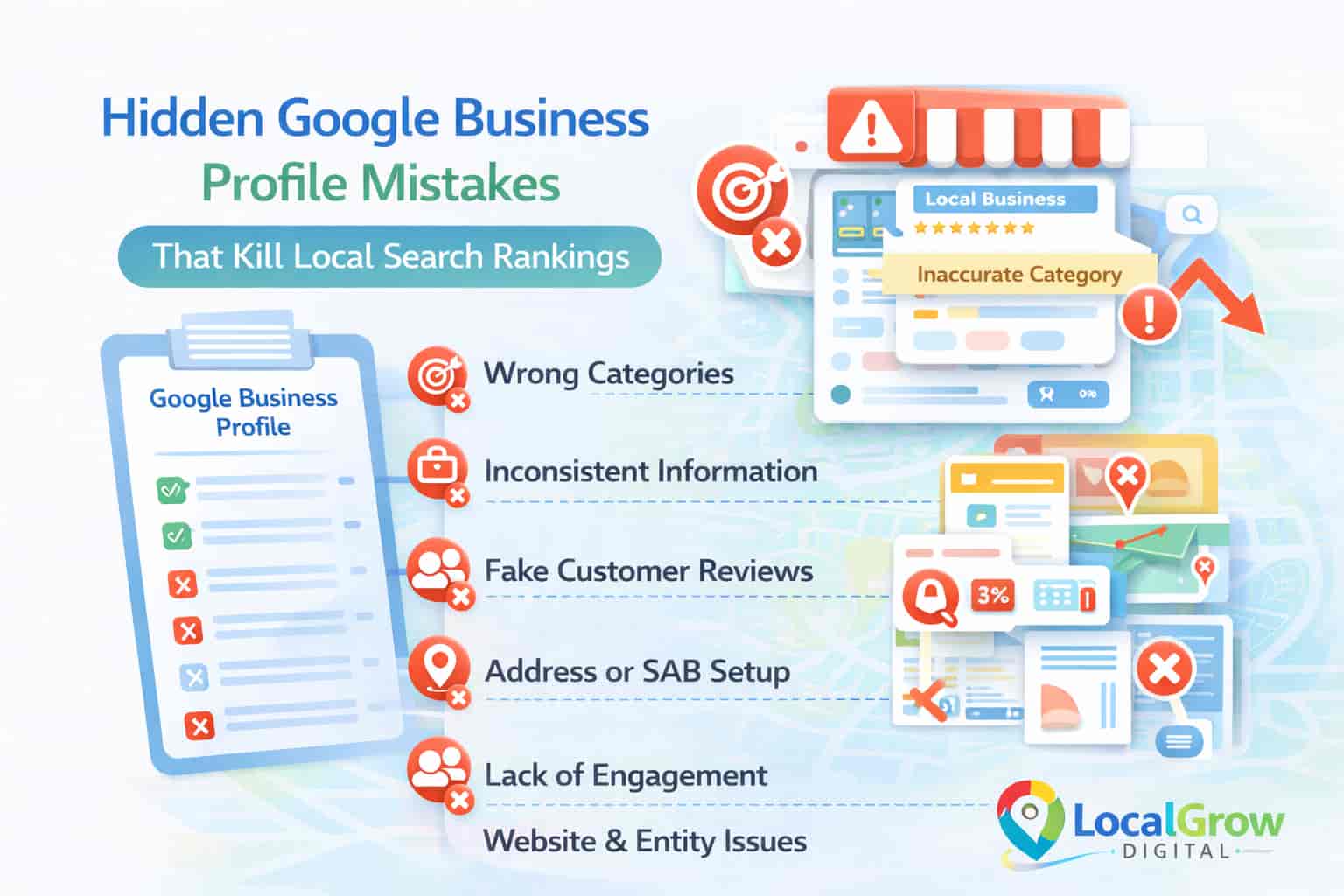
Even small issues such as category mismatches, address ambiguity, or inactive profile behavior can prevent Google from increasing your visibility, even if your business is legitimate and verified.
When Google Maps ranking not improving becomes a long-term issue, it usually indicates deeper trust or relevance problems rather than simple optimization gaps.
Hidden Google Business Profile Issues That Block Rankings
Many Google Maps ranking problems are caused by hidden profile-level issues that are not visible inside the dashboard. These issues silently reduce trust and prevent algorithmic promotion.
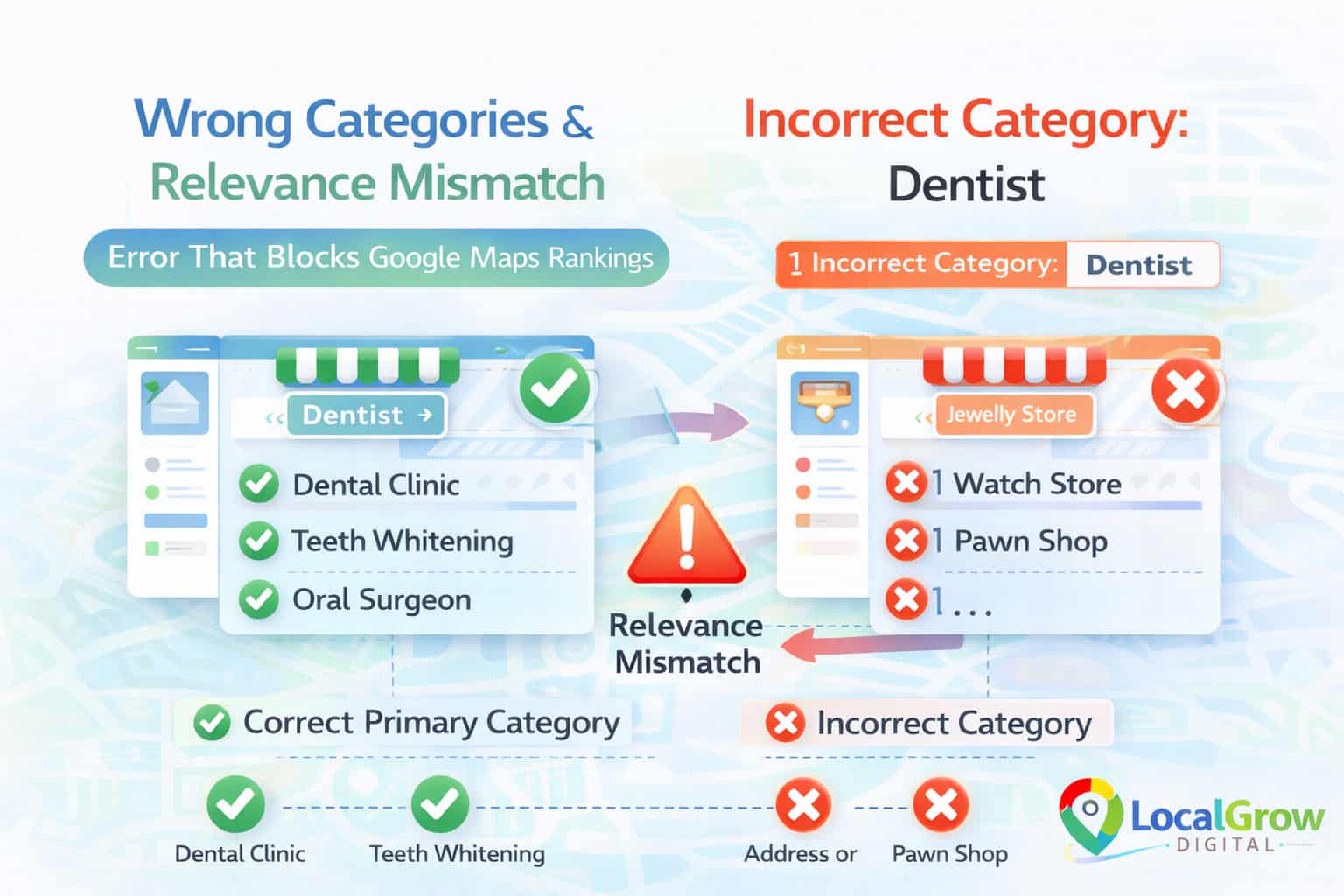
- Incorrect or overly broad primary category
- Service areas that do not match real-world coverage
- Inconsistent business identity signals
- Profile edits triggering soft re-verification
- Suspicious or low-quality engagement patterns
What Google Sees
Google evaluates business legitimacy through data consistency, behavioral signals, and trust validation patterns collected across Maps, Search, and user interactions.
What Business Owners See
Business owners often see a fully verified profile with services, photos, and reviews, but are unaware of hidden filters and trust dampeners affecting visibility.
Address and Service Area Business Configuration Problems
Address visibility and service area business configuration play a major role in Google Maps trust evaluation. Incorrect address settings or unrealistic service coverage can suppress rankings even for verified listings.
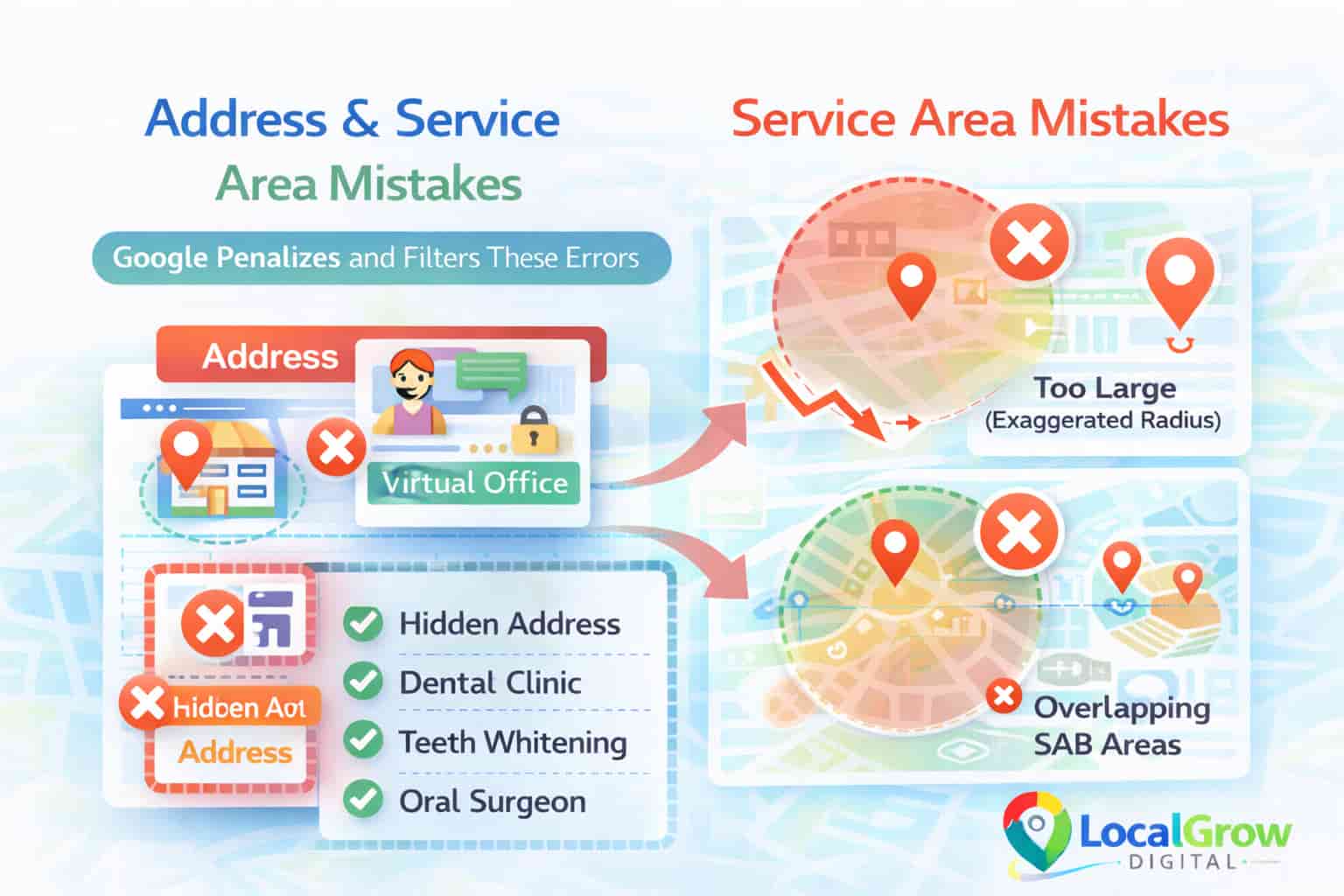
Service area businesses are evaluated differently from storefront locations, and Google applies stricter filters to prevent spam and false location representation.
How Review Patterns Prevent Google Maps Ranking Growth
Reviews are not only a trust signal but also a behavioral validation factor. Poor review velocity, unnatural review timing, or lack of owner responses can stall Google Maps rankings.
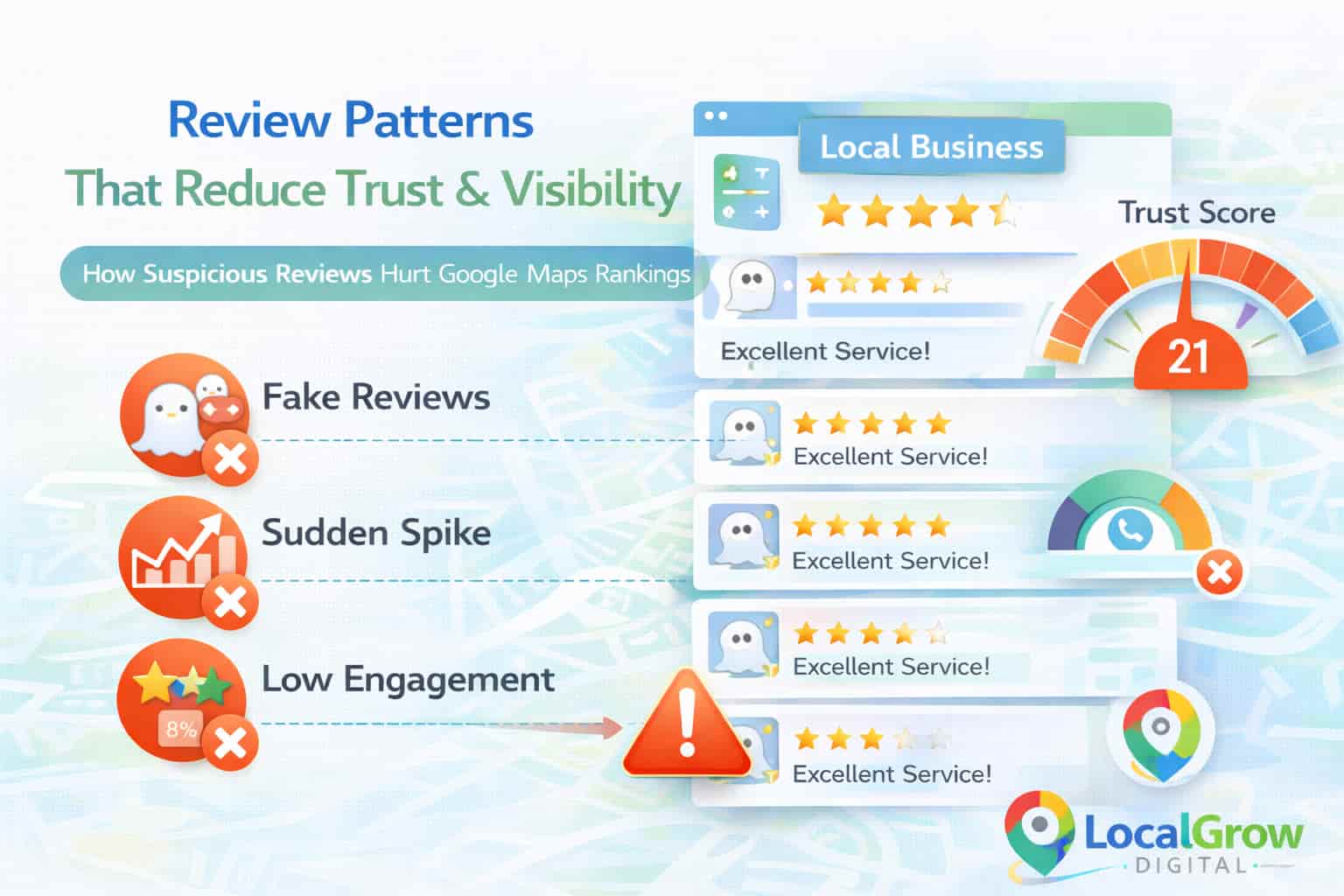
Google evaluates review consistency, authenticity, and engagement quality rather than just star ratings. Sudden spikes or inactive review periods can reduce confidence in ranking stability.
Related Google Maps Ranking Guides
Many ranking stagnation issues are connected to deeper Google Maps signals such as why businesses never rank on Google Maps and how sudden Google Maps ranking drops occur after profile edits or algorithmic trust resets.
Weak Website Signals That Limit Google Maps Visibility
When Google cannot fully validate business relevance through the Google Business Profile alone, it relies heavily on website signals to confirm legitimacy, service accuracy, and geographic alignment.
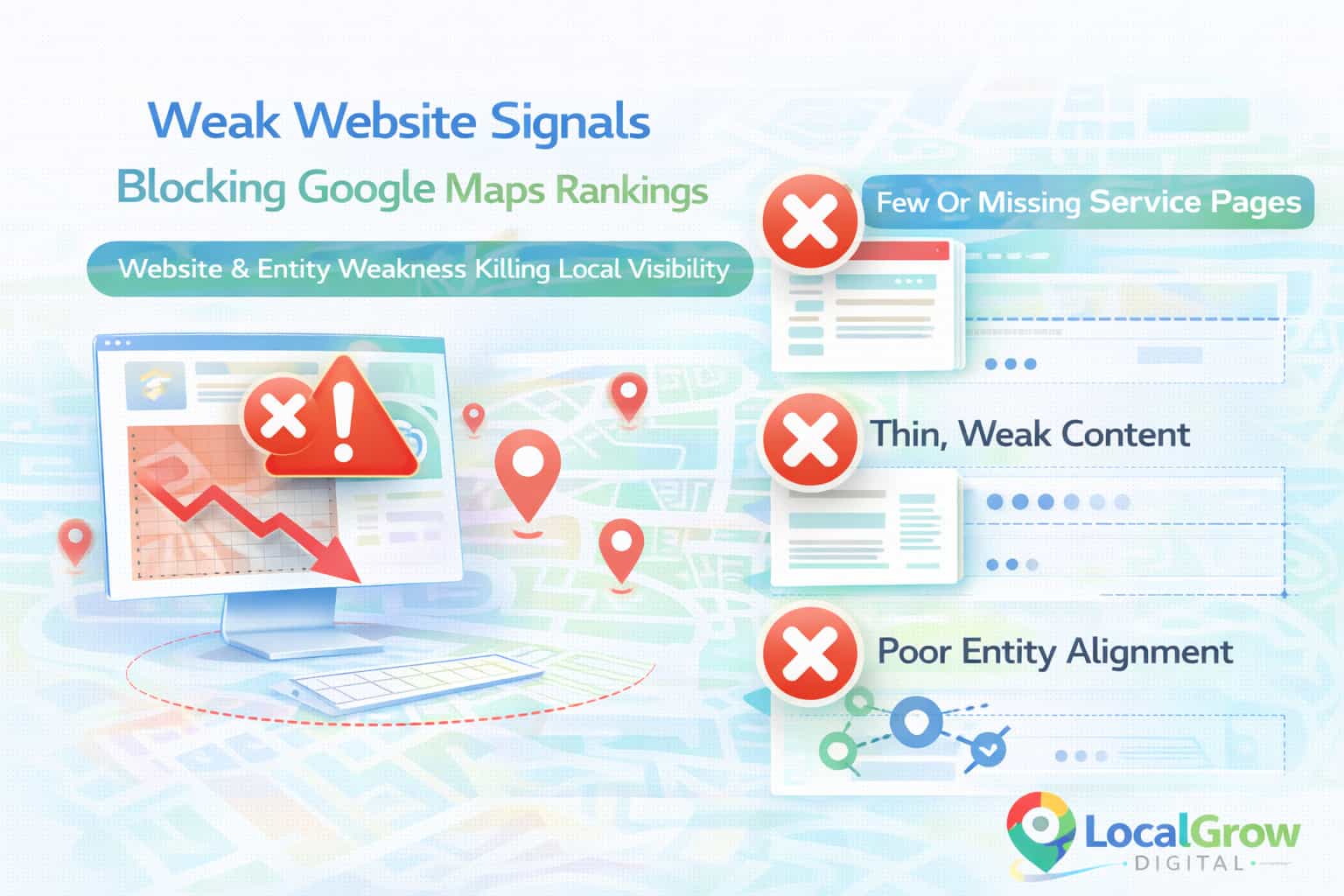
Thin service pages, unclear service coverage, or missing local relevance signals on the website can directly block Google Maps ranking improvements.
Google explains that relevance, distance, and prominence are the primary factors used to determine which businesses appear in Google Maps local results.
— Google Business Profile Help Documentation
Inactivity and Engagement Gaps in Google Business Profile
Google favors actively managed profiles. Listings with outdated posts, no recent updates, or low user interaction often fail to gain ranking momentum.
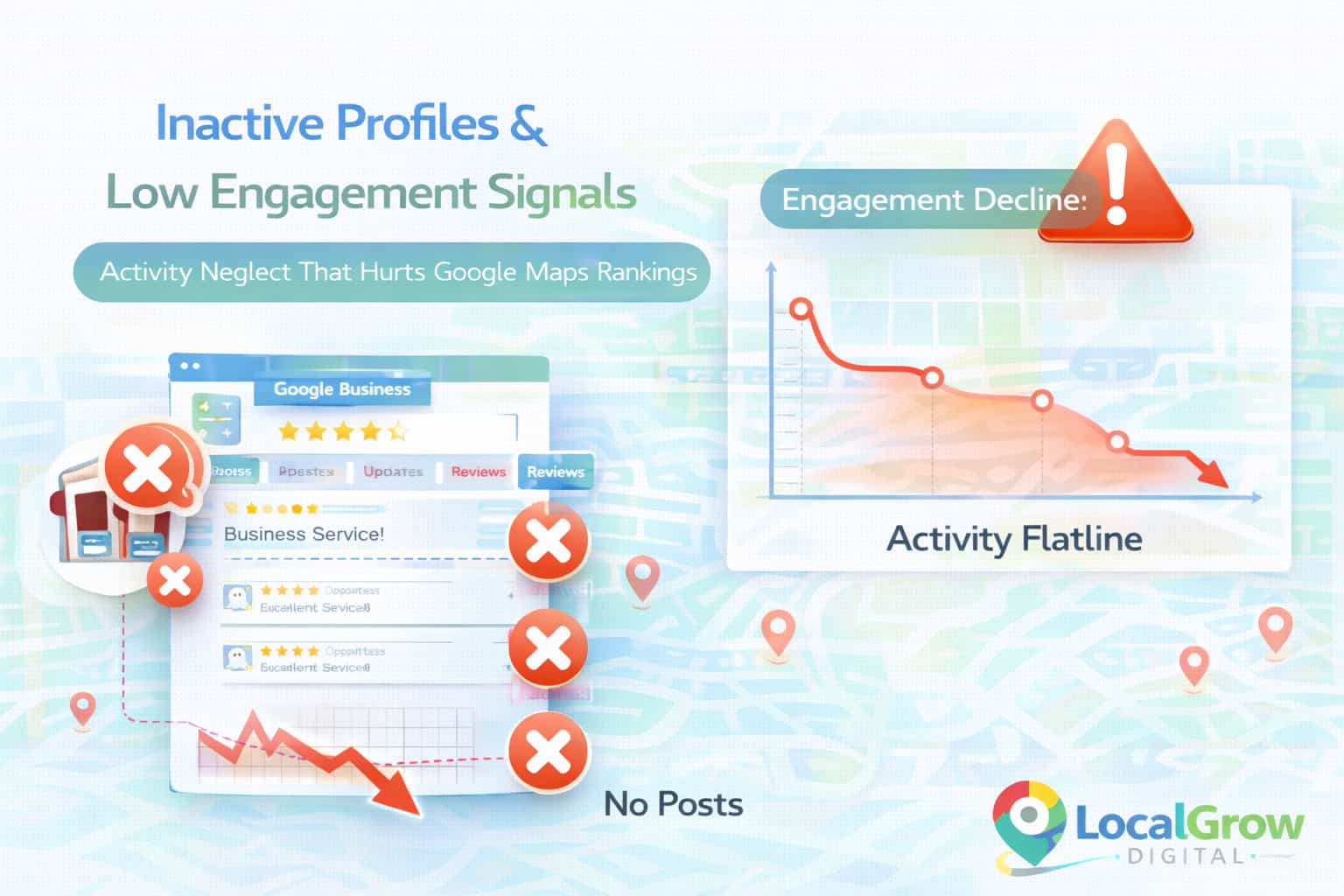
Regular activity signals help Google confirm that a business is operational, responsive, and relevant to users searching nearby.
Category and Relevance Mismatch That Stops Google Maps Ranking Growth
One of the most overlooked reasons a Google Maps ranking does not improve is category mismatch. Even when a business selects a popular category, Google may suppress visibility if the category does not precisely match search intent.
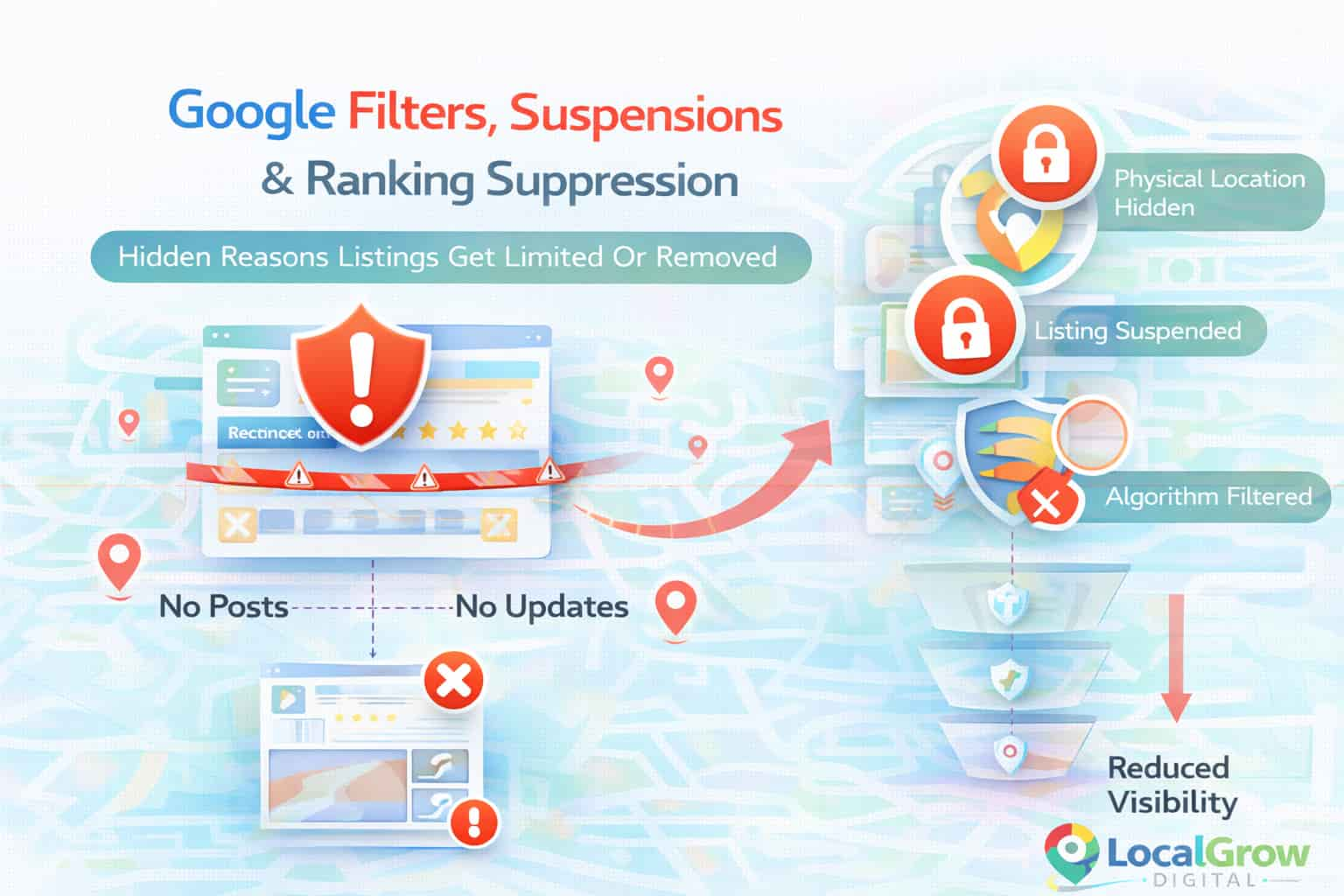
Google prioritizes relevance accuracy over category popularity. A slightly incorrect primary category can prevent ranking growth even when reviews, proximity, and engagement appear strong.
Google officially explains how Google Business Profile categories affect local rankings by using them to determine relevance, visibility eligibility, and competitive comparison on Google Maps.
Why Google Trust Stops Increasing for Some Businesses
Google Maps rankings improve only when trust signals continue to grow. When trust plateaus, Google pauses ranking movement to prevent manipulation and verify long-term legitimacy.
Trust decay can occur due to frequent profile edits, inconsistent citations, review manipulation patterns, or business behavior that does not align with real-world expectations.
Why Competitors Keep Ranking Higher on Google Maps
Competitors that outrank you often benefit from older trust signals, stronger behavioral data, and sustained engagement history rather than superior optimization alone.
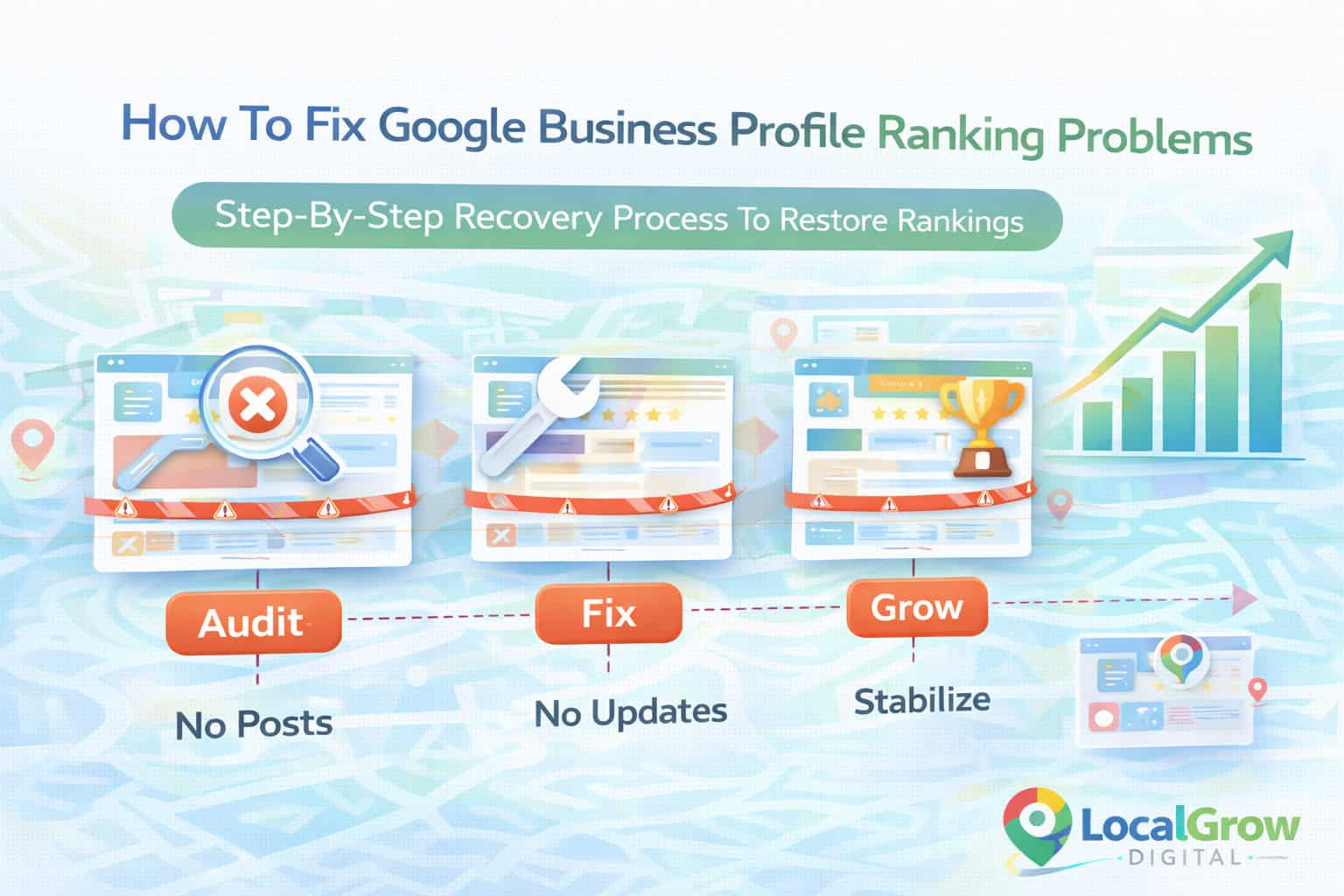
Google compares businesses within the same relevance cluster and rewards those with consistent authority over time, not just recent optimization activity.
If competitors remain ahead despite optimization, understanding why some businesses never rank on Google Maps helps identify hidden authority gaps and trust limitations.
When Google Maps ranking not improving becomes a long-term issue, it usually indicates deeper trust or relevance problems rather than simple optimization gaps.
How Google Combines Signals to Decide Google Maps Rankings
Google Maps rankings are not based on a single factor. Google algorithmically combines relevance, distance, prominence, engagement, and trust signals to determine final visibility.
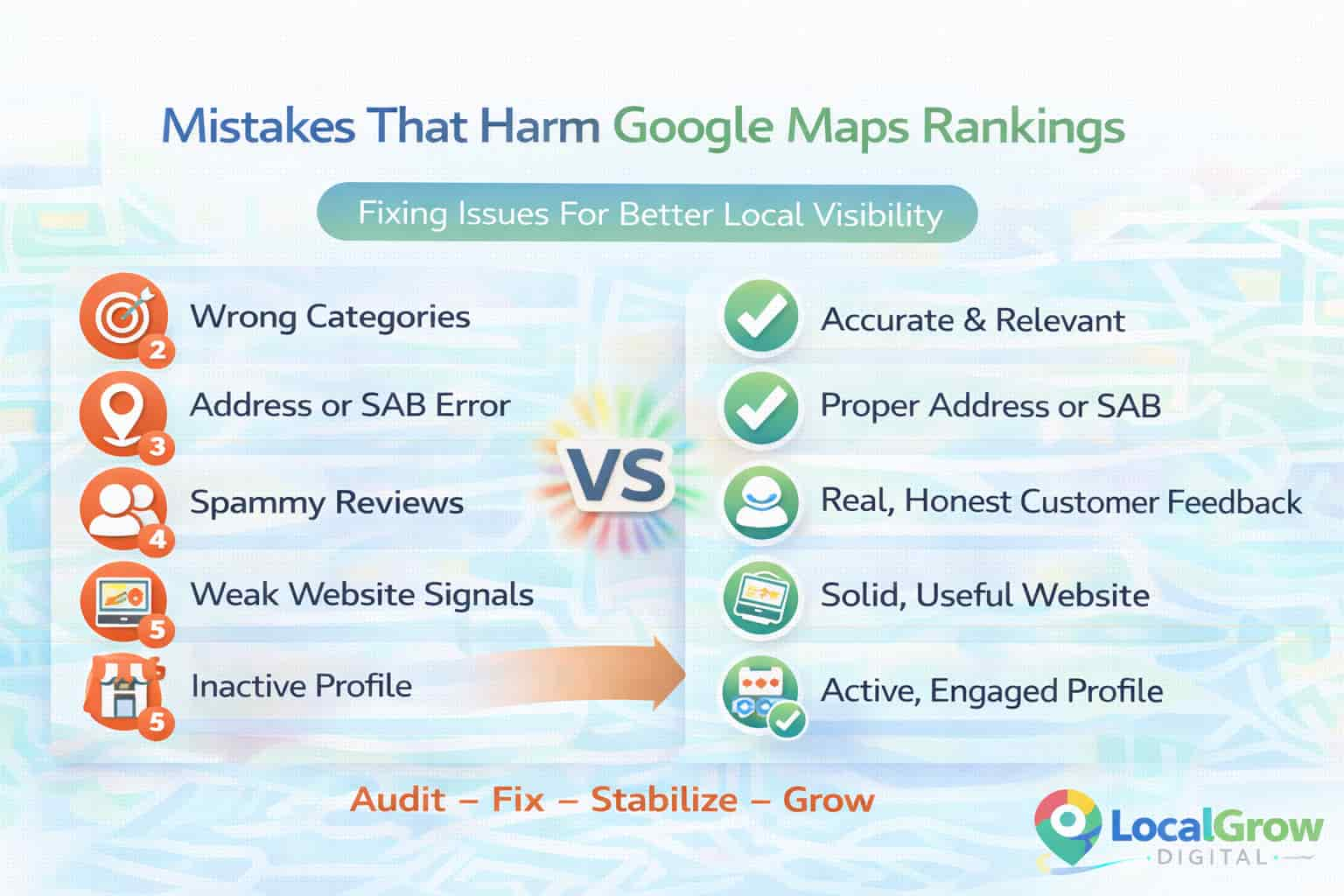
Improving only one signal rarely leads to ranking growth. Google expects balanced improvement across profile accuracy, website validation, reviews, engagement, and real-world behavior.
Google Maps visibility does not increase simply by adding information. Rankings improve when Google gains confidence that a business is real, relevant, and trusted by users in the real world.
How to Fix a Google Maps Ranking That Is Not Improving
Fixing a stalled Google Maps ranking requires identifying which trust or relevance layer is holding the profile back and correcting it systematically rather than making random edits.
- Correct primary and secondary category alignment
- Strengthen website relevance and service clarity
- Normalize review velocity and response behavior
- Increase real engagement signals
- Reduce unnecessary profile edits
Frequently Asked Questions About Google Maps Ranking Not Improving
Why is my Google Maps ranking not improving even after optimization?
Google Maps ranking may not improve if Google detects weak trust signals, inconsistent relevance, poor engagement, or unresolved profile conflicts. Unlike traditional SEO, Google Maps requires real-world validation over time.
How long does it take for Google Maps ranking to improve?
Most businesses see movement within 2–8 weeks, but competitive areas or trust-deficient profiles can take 3–6 months of consistent signals before noticeable improvement.
Can frequent Google Business Profile edits slow ranking growth?
Yes. Excessive edits can trigger soft re-verification or trust resets, temporarily freezing Google Maps ranking improvements.
Does adding more reviews always improve Google Maps ranking?
No. Google evaluates review velocity, authenticity, diversity, and response behavior, not just total review count.
Why do competitors rank higher even with fewer reviews?
Competitors may have stronger historical trust, better relevance alignment, or higher engagement signals despite fewer reviews.
Can wrong categories stop Google Maps ranking improvement?
Yes. Incorrect primary or secondary categories are one of the top hidden blockers of Google Maps visibility.
Does hiding my address affect Google Maps rankings?
For service area businesses, hiding the address is allowed, but improper service area setup can reduce ranking potential.
Why is my business visible on Search but not improving on Maps?
Google Search and Google Maps use different ranking systems. Maps relies more on proximity, trust, and behavioral signals.
Can website SEO impact Google Maps ranking growth?
Yes. Weak or irrelevant website signals can prevent Google from validating business relevance and authority.
Do Google Business Profile posts help rankings?
Indirectly, yes. Posts increase engagement and freshness signals, which support ranking stability and growth.
Does replying to reviews help Google Maps rankings?
Yes. Review responses demonstrate activity, trust, and customer engagement, which Google tracks.
Why does my Google Maps ranking fluctuate but not improve?
Fluctuations often indicate algorithm testing, competitor activity, or unstable trust signals.
Can duplicate listings stop ranking growth?
Yes. Duplicate or conflicting profiles confuse Google and dilute authority.
Does proximity still matter for Google Maps rankings?
Yes. Distance remains a core factor, but relevance and prominence can sometimes outweigh proximity.
Can service area radius settings affect rankings?
Yes. Unrealistic or overly large service areas can reduce trust and suppress rankings.
Why does Google sometimes freeze Maps rankings?
Google may pause ranking movement to verify legitimacy, prevent spam, or evaluate long-term behavior.
Do citations still matter for Google Maps ranking improvement?
Yes. Consistent Name, Address, and Phone (NAP) data reinforces trust signals.
Can low engagement prevent ranking growth?
Yes. Low clicks, calls, or direction requests signal weak user interest to Google.
Are Google Maps rankings affected by business age?
Older businesses often benefit from accumulated trust, but new businesses can still rank with strong signals.
Does Google penalize over-optimization on Maps?
Yes. Keyword stuffing, fake reviews, or unnatural edits can suppress rankings.
Can Google Maps ranking improve without a website?
Possible, but difficult. Websites significantly strengthen legitimacy and conversion signals.
Why does my ranking improve in some areas but not others?
Google Maps rankings are location-specific and vary by searcher proximity.
Can negative reviews block ranking growth?
A few negative reviews won’t, but patterns of unresolved complaints can reduce trust.
Does business description impact Google Maps ranking?
It supports relevance but works best when aligned with categories, services, and website content.
Can Google Ads improve organic Google Maps rankings?
No. Paid ads do not influence organic Maps rankings.
Why do rankings improve and then drop again?
Drops may occur after profile edits, competitor changes, or algorithm updates.
How can I diagnose why my Maps ranking is stuck?
A structured audit of categories, reviews, website signals, engagement, and citations is required.
Does posting photos help Google Maps ranking growth?
Yes. Photo activity increases engagement and profile freshness.
Can fake competitors affect my Google Maps ranking?
Yes. Spam competitors can distort rankings until reported and removed.
Is professional Google Maps optimization worth it?
Yes. Experts prevent costly mistakes and accelerate ranking growth safely.
Can Google Maps ranking ever be guaranteed?
No. Rankings depend on competition, location, and algorithm behavior, but optimization greatly improves chances.