

GST for freelancers and service providers in India becomes mandatory in many situations, especially when services are provided across states, through digital platforms or to foreign clients. Designers, consultants, digital marketers, tutors and online professionals often require GST registration even if their income appears below the normal turnover threshold.
In short, GST for freelancers and service providers in India becomes compulsory when services cross state borders or involve foreign clients.
Because GST for freelancers and service providers in India is governed by specific interstate and export rules, professionals must carefully evaluate their service model before assuming exemption.
Understanding GST registration rules for freelancers is critical to avoid penalties, payment disruptions, legal notices and compliance complications. Since most freelance work today involves interstate or export services, GST applicability is wider than many professionals assume.
If you are completely new to GST compliance, it is recommended to first understand GST registration in India and how the process, documents and timelines work before applying as a freelancer.
Table of Contents
Who Is Considered a Freelancer or Service Provider Under GST?
Under GST law, a service provider is any individual or entity that earns income by supplying professional, technical, consultancy, digital or advisory services instead of selling physical goods.

- Graphic designers
- Web developers
- Digital marketers
- Online tutors and coaches
- Business consultants and advisors
- Content writers and editors
- Virtual assistants
- IT professionals and tech freelancers
Even part-time freelancers, side-hustle professionals and independent consultants fall under GST provisions if certain legal conditions such as interstate supply or export of services are triggered.
Is GST for Freelancers and Service Providers in India Mandatory?
Is GST Mandatory for Freelancers in India?
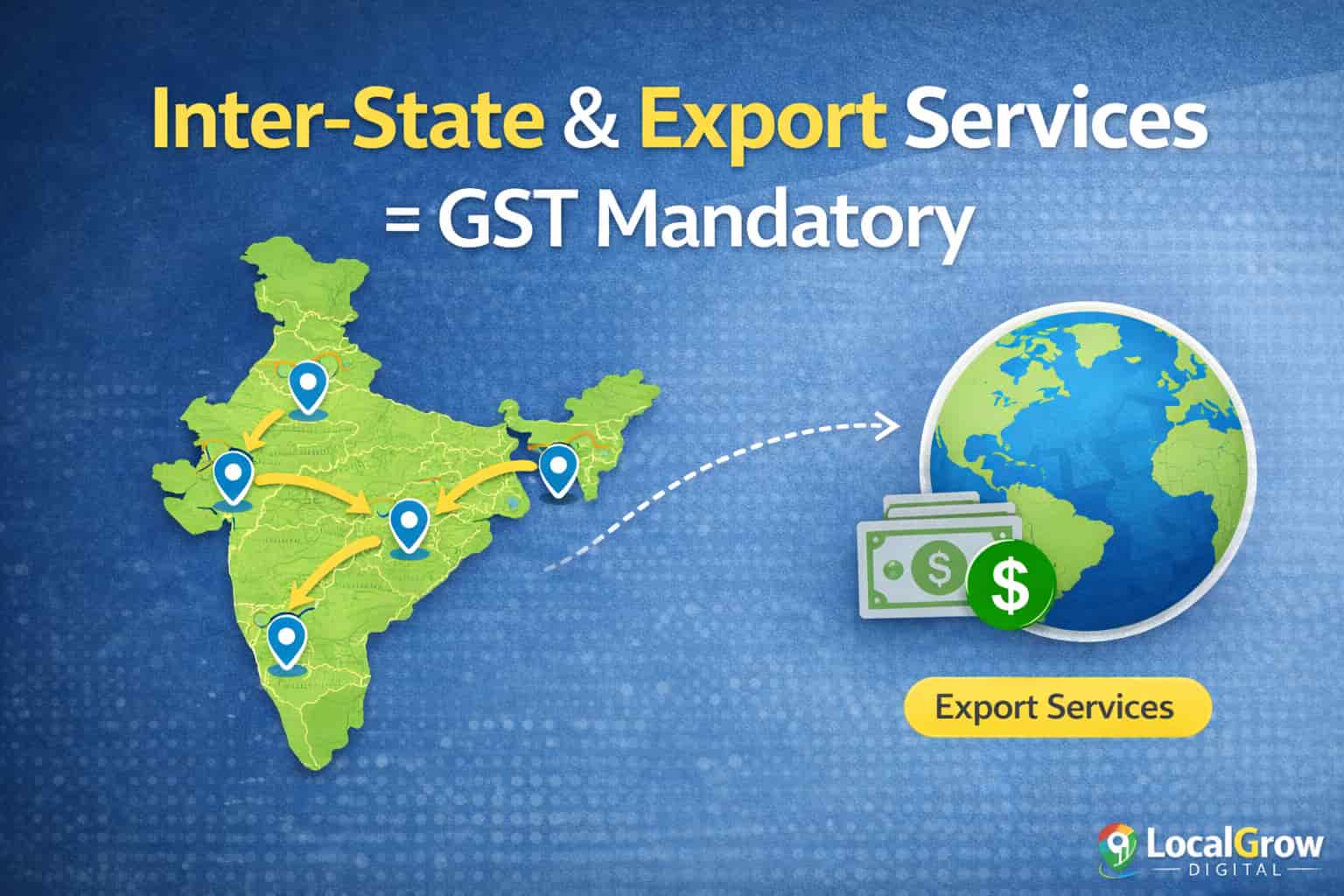
GST for freelancers and service providers in India is mandatory if services are supplied across states or exported internationally, regardless of turnover threshold.
GST registration becomes compulsory for freelancers in specific scenarios, even when annual turnover does not cross ₹20 lakh.
- If you provide inter-state services
- If you export services to foreign clients
- If you receive payments from overseas platforms
- If you operate through online marketplaces requiring GST
- If tax authorities determine mandatory compliance conditions
Under GST law, interstate supply of services requires mandatory registration regardless of turnover threshold.
— Central Goods and Services Tax Act, 2017
GST Turnover Limit for Service Providers in India
Normally, service providers must obtain GST registration if aggregate annual turnover exceeds ₹20 lakh. However, this exemption does not apply to interstate services and export of services.
To better understand how the GST turnover limit in India is calculated across multiple income sources under one PAN, freelancers should carefully evaluate aggregate receipts from all clients, platforms and foreign remittances.
Freelancers often underestimate total turnover because GST calculates income across all clients under one PAN. Income from multiple platforms, states or countries is aggregated to determine eligibility.
GST applicability for online service providers often becomes confusing because many freelancers work with clients across multiple states. In such cases, turnover exemption does not protect against mandatory registration requirements.
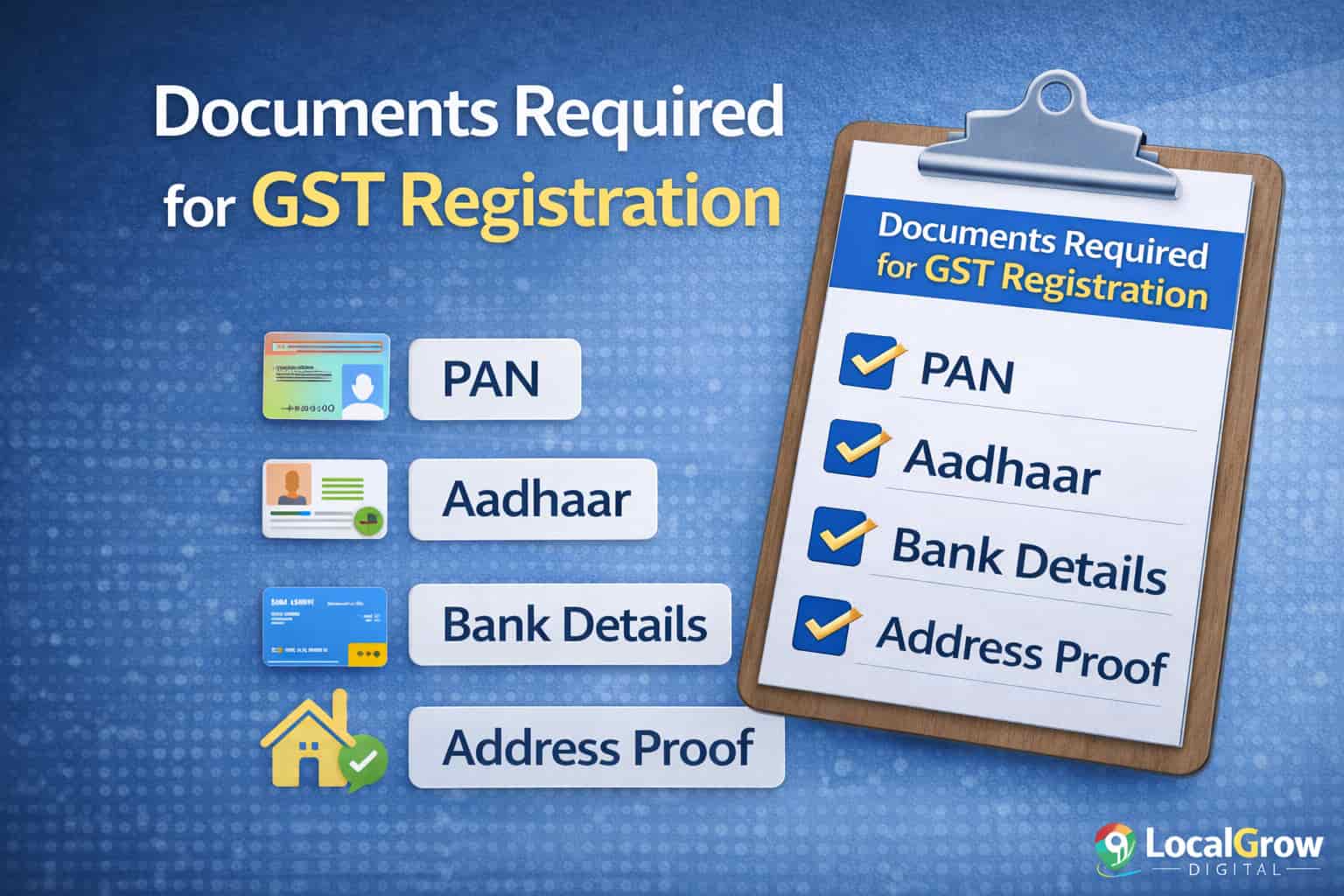
Documents Required Under GST for Freelancers and Service Providers in India
Failure to register for GST when legally required can lead to serious financial and compliance consequences.
- Penalty and interest on unpaid tax
- Legal notices from GST authorities
- Difficulty receiving foreign payments
- Platform restrictions or account suspension
- Future compliance complications
While the documentation process appears simple, many freelance applications get delayed due to minor errors in address proof or service description. Seeking professional GST registration service support can significantly reduce rejection risk and speed up approval timelines.
For a detailed checklist of documents required for GST registration in India, you can refer to this complete GST document checklist guide
Other Business Registrations Helpful for Freelancers
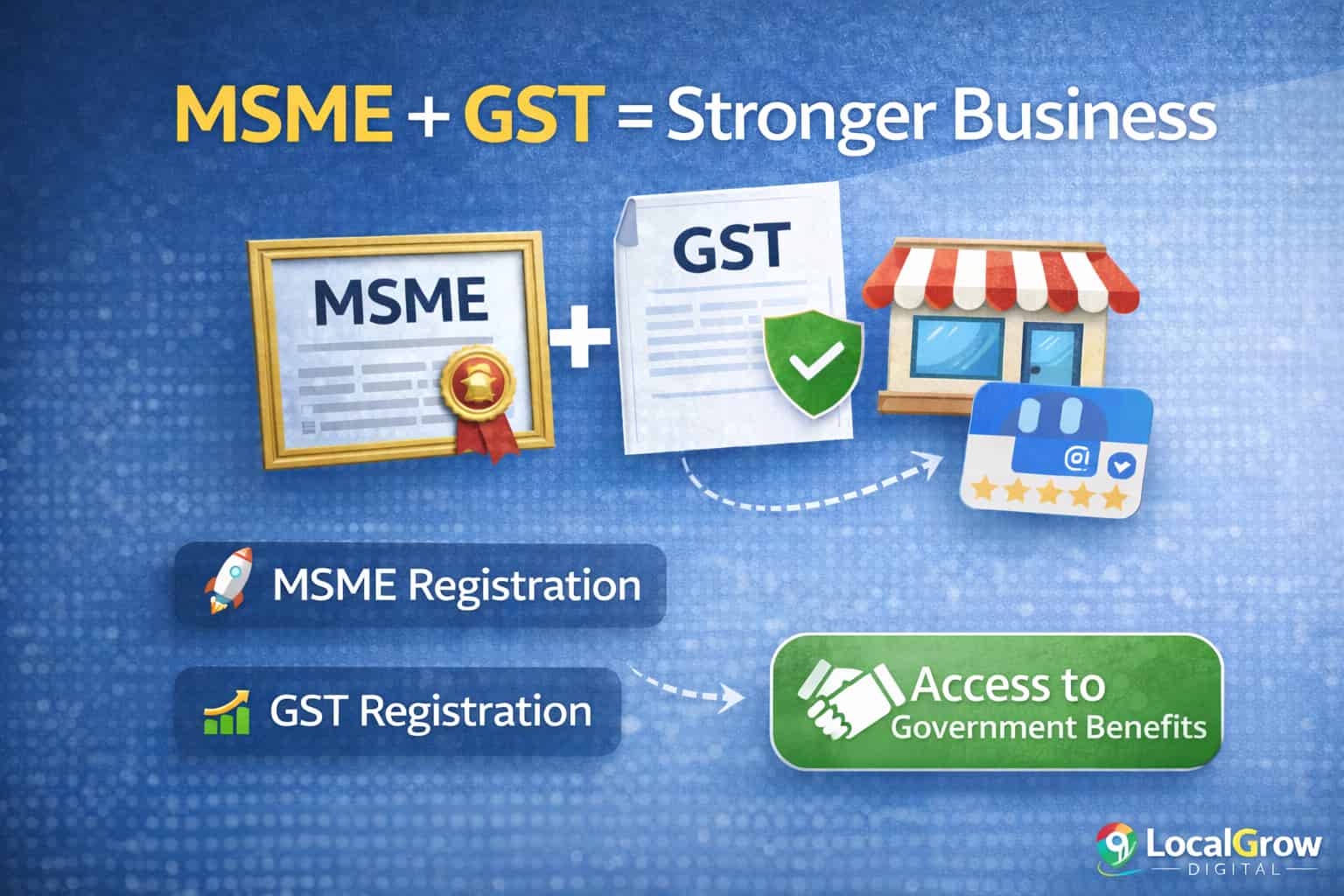
Apart from GST registration, freelancers can strengthen their professional credibility through additional registrations that enhance compliance and growth opportunities.
Freelancers may consider applying for MSME registration in India to access government schemes, loan benefits and official recognition as a registered enterprise.
When GST Is Required
- Interstate services
- Export of services
- Online platform compliance
- Foreign payments
- Legal mandate
When GST May Not Be Required
- Purely local services
- Turnover below ₹20 lakh
- No interstate or export activity
- No marketplace requirement
GST on Export of Services for Freelancers in India
Freelancers providing services to foreign clients are treated as exporters under GST, provided specific legal conditions are satisfied. Export of services is classified as a zero-rated supply, but GST registration is still mandatory before claiming benefits.
Understanding GST for freelancers and service providers in India becomes especially important in export scenarios where zero-rated supply provisions apply but registration is still compulsory.
Freelancers working with clients in the USA, UK, Canada, Australia or UAE often search whether GST applies to foreign remittance income. Under Indian GST law, such transactions qualify as export of services and require proper registration and LUT filing.
GST registration for freelancers in India providing export services is not optional, even though tax rate may be zero under LUT provisions. Proper classification ensures eligibility for refunds and avoids compliance complications.
Freelancers exporting services must either file a Letter of Undertaking (LUT) to export without paying IGST or pay IGST and later claim a refund.
Who Must Register Under GST?
GST for freelancers and service providers in India applies to any professional supplying interstate or export services, regardless of turnover exemption limits. Even a single invoice raised to a client located in another state or outside India may trigger mandatory registration provisions under GST law.
Freelancers working through digital platforms, foreign marketplaces or international clients must evaluate compliance carefully to avoid penalties and refund complications.
Freelancers unsure about export compliance may also review GST for online sellers in India if operating through digital platforms.
A service qualifies as export of services under GST when:
- Supplier is located in India
- Recipient is located outside India
- Place of supply is outside India
- Payment is received in convertible foreign exchange
- Supplier and recipient are not merely establishments of the same entity
Freelancers exporting services must either file a Letter of Undertaking (LUT) to export without paying IGST or pay IGST and later claim a refund.
If your freelance export business later closes or changes structure, you may need to understand how to cancel GST registration in India properly to avoid future compliance liabilities.
GST for Freelancers Working Through Online Platforms
Freelancers operating through online marketplaces, aggregators or digital platforms may require GST registration even when turnover is below ₹20 lakh, depending on the nature of supply and interstate transactions.
For example, professionals providing digital services through ecommerce or aggregator platforms should understand GST for online sellers in India to determine whether mandatory registration provisions apply.
- Platform TCS implications
- Interstate supply triggered automatically
- Mandatory compliance documentation
- Invoice requirements under GST
- Monthly and annual return filing obligations
Does GST Apply Even Below ₹20 Lakh for Freelancers?
Yes. GST for freelancers and service providers in India becomes mandatory if interstate or export services are involved, even when annual turnover remains below ₹20 lakh.
Penalty Provisions Under GST Law for Non-Registration
Under Section 122 of the Central Goods and Services Tax Act, 2017, failure to register when required can attract penalties equal to tax evaded or ₹10,000, whichever is higher.
You can verify official penalty provisions directly on the GST portal and government documentation for legal accuracy.
Non-registration may also impact future loan eligibility, MSME benefits and government tenders, as GST compliance is often checked during financial verification processes.
Non-compliance with GST for freelancers and service providers in India can trigger financial penalties, interest liability and long-term compliance scrutiny.
Ignoring GST compliance for freelance professionals may lead to departmental notices and financial penalties.
Can Freelancers Use Their Home Address for GST Registration?
Residential address registration requires:
- Valid address proof
- No objection certificate (if rented)
- Utility bill copy
- Proper business activity declaration
Common GST Mistakes Freelancers and Service Providers Make
- Ignoring interstate service rules
- Assuming ₹20 lakh exemption always applies
- Not filing LUT for export services
- Mixing personal and business bank accounts
- Delaying GST return filings
- Not issuing proper tax invoices
These mistakes can result in compliance notices, penalties and refund delays, especially for freelancers dealing with international clients.
This guide specifically focuses on GST for freelancers and service providers, distinct from general GST registration rules applicable to goods suppliers or trading businesses.
GST for Freelancers Receiving Foreign Remittance
Freelancers receiving foreign remittance in USD, GBP, EUR or other currencies must evaluate GST for freelancers and service providers in India under export of services provisions. Even though export is zero-rated, GST registration and LUT filing remain mandatory.
Failure to properly classify export income may lead to refund delays, compliance notices or mismatch between income tax and GST records.
Overall, GST for freelancers and service providers in India is not merely a procedural formality but a critical compliance requirement for professionals working across state or international boundaries. Early understanding prevents legal risk and strengthens financial credibility.
GST Registration for Freelancers in India Explained Clearly
Many professionals confuse exemption limits with mandatory provisions. GST registration for freelancers in India depends primarily on the nature of service supply rather than just turnover.
Frequently Asked Questions About GST for Freelancers and Service Providers in India
Is GST mandatory for freelancers in India?
GST becomes mandatory if a freelancer provides interstate services, exports services, or crosses the ₹20 lakh turnover threshold. In many cases involving foreign or out-of-state clients, registration is compulsory even below the limit.
What is the GST turnover limit for service providers?
The general exemption threshold is ₹20 lakh annually. However, this exemption does not apply to interstate supply of services or export of services.
Do freelancers providing services to foreign clients need GST?
Yes. Export of services requires GST registration even though exports are treated as zero-rated supplies.
What is zero-rated supply under GST for freelancers?
Zero-rated supply means export services are taxable at 0%, but the freelancer must register and may claim input tax credit or file LUT.
Is GST required for online tutors working across states?
Yes. Providing services across state borders triggers mandatory GST registration regardless of turnover.
Can freelancers use their home address for GST registration?
Yes. Residential address can be used as principal place of business with valid documentation.
Do freelancers need GST if income is below ₹20 lakh?
If services are interstate or exported, GST registration is mandatory even below ₹20 lakh.
Is GST required for digital marketers and consultants?
Yes, especially when clients are located in different states or countries.
What happens if a freelancer does not register for GST?
Penalties, interest on tax, legal notices and payment disruptions may occur.
What is the penalty for not registering under GST?
Under Section 122 of CGST Act, penalty may be ₹10,000 or tax amount evaded, whichever is higher.
Can freelancers claim GST refund on export services?
Yes, freelancers can claim GST refund on export of services if they either pay IGST and apply for refund or file a Letter of Undertaking (LUT) to export without paying tax. Proper documentation and timely return filing are essential to avoid refund rejection.
Is GST required for Upwork or Fiverr freelancers?
Yes, freelancers working on platforms like Upwork or Fiverr typically qualify as exporters of services when clients are located outside India. GST registration is mandatory to legally invoice and report such export income.
Do freelancers need to file GST returns monthly?
Once registered under GST, freelancers must file periodic returns such as GSTR-1 and GSTR-3B. The frequency depends on turnover and scheme selection, but compliance remains mandatory regardless of invoice volume.
Can GST registration be cancelled later?
Yes, GST registration can be cancelled legally if freelance activity is discontinued or turnover falls below eligibility conditions. However, cancellation must be filed properly to avoid future notices.
Does PayPal income require GST registration?
Income received through PayPal or other international payment gateways generally qualifies as export of services. Therefore, GST registration is required even though export supplies are zero-rated.
Is GST mandatory for freelancers working from home?
Working from home does not exempt a freelancer from GST. If interstate or export conditions are triggered, registration becomes mandatory regardless of workplace location.
Do freelance graphic designers need GST?
Freelance graphic designers providing services across states or internationally must obtain GST registration. Even below ₹20 lakh turnover, interstate supply provisions may apply.
Is GST required for consultants advising foreign companies?
Yes, consultants advising foreign companies fall under export of services category. GST registration ensures proper compliance and enables zero-rated treatment.
Do freelancers need separate bank account for GST?
While not legally mandatory, maintaining a separate bank account for GST transactions improves compliance clarity and reduces risk during departmental scrutiny.
Is GST applicable on freelance services provided within same state?
GST applies to intra-state freelance services only when annual turnover exceeds ₹20 lakh. Below this limit and without interstate supply, exemption may apply.
Do freelancers need GST for part-time work?
Part-time freelance work is not exempt from GST provisions. If aggregate turnover or interstate supply conditions are met, registration becomes compulsory.
Can freelancers register voluntarily under GST?
Freelancers may voluntarily register under GST even if not required. Voluntary registration allows claiming input tax credit and improves professional credibility.
Does GST apply to content writers?
Content writers providing services to clients in different states or countries are required to register under GST due to interstate or export supply provisions.
What documents are required for GST registration for freelancers?
GST registration requires PAN, Aadhaar, address proof, bank details and service activity description. Incomplete documentation often leads to application rejection.
Is GST required for YouTubers or online creators?
YouTubers and online creators earning from foreign ad platforms or sponsors typically qualify under export of services. GST registration ensures proper invoicing and compliance.
Can freelancers issue invoice without GST?
Freelancers may issue invoices without GST only if registration is not legally required. Once registered, GST must be charged where applicable.
Is GST required for freelance IT services?
Freelance IT professionals working across state lines or for international clients are required to register under GST irrespective of turnover exemptions.
Do freelancers need LUT for export services?
Yes, freelancers exporting services must file a Letter of Undertaking (LUT) annually to supply services without charging IGST while maintaining zero-rated status.
Can GST registration be rejected?
GST registration applications may be rejected if documentation is inconsistent, address proof is unclear or service description is incomplete. Professional assistance reduces this risk.
How long does GST registration take for freelancers?
GST registration typically takes 3–7 working days when documentation is correct. Delays may occur if clarification notices are issued by authorities.
Is GST mandatory for consultants earning from multiple states?
Consultants earning income from multiple states trigger interstate supply provisions and must register under GST regardless of turnover threshold.
Do freelancers need to charge GST to foreign clients?
Freelancers do not charge GST on export services under LUT, but registration and proper invoicing remain mandatory to maintain compliance.
Is GST applicable to online coaching services?
Online coaching services delivered across state borders qualify as interstate supply and require GST registration under current law.
Can GST be avoided legally for freelancers?
GST cannot be legally avoided if mandatory registration conditions are met. Attempting to bypass registration may result in penalties and compliance scrutiny.
Is professional GST assistance recommended for freelancers?
Professional GST assistance ensures correct registration, proper export compliance, accurate filing and reduced risk of departmental notices for freelancers.
Is GST required for freelancers receiving foreign remittance in USD or EUR?
Yes, foreign remittance income typically qualifies as export of services under GST law. Registration is mandatory to legally invoice and file LUT for zero-rated treatment.
Can freelancers face income tax scrutiny if GST is not registered?
In some cases, mismatch between income records and GST registration status may trigger departmental review. Proper GST compliance ensures consistency between tax filings.
Why GST for Freelancers and Service Providers in India Should Not Be Ignored
Ignoring GST for freelancers and service providers in India can result in unexpected legal notices, penalty demands and disruption in receiving domestic or international payments. Many freelancers assume the ₹20 lakh exemption always applies, but interstate and export provisions override that threshold.
Even a single interstate invoice or foreign client engagement may trigger mandatory registration requirements. Understanding GST for freelancers and service providers in India at an early stage helps avoid compliance stress, refund delays and financial penalties.
Proactive registration ensures smoother client onboarding, platform approvals, international payment processing and long-term tax compliance without departmental scrutiny.
Apply for GST Registration Without Confusion or Rejection Risk
If you are unsure whether GST for freelancers and service providers in India applies to your specific work model, professional guidance can prevent costly mistakes and rejection delays.