
GST for retail shops in India is mandatory in several situations, especially when turnover crosses limits or interstate supply begins. Many shop owners misunderstand how GST for retail shops in India actually applies to their business structure.
Whether you operate a grocery store, boutique, salon, hardware outlet or repair shop, understanding GST registration rules is essential to avoid penalties, blocked marketplace accounts or compliance notices.
GST rules apply uniformly across India including Maharashtra, Uttar Pradesh, Delhi, Karnataka and other states.
If you are unfamiliar with the application process, it is important to understand GST Registration in India – Complete Guide for Businesses and how documentation, verification and approval timelines function before initiating registration.
If you run a retail shop and are unsure whether GST applies to your business model, this guide explains turnover limits, mandatory cases, documentation requirements and how to apply correctly without compliance stress.
Our team has assisted multiple retail establishments across India in evaluating GST eligibility and avoiding rejection or penalty notices.
By the end of this article, you will know exactly whether you need GST and how to move forward safely for your business.
Table of Contents
What Is GST for Retail Shops in India and How Does It Apply?
GST (Goods and Services Tax) is a unified indirect tax system applicable to the supply of goods and services across India. Retail businesses are not automatically exempt from GST. Registration depends on turnover thresholds, type of supply and interstate transactions.
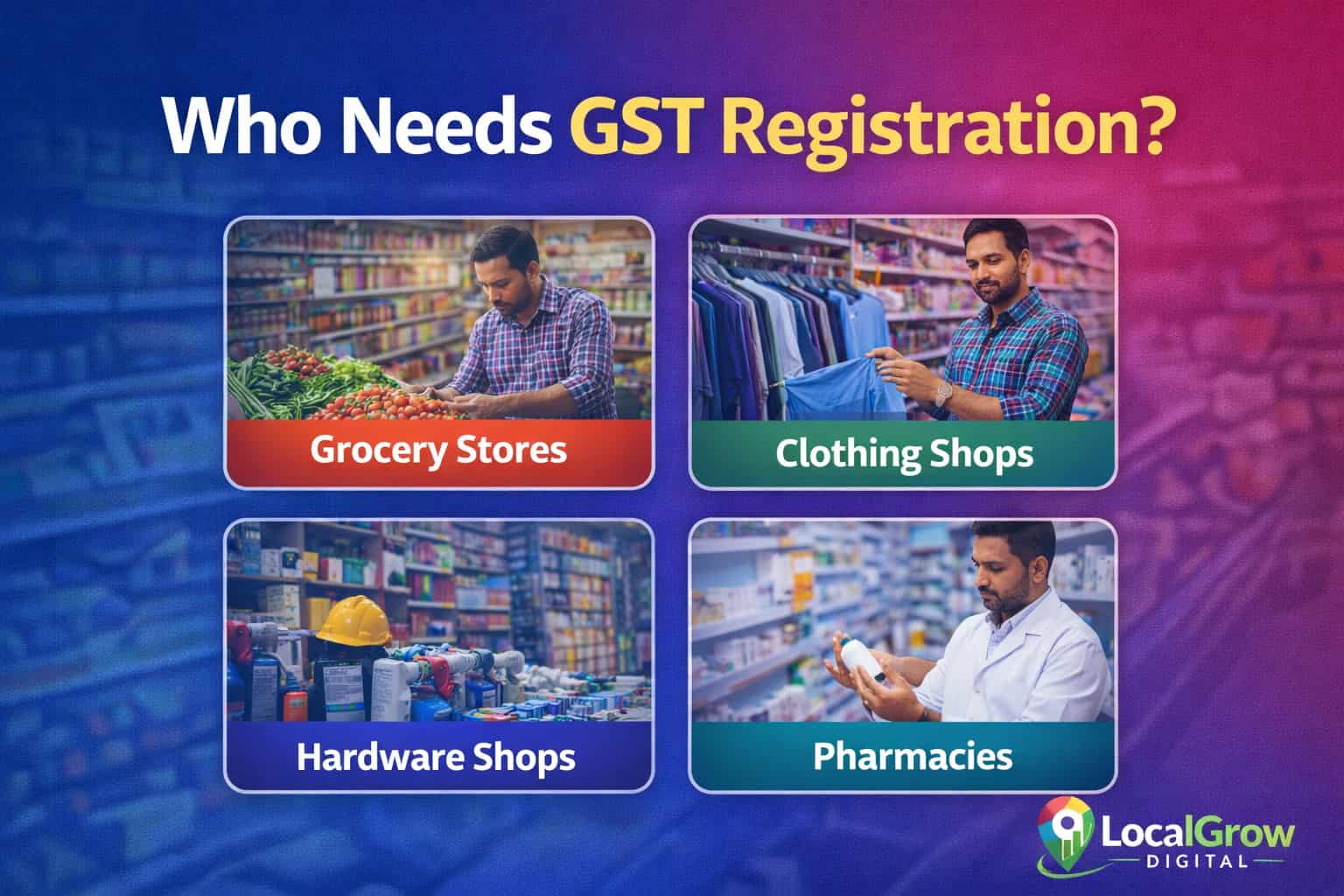
Even single-owner retail establishments may fall under mandatory GST provisions if interstate supply, online marketplace selling or taxable service components are involved.
Which Retail Businesses Must Register Under GST?
Several categories of retail businesses may require GST registration based on turnover and supply structure.
- Grocery and kirana stores
- Clothing and garment retailers
- Beauty salons and wellness centers
- Electronics and mobile repair shops
- Hardware and spare parts outlets
- Stationery and gift stores
If your retail establishment also provides taxable services such as repair, installation or consulting along with goods supply, review GST for freelancers and service providers in India to understand additional compliance obligations.
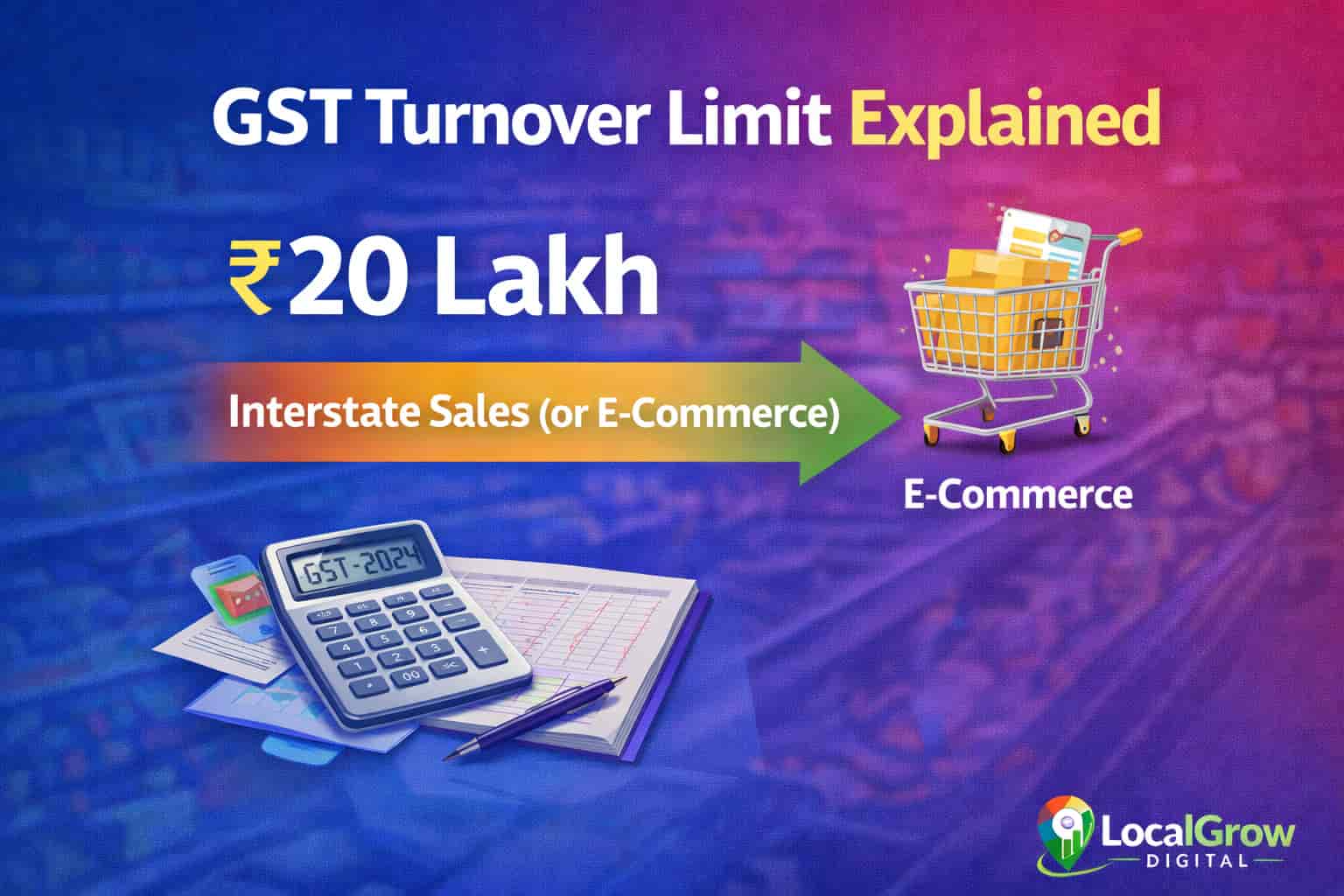
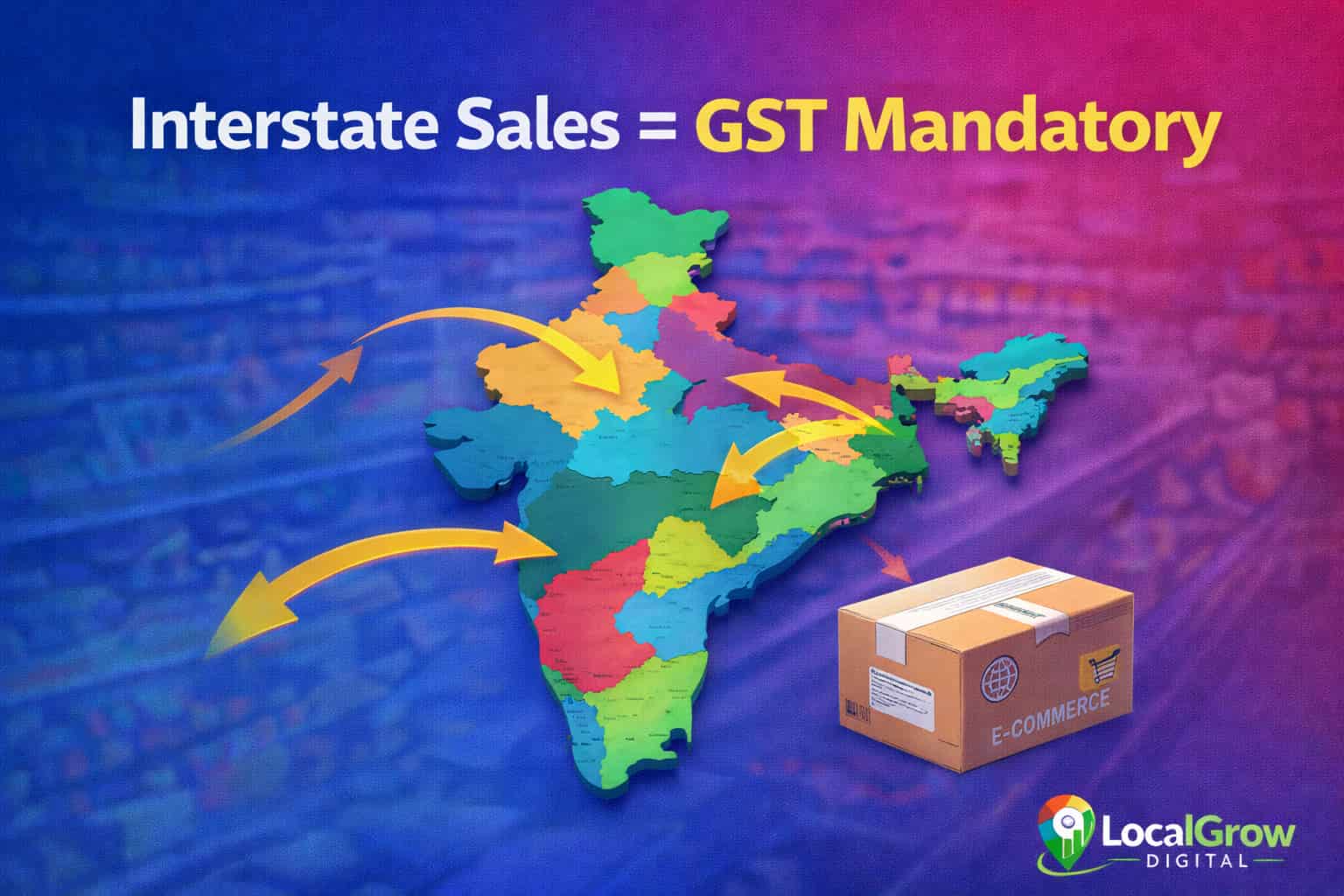
If your business supplies goods outside your state, sells through online platforms or crosses turnover limits, GST registration becomes mandatory regardless of shop size.
Retailers selling through marketplaces should also review GST for online sellers in India to understand TCS deductions, interstate supply rules and compliance requirements.
GST Turnover Limit for Retail Shops in India
GST registration becomes compulsory when annual aggregate turnover exceeds prescribed limits under GST law.
- ₹40 lakh for goods suppliers in most states
- ₹20 lakh for service-based businesses
- ₹20 lakh for special category states
Aggregate turnover includes all taxable supplies under the same PAN across branches or activities, making accurate calculation essential for compliance under GST for retail shops and local businesses in India.
To understand threshold calculations in detail, you may read GST turnover limit in India and when registration becomes mandatory for businesses.
Who Must Register Under GST for Retail Businesses?
GST for retail shops in India applies to any business exceeding turnover thresholds, selling through e-commerce platforms or supplying goods across state borders. Registration is based on supply structure, not shop size.
When Is GST Mandatory Even Below Turnover Limit?
Certain situations trigger mandatory GST registration regardless of turnover threshold.
- Selling through Amazon, Flipkart, Meesho or other e-commerce platforms
- Supplying goods to other states
- Acting as a supplier to registered businesses
- Engaging in taxable online sales
Registered businesses also find it easier to apply for loans and government schemes.
Proper compliance with GST for small shops in India also helps businesses grow safely and legally.
Does Every Retail Shop Need GST Registration?
Not every retail shop requires GST registration. GST for retail shops in India becomes mandatory only when turnover exceeds threshold limits or when interstate or online marketplace supply is involved.
How to Apply for GST Registration Easily
Retail businesses often assume exemption based solely on turnover, but interstate supply provisions override threshold limits under GST law.
Documents Required for GST Registration for Retail Businesses
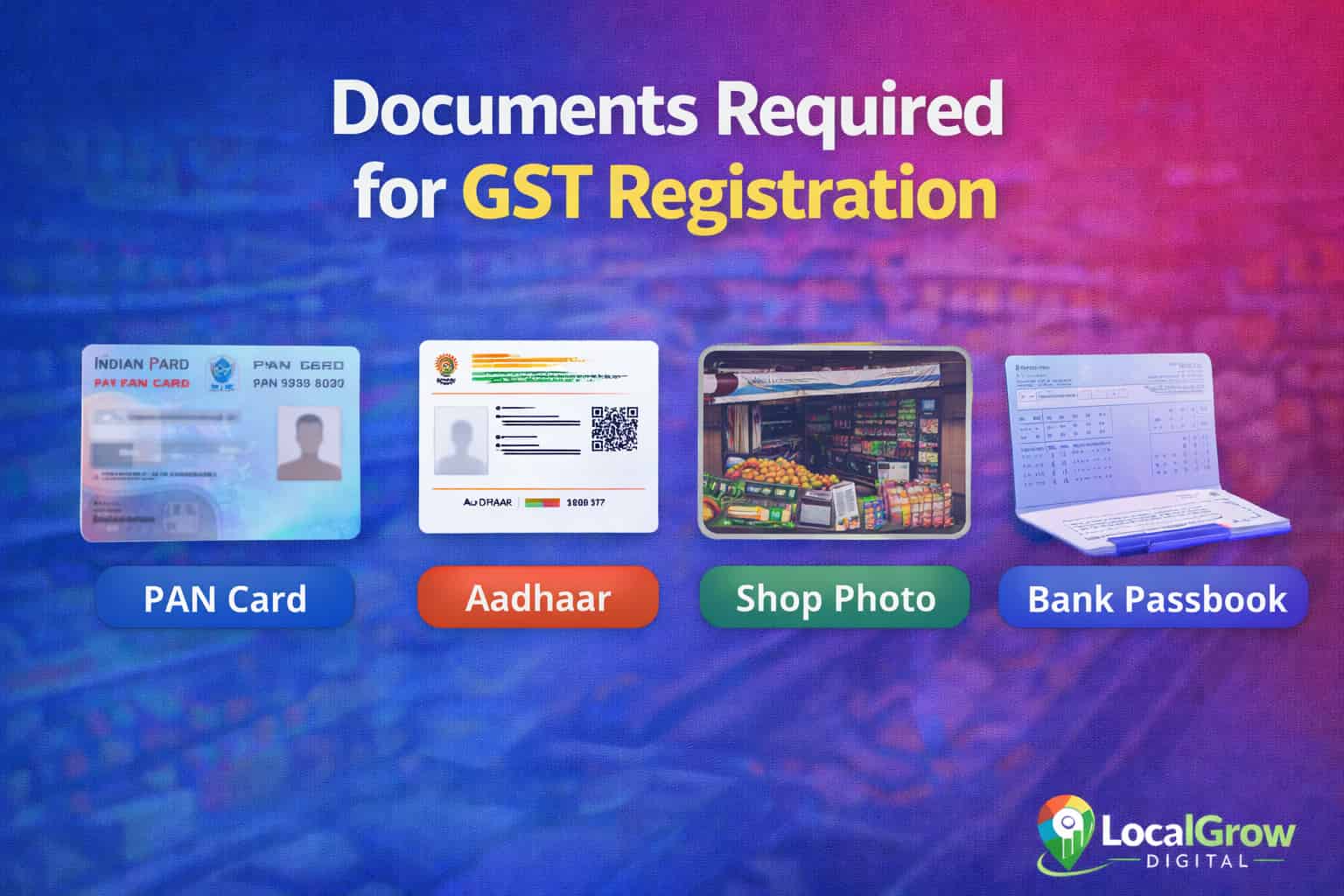
GST registration for retail establishments requires submission of standard identity and business documents.
- PAN card
- Aadhaar card
- Shop address proof (electricity bill or rent agreement)
- Bank account details
- Photograph of proprietor
For a detailed checklist of documents required for GST registration in India, you can refer to this complete GST document checklist guide
Incomplete or inconsistent documentation is one of the primary reasons for GST application rejection.
GST registration becomes compulsory when statutory turnover thresholds are crossed or when interstate supply conditions are triggered.
— GST Compliance Framework
Situations Where GST Is Mandatory
- Interstate sales
- Online marketplace selling
- Turnover exceeding limits
- Supplying registered entities
Situations Where GST May Not Be Required
- Pure intra-state supply below threshold
- No online marketplace activity
- No taxable service component
Composition Scheme vs Regular GST for Retail Shops
Retail business owners often face confusion when choosing between the Composition Scheme and the Regular GST scheme. The correct selection depends on turnover, supply structure and compliance capacity.
Quick Decision Guide for Retailers
Choose Composition Scheme if your business operates purely within one state and remains below prescribed turnover limits.
Choose Regular GST if you sell interstate, operate through online marketplaces or wish to claim input tax credit.
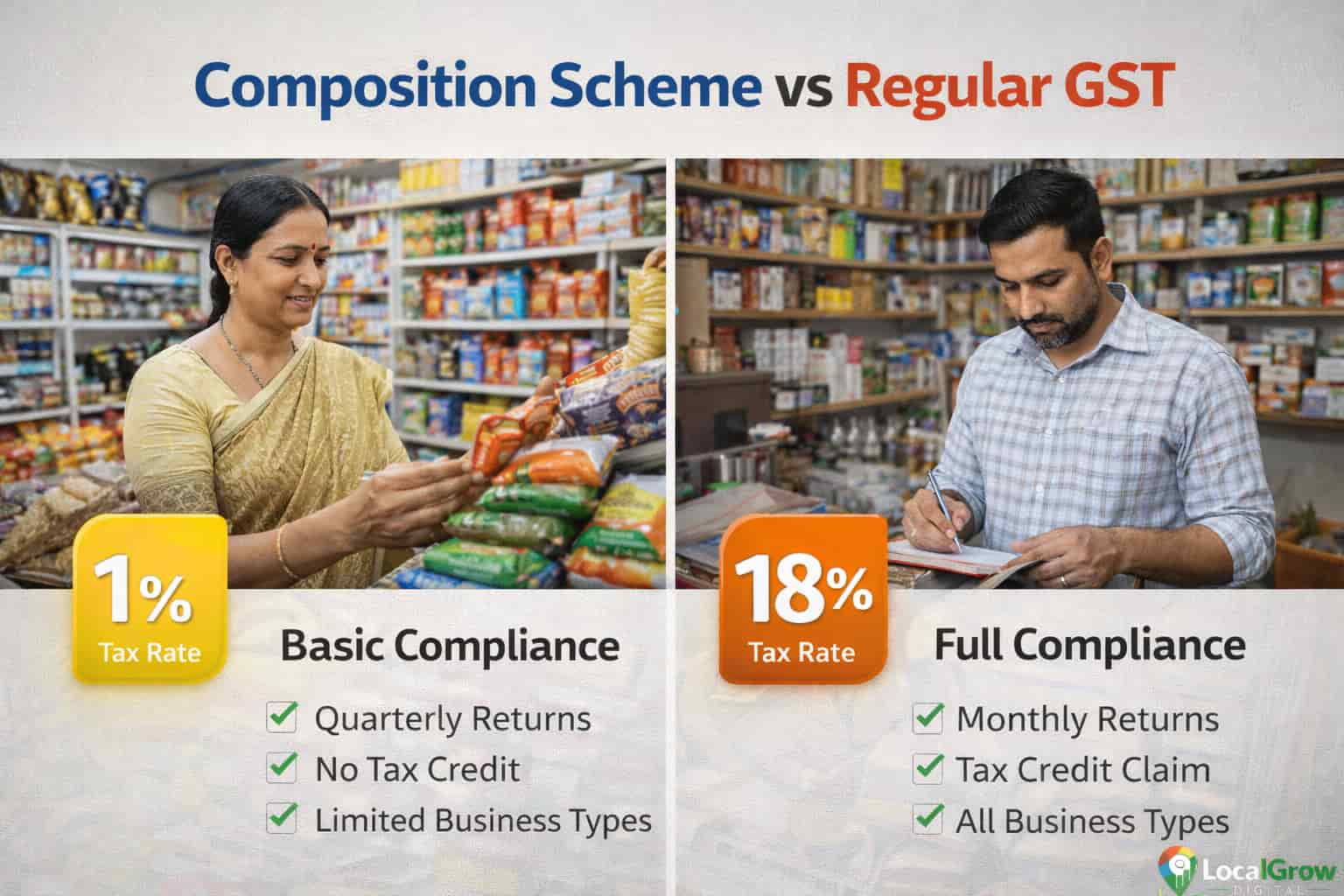
Composition Scheme
- Available for eligible businesses below prescribed turnover
- Lower tax rate (generally 1% for traders)
- Cannot collect GST from customers
- Cannot claim input tax credit
- Limited compliance burden
Regular GST Scheme
- Mandatory above turnover threshold
- Can collect GST from customers
- Eligible for input tax credit
- Suitable for interstate and online sales
- Requires regular return filing
Retail businesses engaged in interstate sales or online marketplace selling are generally not eligible for the Composition Scheme and must register under the Regular GST framework.
Penalties for Non-Registration Under GST
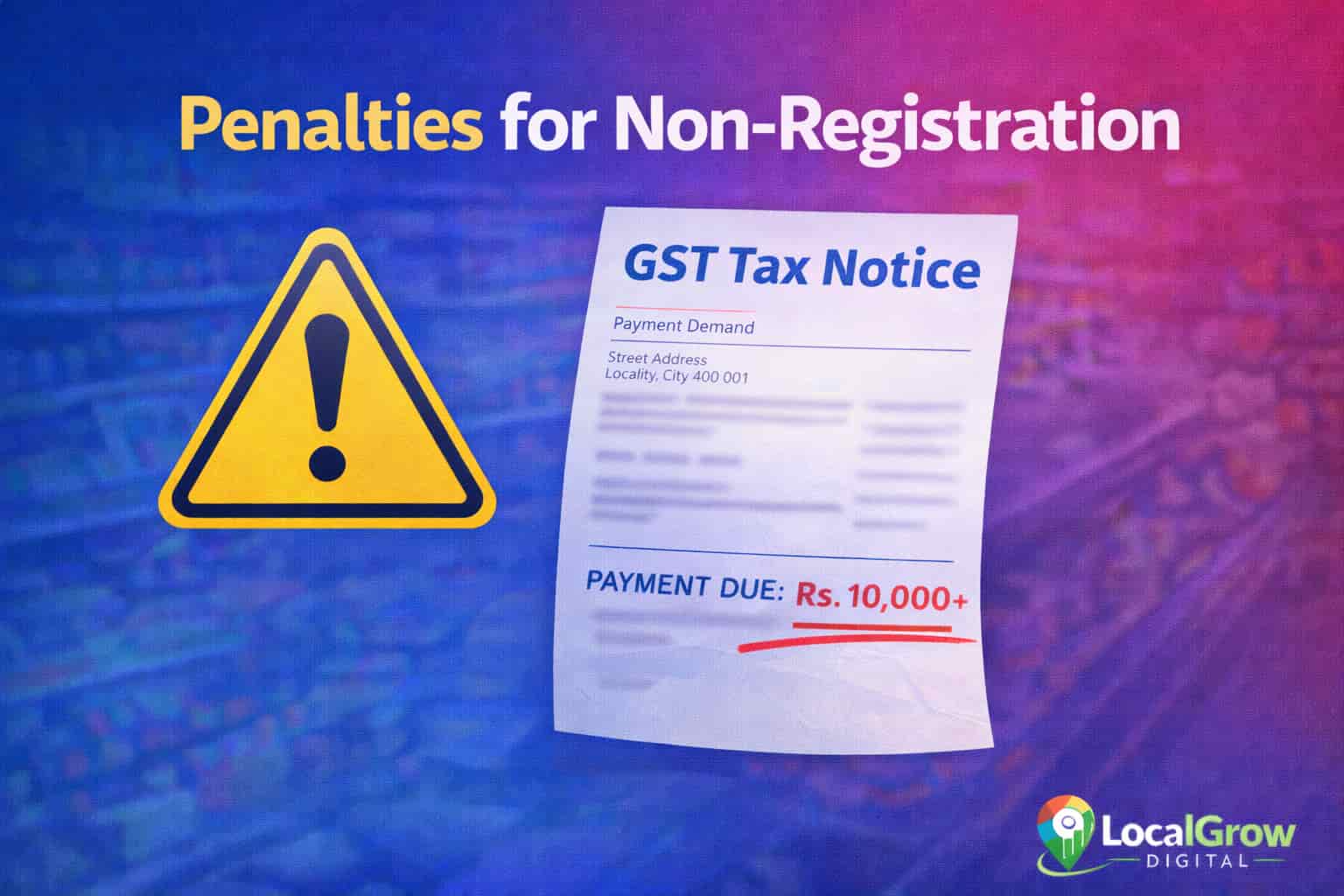
Operating a retail business without mandatory GST registration can result in financial penalties, tax demand notices and compliance scrutiny. As per Section 122 of the CGST Act, failure to register when liable may attract monetary penalties and tax demand proceedings. Ignorance of turnover thresholds or interstate supply conditions does not provide legal protection.
- Penalty up to ₹10,000 or tax amount due (whichever is higher)
- Interest on unpaid tax
- Possible cancellation of marketplace accounts
- Departmental inspection or audit
As per Section 122 of the CGST Act, failure to register when liable may attract monetary penalties and tax demand proceedings.
Retail businesses supplying through e-commerce platforms may also face account suspension if GST details are not properly registered and verified.
GST for Retail Shops Selling Online or Across States
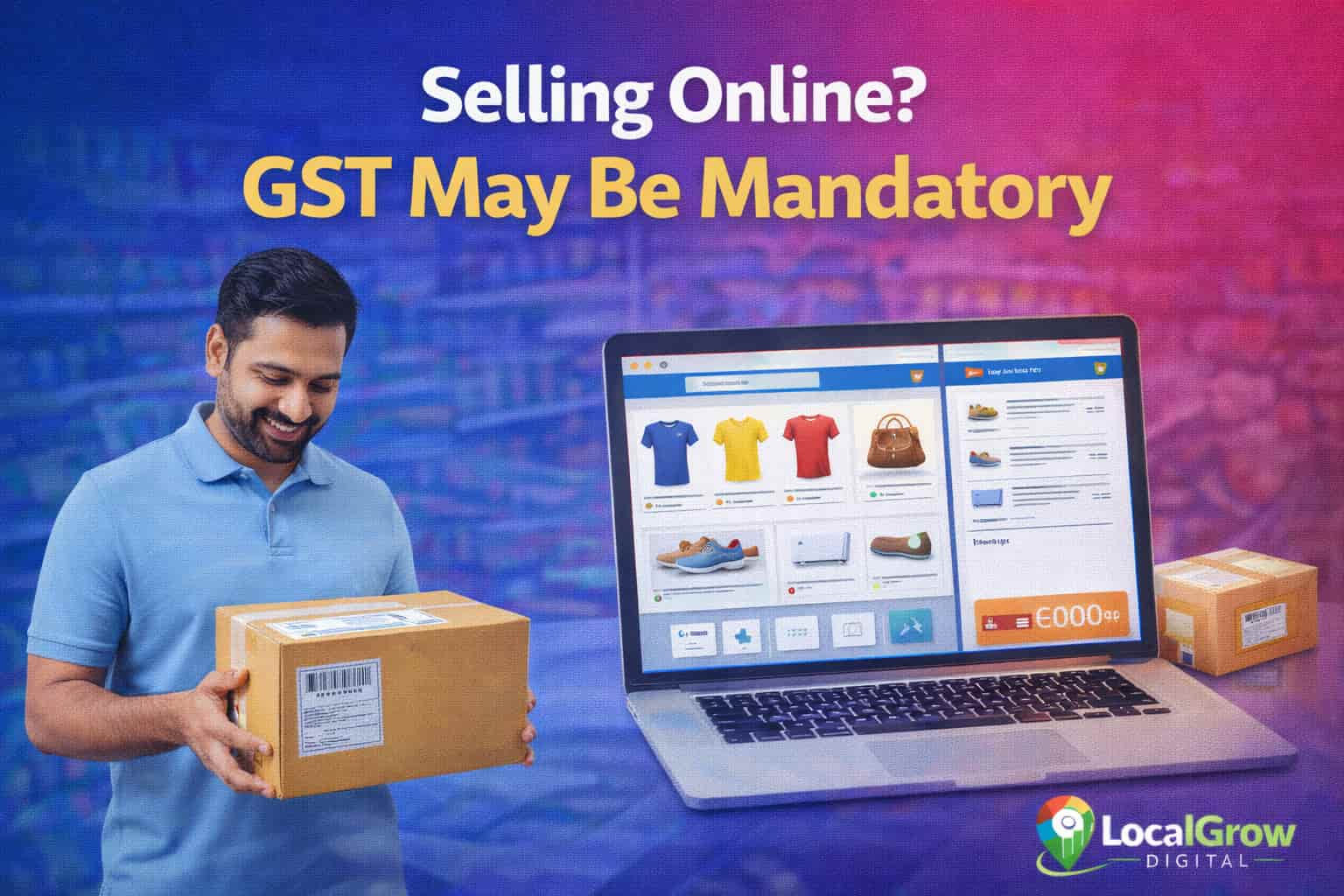
Retail businesses selling through online platforms such as Amazon, Flipkart or Meesho must obtain GST registration regardless of turnover exemption limits. E-commerce operators are required to collect Tax Collected at Source (TCS), which makes GST compliance mandatory.
Similarly, supplying goods to customers located in other states triggers interstate supply provisions under GST law. Retail businesses engaged in such transactions must register under the Regular GST scheme.
If you also sell products through digital marketplaces, you may review GST for online sellers in India to understand marketplace-specific compliance requirements.
Official turnover thresholds and registration rules can be verified through the GST Portal registration guidelines issued by the Government of India.
Why Proper GST Compliance Strengthens Retail Businesses
Proper GST compliance improves business credibility, enables participation in government tenders and simplifies financial documentation during loan or credit applications. Many retail shop owners also apply for MSME registration to access government subsidies, priority lending schemes and credit support programs. Many financial institutions verify GST registration status before processing working capital or business loan requests.
Structured compliance under GST for retail shops in India not only prevents penalties but also builds long-term operational stability.
Maintaining compliance under GST for retail shops and local businesses in India also reduces audit risk and ensures smoother operations when expanding to online or interstate markets.
Frequently Asked Questions About GST for Retail Shops in India
Is GST mandatory for retail shops in India?
GST for retail shops in India becomes mandatory when annual aggregate turnover exceeds the prescribed threshold or when interstate supply or online marketplace selling is involved. Even a single interstate transaction may trigger compulsory registration. Compliance depends more on supply structure than business size.
What is the GST turnover limit for retail shops?
The GST turnover limit is ₹40 lakh for suppliers of goods in most states and ₹20 lakh for service-based businesses or special category states. However, this exemption does not apply to interstate supply or e-commerce sales.
Do kirana stores require GST registration?
Kirana stores must obtain GST registration if turnover crosses the threshold or if they sell goods interstate or through online platforms. Many grocery businesses unknowingly trigger registration due to marketplace participation.
Is GST required for salons and service-based retail businesses?
Yes, service-based establishments such as salons must register once turnover exceeds ₹20 lakh. If services are supplied across state borders, registration may become mandatory even below this threshold.
Is GST compulsory for shops selling on Amazon or Flipkart?
Yes, retail shops selling through e-commerce platforms must register under GST irrespective of turnover exemption. Online marketplace operators collect TCS, which makes GST registration mandatory.
Can a retail shop operate without GST below turnover limit?
Yes, if the business operates purely within the same state, does not sell online and remains below threshold, registration may not be required. However, turnover calculation must include all taxable supplies under the same PAN.
What penalties apply for non-registration under GST?
Failure to register when required may attract penalties up to ₹10,000 or the amount of tax due, whichever is higher. Interest on unpaid tax and compliance notices may also be issued by authorities.
Can retail traders opt for the Composition Scheme?
Eligible retail traders below prescribed turnover limits may opt for the Composition Scheme, which offers lower tax rates but restricts interstate supply and input tax credit claims.
Can Composition Scheme dealers sell online?
No, businesses under the Composition Scheme cannot engage in interstate supply or e-commerce platform sales. Such activity requires migration to the Regular GST scheme.
Can a residential address be used for GST registration?
Yes, a residential address can be used if the retail business operates from home, provided valid address proof is submitted during registration.
Is GST required for repair and electronics service shops?
Repair shops providing taxable services must register once turnover exceeds ₹20 lakh. Interstate service supply also triggers mandatory registration irrespective of turnover.
Do wholesale retailers need GST registration?
Yes, wholesale suppliers must comply with GST registration rules if turnover exceeds limits or if interstate transactions occur. Wholesale supply often crosses threshold quickly due to volume.
Can GST registration be cancelled if business closes?
Yes, GST registration can be cancelled legally if business operations are discontinued. You can read how to cancel GST registration in India step-by-step to avoid future compliance notices.
How long does GST registration take for retail shops?
GST registration typically takes 3–7 working days if documentation is accurate. Delays may occur if clarification notices are issued or address verification fails.
Do retail shops need GST for supplying registered buyers?
Supplying goods to registered businesses may require GST registration depending on turnover and supply nature. Many B2B buyers insist on GST compliance before onboarding suppliers.
Is GST applicable on interstate stock transfers?
Yes, interstate stock transfers are treated as taxable supplies under GST law, even if ownership does not change.
Can retail shops claim input tax credit?
Businesses registered under the Regular GST scheme can claim input tax credit on eligible purchases, reducing overall tax liability.
Does GST apply based on payment mode like UPI or cash?
No, GST applicability depends on turnover and supply type, not payment mode. Whether payment is received via UPI, cash or card does not affect registration requirement.
Can GST compliance affect business loan approval?
Yes, financial institutions often verify GST returns and registration status when assessing business loan or working capital applications.
What is TCS under GST for online sellers?
Tax Collected at Source (TCS) is collected by e-commerce operators from registered sellers and reported to the GST portal, making GST registration compulsory for online retailers.
Is GST mandatory for proprietorship retail shops?
Yes, proprietorship businesses must follow GST registration rules like any other entity if turnover or supply structure triggers mandatory provisions.
Can GST registration be rejected?
Yes, applications may be rejected due to incorrect documentation, inconsistent address proof or improper business description.
Is GST required for seasonal retail shops?
Seasonal businesses must evaluate aggregate turnover across financial year. If limits are crossed or interstate sales occur, registration becomes compulsory.
Is GST applicable on discounted sales?
GST is calculated on transaction value after eligible discounts, subject to proper documentation.
Do retail shops need GST for government tenders?
Many government contracts and procurement processes require active GST registration as part of compliance verification.
Can retail businesses voluntarily register under GST?
Yes, voluntary registration is permitted and may improve credibility, allow ITC claims and enable marketplace participation.
What records must retail shops maintain under GST?
Retail businesses must maintain purchase invoices, sales records, tax payment documents and return filings for audit and compliance purposes.
Is GST mandatory for shops expanding to online sales later?
Yes, once a retail business begins selling through e-commerce platforms, GST registration becomes mandatory regardless of turnover.
Can GST registration reduce audit risk?
Proper GST compliance reduces the likelihood of departmental scrutiny and ensures smooth financial documentation.
Where can official GST rules be verified?
Official GST rules and notifications can be verified on the Government GST Portal.
Is GST mandatory for retail shops taking UPI or digital payments only?
GST for retail shops in India depends on turnover and supply structure, not payment mode. Whether payments are received through UPI, cash or card does not exempt businesses from registration requirements.
Why GST for Retail Shops in India Should Not Be Ignored
Ignoring GST for retail shops in India can result in penalties, compliance notices and marketplace suspension. Proper registration protects business credibility and enables structured growth.
Apply for GST Registration for Your Retail Business
If you are unsure whether GST for retail shops in India applies to your business model, professional evaluation can prevent compliance mistakes, rejection delays and penalty risks. Proper registration ensures smoother marketplace onboarding, interstate expansion and financial documentation.
Professional guidance ensures that GST for retail shops in India is applied correctly based on turnover structure, supply type and future expansion plans.

Our team at LocalGrow Digital evaluates eligibility first, explains applicable provisions clearly and proceeds only after confirming readiness. Structured assistance ensures accurate filing and faster approval.