
Service Area Business SEO is essential for businesses that serve customers at their locations instead of operating from a physical storefront. Plumbers, electricians, cleaning services, consultants, and delivery-based businesses all depend on Google Maps visibility to generate local leads.
Ranking a service area business on Google Maps requires a different optimization strategy compared to traditional storefront listings. Google applies stricter filters, location trust checks, and relevance validation before showing service area businesses in local results.
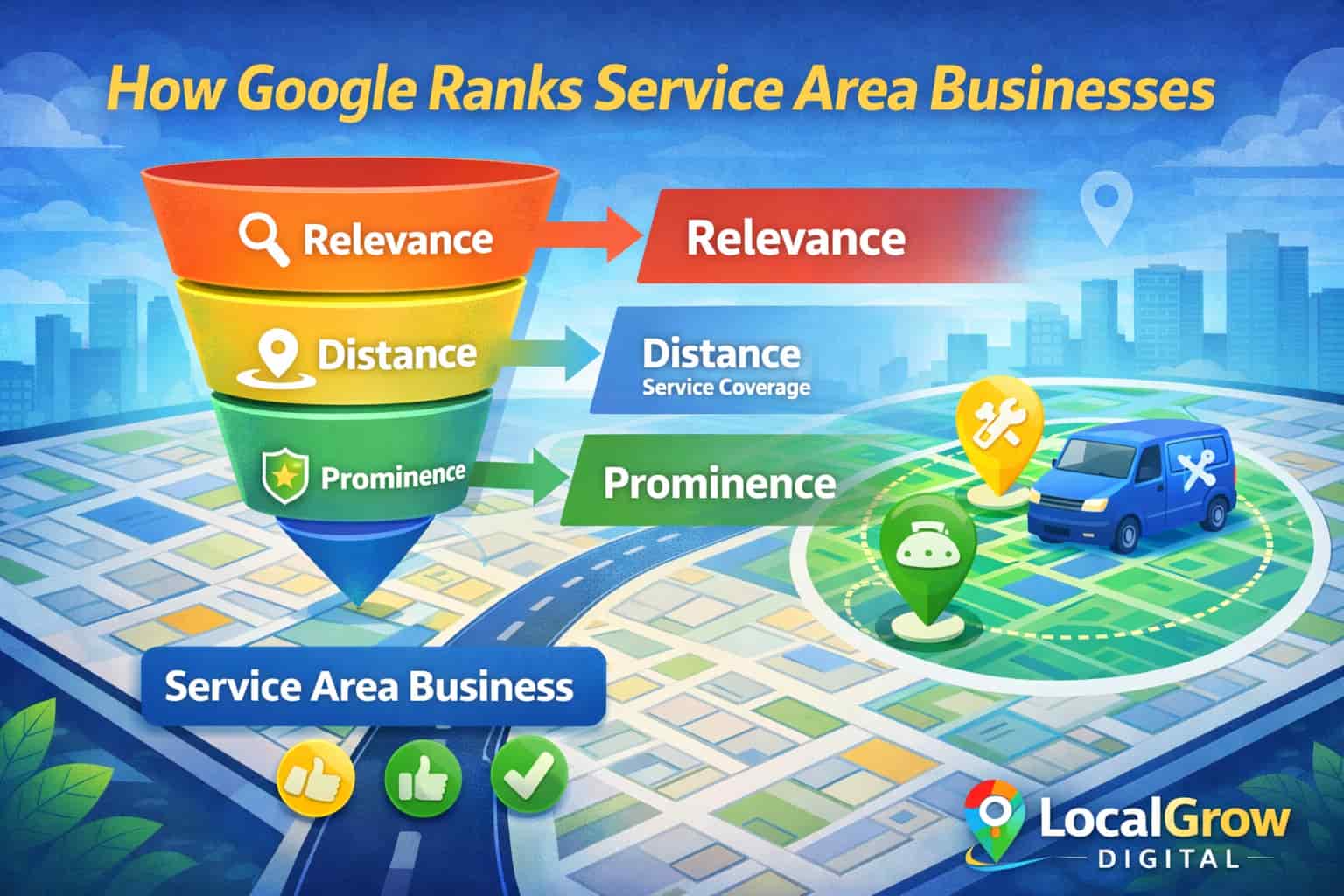
Before optimizing a service area business, it is important to understand how local SEO for businesses works and how Google evaluates relevance, distance, and prominence when ranking listings on Google Maps.
Table of Contents
What Is a Service Area Business on Google Maps?
A service area business (SAB) is a business that serves customers at their location instead of receiving customers at a physical address. Google allows these businesses to hide their address and define specific service areas they operate in.
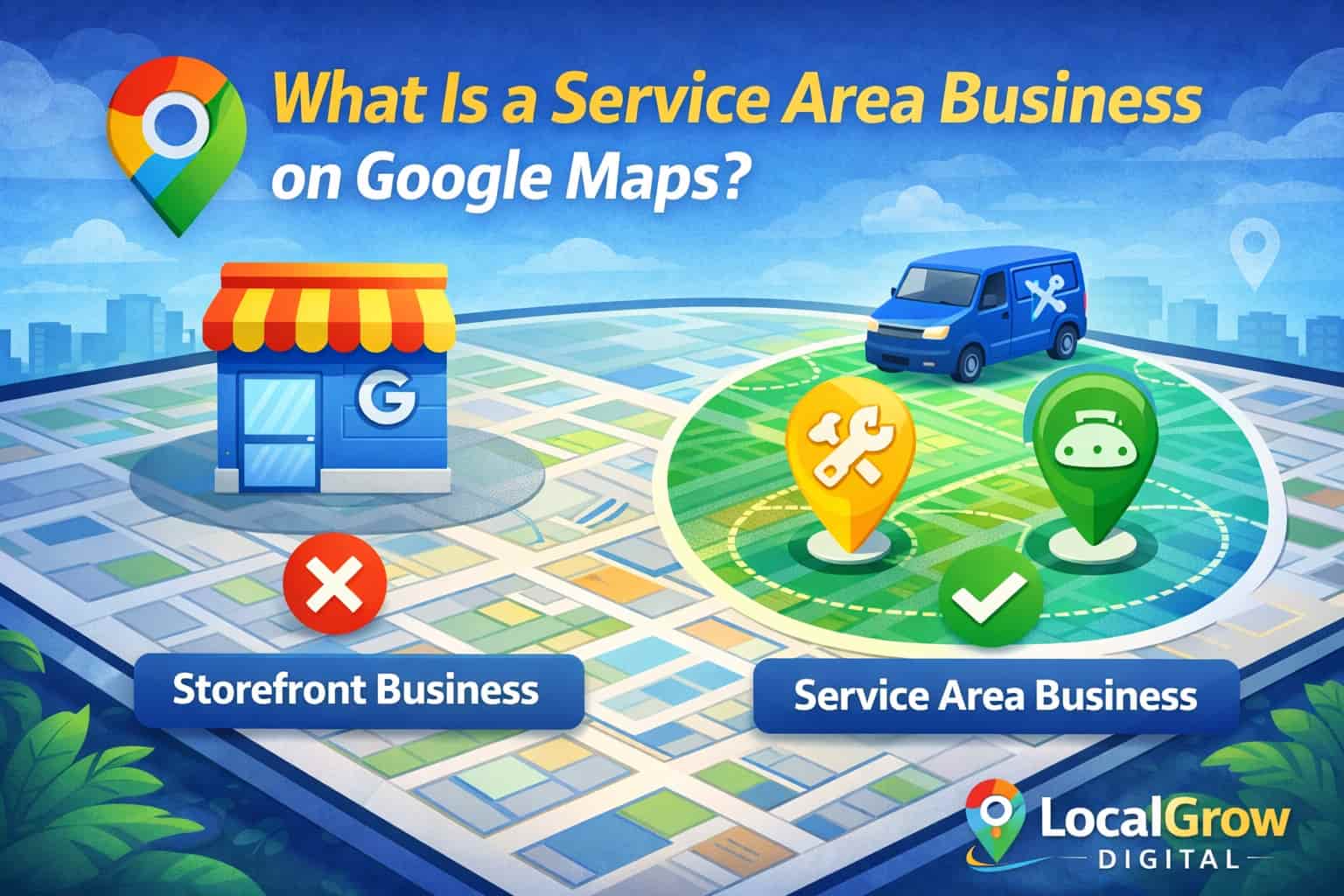
Examples of service area businesses include home service providers, consultants, repair technicians, logistics providers, and mobile professionals. These businesses rely heavily on Google Maps visibility to attract nearby customers.
How Google Treats Service Area Businesses Differently
Google applies additional verification and trust checks to service area businesses because they do not display a public address. This makes SAB SEO more sensitive to profile accuracy, category selection, and consistency signals.
Google clearly explains that service area businesses are evaluated differently from storefront locations, especially when an address is hidden and visibility depends on service areas, relevance, and trust signals.
- Address visibility restrictions
- Service area radius validation
- Stronger review trust requirements
- Website relevance confirmation
- Profile activity and engagement signals
Service Areas and Location Signals in Google Maps
Google uses service area data to estimate proximity and relevance for service area businesses. Incorrect service area setup can prevent listings from appearing even when the business is fully verified.
Adding too many locations or unrealistic coverage zones can reduce trust and limit Google Maps visibility for service area businesses.
Why Website SEO Is Critical for Service Area Businesses
For service area businesses, Google relies more heavily on website signals to verify legitimacy, services offered, and geographic relevance. A weak or unrelated website can block Google Maps rankings entirely.

Location-focused service pages, clear service descriptions, and consistent NAP details help Google confirm where and how a service area business operates.
Service Area Business SEO Readiness Checker (Tool)
This tool will analyze whether a service area business is correctly optimized for Google Maps visibility, including service areas, website relevance, and profile trust signals.
Common Service Area Business SEO Mistakes That Block Rankings
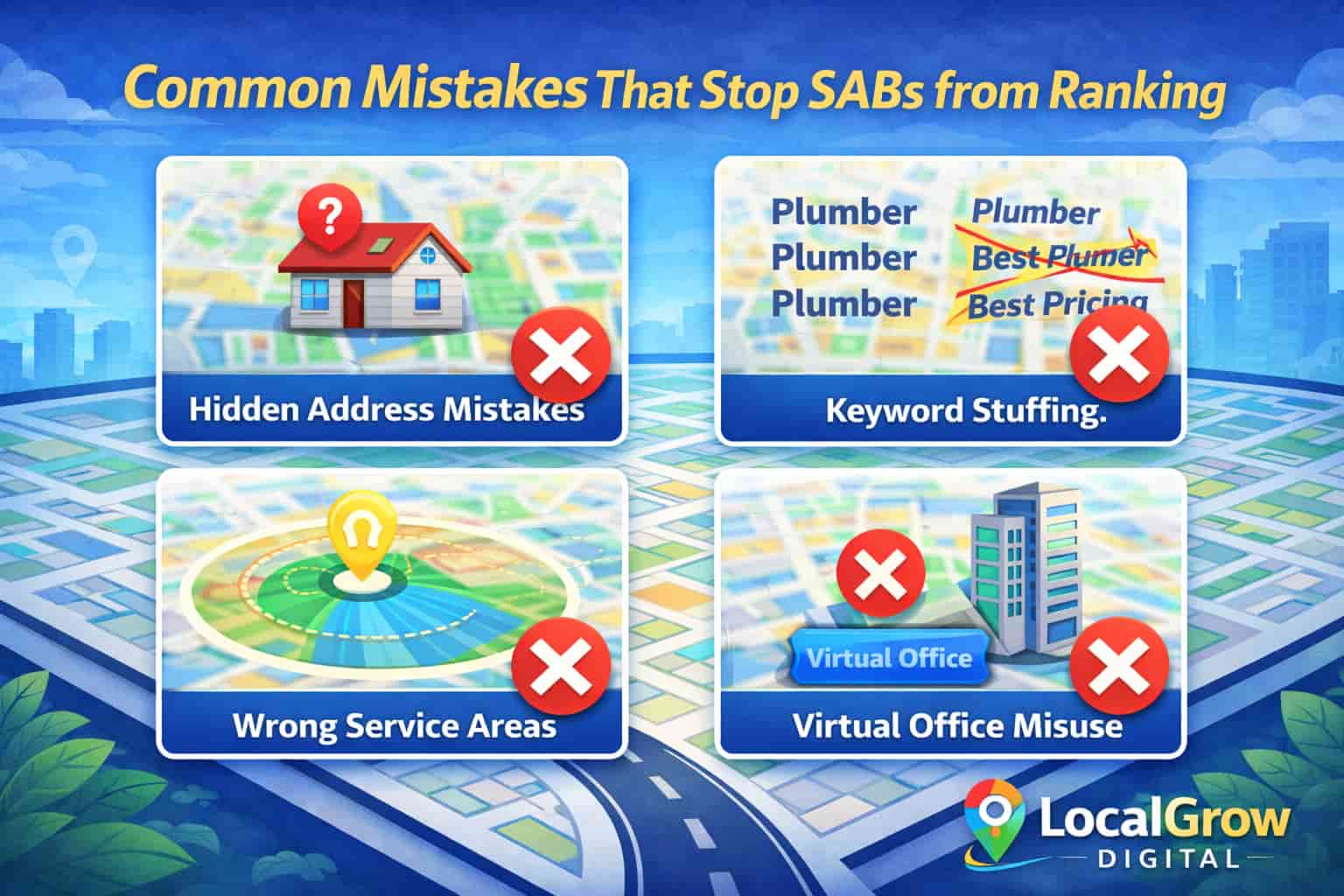
Many service area businesses fail to rank on Google Maps due to small but critical configuration mistakes. These errors often trigger Google’s internal filters, preventing listings from appearing even when the business is verified.

- Adding too many service areas far from the real operating zone
- Using virtual or shared office addresses
- Selecting incorrect primary business categories
- Weak or generic website service pages
- Inconsistent business information across platforms
How Reviews Influence Service Area Business Rankings
Reviews play a stronger trust role for service area businesses because Google cannot verify a physical storefront. Consistent, high-quality customer reviews help confirm legitimacy, service quality, and real-world activity.
Reviews work alongside other local SEO signals that Google uses to evaluate trust, prominence, and relevance for service area business listings.
Google reviews are a critical component of prominence, one of the three core factors Google uses to rank businesses on Google Maps, alongside relevance and distance.
— Google Business Profile Help Documentation
Website Optimization for Service Area Business SEO
For service area businesses, the website acts as a validation layer for Google Maps rankings. Google cross-checks website content to confirm services offered, locations served, and overall business legitimacy.
If a service area business website is not properly aligned with Google Maps strategy, professional Google Business Profile setup and optimization can help correct visibility issues and strengthen ranking signals.
- Location-specific service pages
- Clear service descriptions
- Consistent NAP details
- Fast mobile-friendly design
- Internal linking to service content
What Helps Service Area Businesses Rank
- Accurate service area settings
- Strong website relevance
- Consistent customer reviews
- Category accuracy
- Regular profile activity
What Hurts Service Area Business Visibility
- Fake or virtual addresses
- Overextended service areas
- Thin website content
- Duplicate listings
- Policy violations
Related Google Maps & Local SEO Guides
Understanding service area business SEO becomes easier when combined with insights from other Google Maps ranking guides that explain visibility, trust signals, and ranking behavior.
Learn why some businesses never rank on Google Maps even after optimization and how service area limitations affect visibility.
If rankings suddenly decline after edits or updates, this guide explains common causes of Google Maps ranking drops and recovery steps.
Service businesses should also understand how website SEO impacts Google Maps rankings and influences trust validation.
If your service area business is not ranking on Google Maps or visibility is inconsistent, professional optimization can help identify hidden issues and improve long-term performance.
Frequently Asked Questions About Service Area Business SEO
What is a service area business on Google Maps?
A service area business (SAB) is a business that travels to customers instead of serving them at a physical storefront. Examples include plumbers, electricians, cleaning services, and consultants.
Can service area businesses rank on Google Maps without an address?
Yes. Service area businesses can rank on Google Maps without showing an address, as long as the business is verified, policy-compliant, and properly optimized.
Why is my service area business not showing on Google Maps?
Common reasons include incorrect service area settings, category mismatch, weak website signals, policy violations, or over-extended service locations.
Does hiding the address reduce Google Maps ranking?
No. Hiding the address does not reduce rankings. Google expects service area businesses to hide their address if they don’t serve customers at a physical location.
How many service areas should I add in Google Business Profile?
Only add realistic service areas that you actively serve. Adding too many distant locations can reduce trust and limit visibility.
Do service area businesses need a website to rank on Google Maps?
A website is not mandatory, but it significantly improves trust, relevance, and ranking stability—especially for competitive service areas.
What categories work best for service area businesses?
Choose the most accurate primary category that reflects your core service. Avoid generic or unrelated categories, as they dilute relevance.
Can virtual offices be used for service area businesses?
No. Virtual offices and shared workspaces violate Google’s guidelines and often lead to ranking suppression or suspension.
How do reviews affect service area business rankings?
Reviews act as trust validation. Consistent, genuine reviews help confirm legitimacy and improve prominence for service area listings.
Does review response activity matter for SAB SEO?
Yes. Responding to reviews shows engagement and reliability, which indirectly supports Google Maps visibility.
Can a service area business rank in multiple cities?
It can appear across nearby cities if relevance and proximity align, but rankings weaken as distance from the business base increases.
What causes sudden ranking drops for service area businesses?
Common causes include profile edits, competitor activity, category changes, policy enforcement, or algorithm updates.
Does service area radius impact Google Maps visibility?
Yes. Extremely large service areas reduce location relevance and may limit ranking performance.
Is citation building important for service area businesses?
Yes. Consistent business listings across directories help reinforce trust and location signals.
How long does it take for a service area business to rank on Google Maps?
Most businesses see movement within 2–6 weeks after proper optimization, depending on competition and activity levels.
Can duplicate listings hurt service area business rankings?
Yes. Duplicate listings confuse Google and can suppress visibility across all profiles.
Does posting on Google Business Profile help service area businesses?
Yes. Regular posts signal activity and relevance, supporting ranking consistency.
Can service area businesses run Google Ads to improve Maps ranking?
No. Ads do not influence organic Google Maps rankings, though they can increase visibility separately.
Is professional optimization worth it for service area businesses?
Yes. Experts help avoid policy violations, improve trust signals, and accelerate ranking improvements.
Can service area business SEO guarantee top 3 rankings?
No guarantees exist, but correct optimization significantly improves ranking probability.