
Selling online without GST is one of the most searched compliance questions among marketplace sellers in India. Many individuals and businesses want to start selling on platforms like Amazon, Flipkart, and Meesho but remain unsure whether GST registration is mandatory. Confusion arises due to seller categories, turnover thresholds, interstate supply rules, and marketplace compliance policies.
Many sellers search whether gst for ecommerce sellers india differs across marketplaces. While onboarding flexibility may vary, GST law ultimately determines registration eligibility, making it essential to evaluate legal triggers before listing products online.
This guide explains whether sellers can legally operate without GST on Amazon, Flipkart, and Meesho, when GST becomes compulsory, and how sellers can remain compliant while starting or scaling online selling operations.
Before evaluating marketplace GST requirements, sellers should understand the complete registration framework explained in GST registration in India complete process, eligibility, and requirements.
Sellers operating without commercial premises must also review compliance rules explained in GST registration without business address in India to avoid verification challenges during marketplace onboarding.
This guide answers whether sellers can sell without GST on Amazon Flipkart Meesho and explains the legal compliance framework for marketplace selling in India.
What Does Selling Without GST on Amazon Flipkart Meesho Mean?
Selling without GST on Amazon, Flipkart, and Meesho refers to operating marketplace business activities without GST registration when eligibility conditions permit. Whether sellers can legally operate without GST depends on turnover threshold, interstate supply, seller category, and compulsory registration triggers under GST law.
Table of Contents
Selling without GST means operating marketplace or online business activities without GST registration, which may be legally permitted or restricted depending on seller category, turnover threshold, interstate supply, and marketplace compliance policies.
| Myth | Fact |
|---|---|
| You can always sell online without GST | GST requirement depends on seller category and platform rules |
| GST mandatory from day one | Some sellers may start without GST depending on turnover |
| Meesho allows selling without GST always | Eligibility depends on reseller category |
| Small sellers never need GST | Interstate supply rules may override threshold |
| GST approval automatic | Verification and compliance still required |
Can You Sell Without GST on Amazon Flipkart Meesho in India? Legal Reality Explained
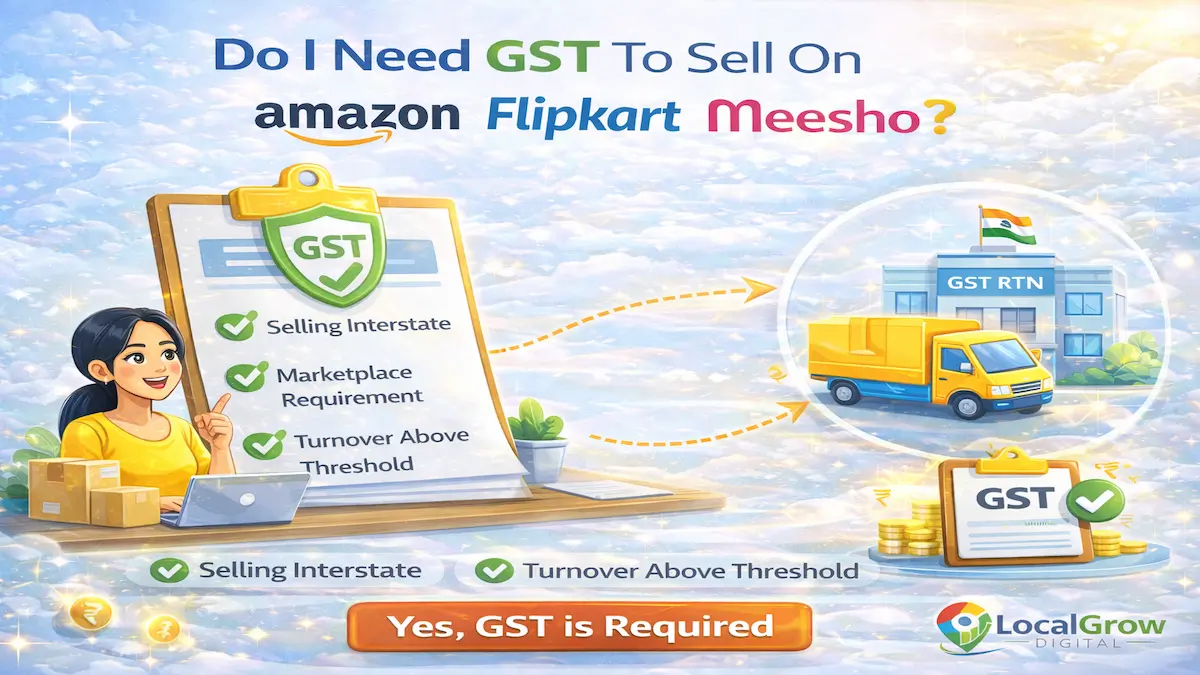
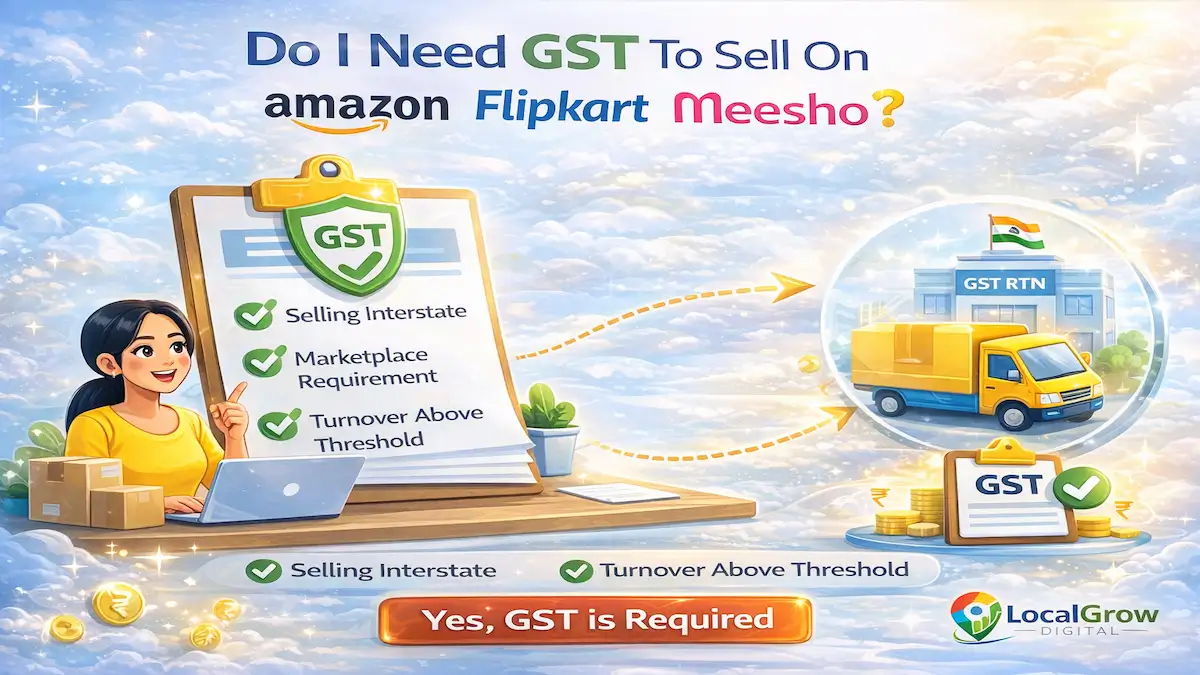
Yes, sellers can sell without GST on Amazon Flipkart Meesho only when turnover threshold applies and compulsory GST triggers like interstate supply, TCS collection, and e-commerce operator provisions are absent.
Is GST Mandatory for Selling on Amazon Flipkart Meesho for New Sellers
Selling without GST on marketplaces depends on regulatory triggers and platform compliance policies. GST law and marketplace operator rules jointly determine whether registration is mandatory.
To understand eligibility, documentation, and approval workflow, sellers should review GST registration in India complete guide covering process and requirements before marketplace onboarding.
Key determinants include seller category, interstate supply, marketplace TCS provisions, turnover threshold, and platform onboarding policies.
Understanding whether you can sell without GST on Amazon Flipkart Meesho depends on compulsory registration triggers and marketplace logistics structure.
Marketplace GST eligibility is not determined by turnover alone — platform policies, interstate supply rules, and TCS provisions significantly influence GST registration requirements.
— LocalGrow Digital Compliance Desk
What GST Law Says About Selling on Amazon Flipkart Meesho Without Registration
Does GST Turnover Threshold Apply to Marketplace Sellers
GST compliance for marketplace sellers arises from provisions related to e-commerce operators, interstate supply, and tax collection at source (TCS). These rules may override normal GST threshold exemptions applicable to offline sellers.
Legal triggers include compulsory registration provisions, marketplace TCS collection, interstate supply, and seller verification requirements.
Marketplace compliance rules such as amazon gst requirement india, flipkart gst policy sellers, and meesho seller gst rules are influenced by compulsory registration provisions applicable to e-commerce operators under GST law.
Under GST law, sellers supplying goods through e-commerce operators may be required to obtain GST registration irrespective of turnover in certain scenarios.
Seller Confusion
- Multiple platform policies
- Threshold misunderstanding
- Interstate supply confusion
- Marketplace myths
- Seller category uncertainty
Reality
• Platform compliance varies
• GST law overrides myths
• Threshold has exceptions
• TCS impacts GST requirement
• Seller category determines eligibility
Compulsory GST registration provisions under CGST Act, e-commerce operator compliance rules, interstate supply definition, and TCS framework collectively determine marketplace GST applicability.
Why GST Rules for Amazon Flipkart Meesho Create Confusion for Online Sellers
Why Do Different Platforms Show Different GST Requirements
Different marketplaces have varying onboarding and compliance expectations, creating confusion among new sellers regarding GST requirements. However, GST law remains the ultimate determining authority irrespective of platform flexibility.
Confusion increases when sellers encounter mixed information regarding gst threshold ecommerce seller rules and marketplace onboarding requirements, often leading to incorrect assumptions about eligibility.
Marketplace GST compliance directly impacts seller onboarding approval, account suspension risk, penalty exposure, and tax credit eligibility. Understanding GST applicability before listing products helps sellers avoid compliance disputes and marketplace account restrictions.
| Factor | Impact on GST Requirement |
|---|---|
| Interstate supply | Often triggers mandatory GST |
| Marketplace TCS | May require GST registration |
| Reseller model | Depends on platform rules |
| Handmade sellers | May qualify under exemptions |
| Dropshipping model | Often requires GST |
| Digital sellers | Depends on supply classification |
| Service sellers | Threshold rules differ |
Why Do New Online Sellers Believe GST Is Optional on Marketplaces?
Many new marketplace sellers assume GST is optional because of turnover threshold exemptions, reseller myths, and platform onboarding flexibility. However, GST eligibility for marketplace selling depends on compulsory registration provisions, interstate supply, and marketplace TCS mechanisms rather than turnover alone.
When Can Sellers Legally Sell Without GST on Online Marketplaces in India
How to Check If You Can Sell Without GST Before Listing Products
In certain cases, sellers may legally operate without GST registration, particularly when transactions fall below threshold limits and do not involve compulsory registration triggers.
Selling without GST on marketplaces is allowed only when transactions do not trigger compulsory registration provisions such as interstate supply, e-commerce operator TCS, or threshold breach.
Possible scenarios include intrastate supply within threshold, reseller models, service-based selling within limits, and composition scheme eligibility. However, platform onboarding policies may still require GST registration.
Accurate document preparation prevents onboarding rejection and compliance delays. Sellers should review documents required for GST registration in India checklist before applying.
Understanding gst compulsory registration ecommerce provisions is critical because certain supply scenarios automatically trigger GST requirement regardless of turnover limits.
| Scenario | GST Requirement |
|---|---|
| Intrastate low turnover selling | Possible exemption |
| Interstate shipping | GST mandatory |
| Marketplace warehouse dispatch | GST mandatory |
| Handmade local selling | Possible exemption |
| Dropshipping cross-state | GST required |
Sellers exploring how to sell without GST on Amazon Flipkart Meesho must evaluate interstate supply, platform policy, and turnover threshold together.
Marketplace flexibility may vary, but GST law ultimately determines registration eligibility irrespective of platform onboarding policies.
— LocalGrow Digital Compliance Desk
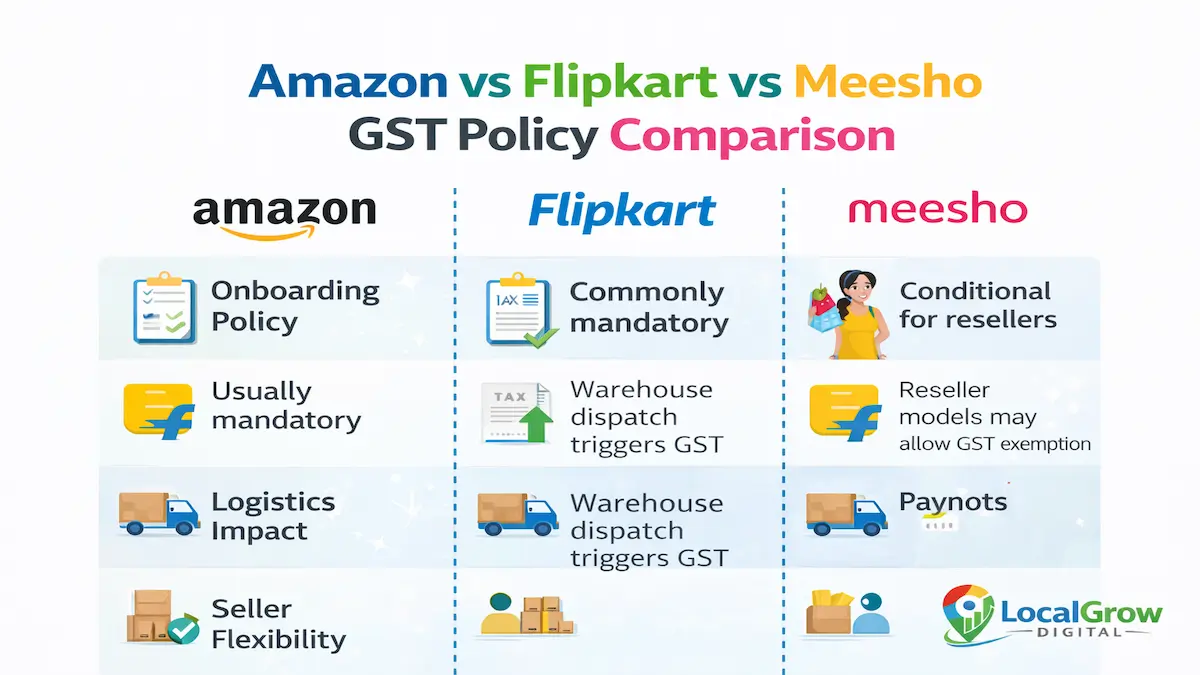
Is GST Mandatory for Selling on Amazon Flipkart Meesho? Platform-Wise Rules Explained
Selling requirements differ across marketplaces due to onboarding policies, seller category restrictions, and GST compliance frameworks. While platforms may show flexibility in certain reseller models, GST law ultimately determines whether registration becomes compulsory.
Marketplace onboarding rules such as amazon gst requirement india, flipkart gst policy sellers, and meesho seller gst rules influence seller eligibility and account approval during verification.
| Marketplace | GST Requirement Trend | Key Trigger |
|---|---|---|
| Amazon | Usually mandatory | Interstate supply & TCS |
| Flipkart | Mandatory in most cases | E-commerce operator rule |
| Meesho | Conditional for resellers | Seller category dependent |
Marketplace GST requirement depends on seller category, supply type, and compulsory registration provisions rather than platform flexibility alone.
Amazon Seller GST Rules in India: When Registration Becomes Mandatory
Amazon sellers generally require GST registration due to interstate logistics, warehouse distribution models, and marketplace TCS provisions applicable under GST law.
Most sellers encounter gst compulsory registration ecommerce triggers when fulfilling orders across states through Amazon fulfillment networks.
Flipkart GST Policy for Sellers: Compliance Requirements Explained
Flipkart onboarding typically requires GST registration due to mandatory tax collection at source and interstate delivery operations supported by the platform logistics network.
Meesho Seller GST Rules: Can Resellers Sell Without GST
Meesho allows certain reseller models where sellers operate without inventory ownership, which may enable GST exemption depending on supply structure and turnover threshold.
However, misunderstanding gst threshold ecommerce seller provisions often leads to incorrect assumptions regarding Meesho GST eligibility.
Reseller vs Manufacturer vs Dropshipper: GST Eligibility Decision Engine
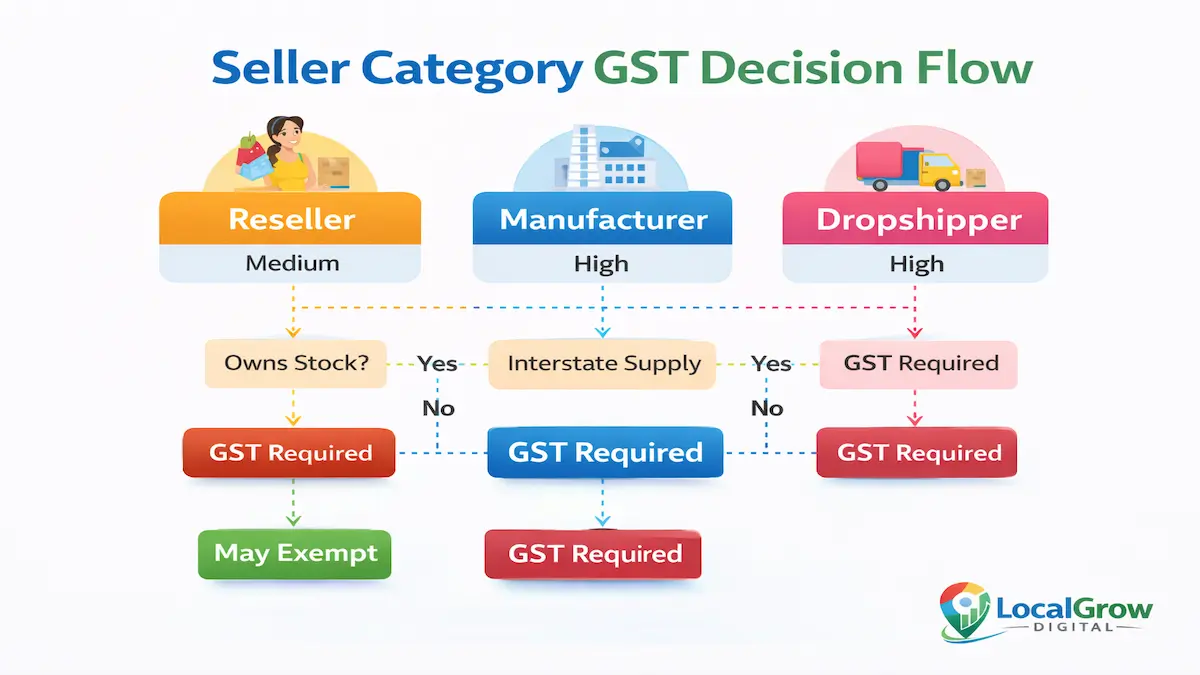
GST applicability varies significantly depending on seller business model. Inventory ownership, billing structure, and supply classification determine whether registration becomes compulsory.
| Seller Type | GST Risk |
|---|---|
| Reseller | Medium |
| Manufacturer | High |
| Dropshipper | High |
| Handmade seller | Low |
| Service seller | Conditional |
How to Know If You Need GST Before Marketplace Onboarding
Before listing products, sellers must evaluate compulsory registration triggers including interstate supply, e-commerce operator provisions, and turnover threshold applicability.
GST eligibility should be determined before marketplace onboarding to prevent account suspension, compliance disputes, or penalty exposure.
Understanding marketplace-specific GST rules helps sellers choose the right onboarding strategy and avoid compliance risks while scaling online selling operations.
Does GST Turnover Threshold Apply to Amazon Flipkart Meesho Sellers
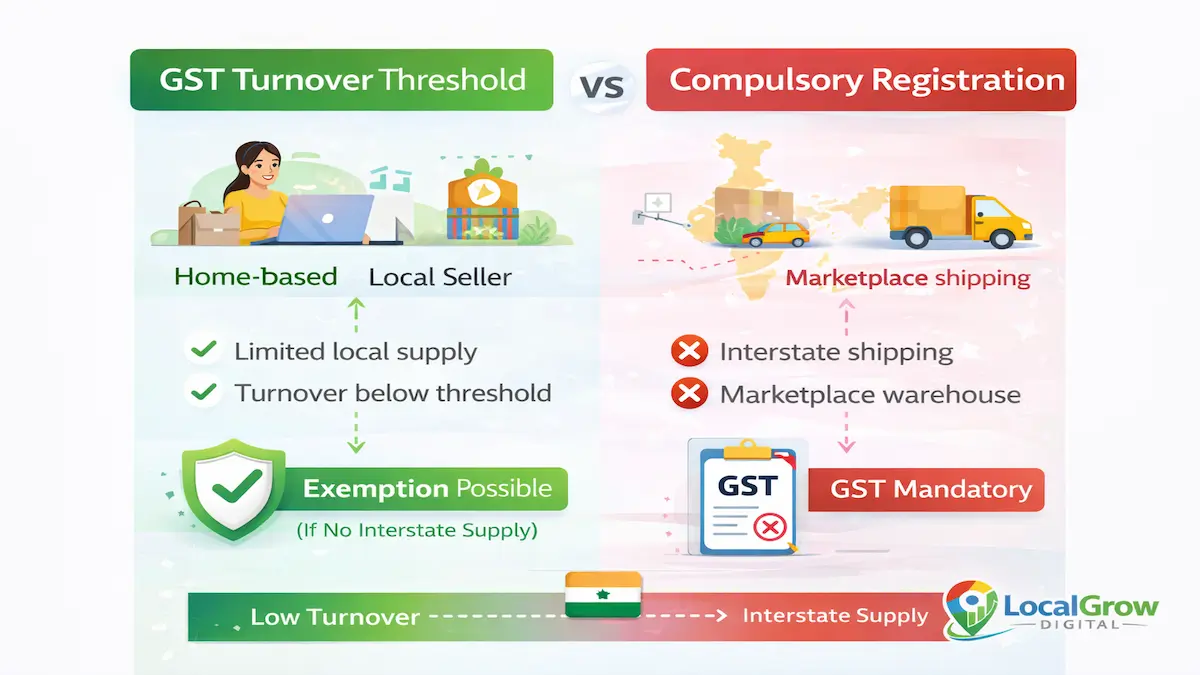
GST threshold exemptions allow certain businesses to operate without registration if turnover remains within prescribed limits. However, marketplace sellers may lose threshold benefit when compulsory registration provisions apply.
Many sellers misunderstand gst threshold ecommerce seller rules, assuming turnover exemption always applies, which may lead to compliance violations during marketplace operations.
GST threshold exemption does not apply when compulsory registration provisions such as interstate supply or e-commerce operator supply are triggered.
Is Interstate Supply the Biggest Reason GST Becomes Mandatory for Marketplace Sellers
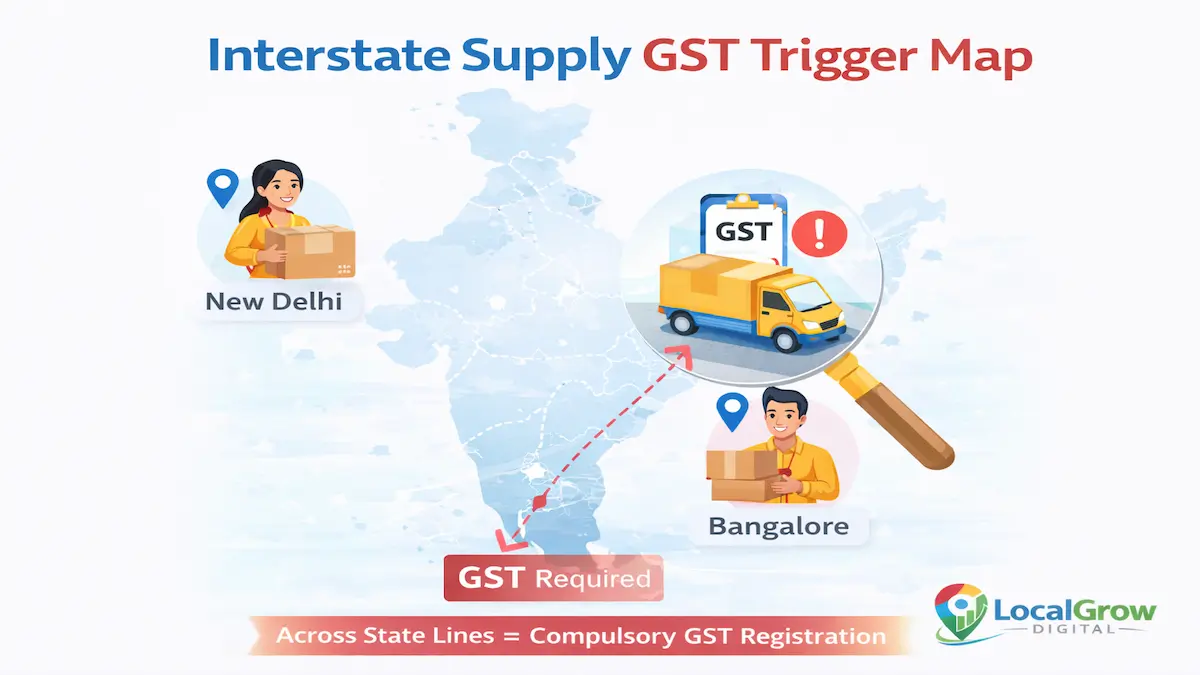
Interstate supply is one of the most critical triggers requiring GST registration. Marketplace logistics networks often deliver products across state boundaries, automatically activating compulsory registration provisions.
| Scenario | GST Impact |
|---|---|
| Intrastate selling | Threshold may apply |
| Interstate supply | GST mandatory |
| Marketplace warehouse dispatch | GST mandatory |
| Direct local delivery | Conditional |
How Marketplace Logistics Automatically Trigger GST Requirement
Marketplace logistics networks often involve interstate delivery, warehouse dispatch, and fulfillment operations that automatically activate compulsory GST registration provisions. Even low turnover sellers may require GST when marketplace logistics create interstate supply conditions under GST law.
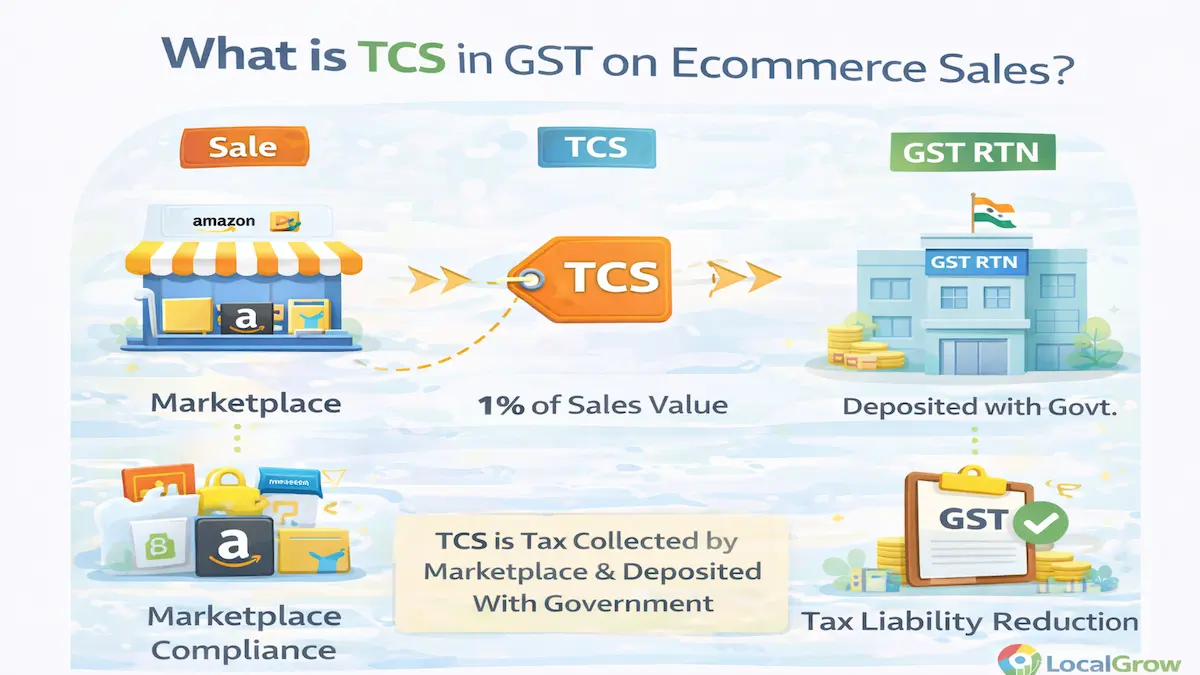
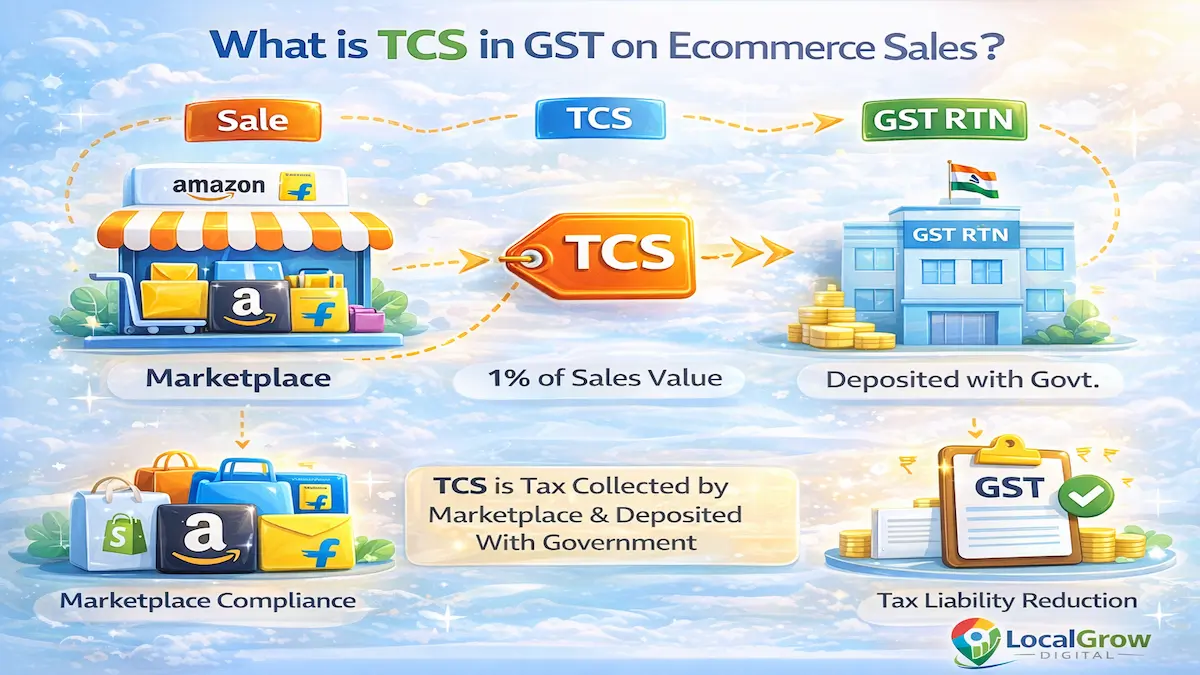
What Is TCS and How It Makes GST Mandatory for Amazon Flipkart Meesho Sellers
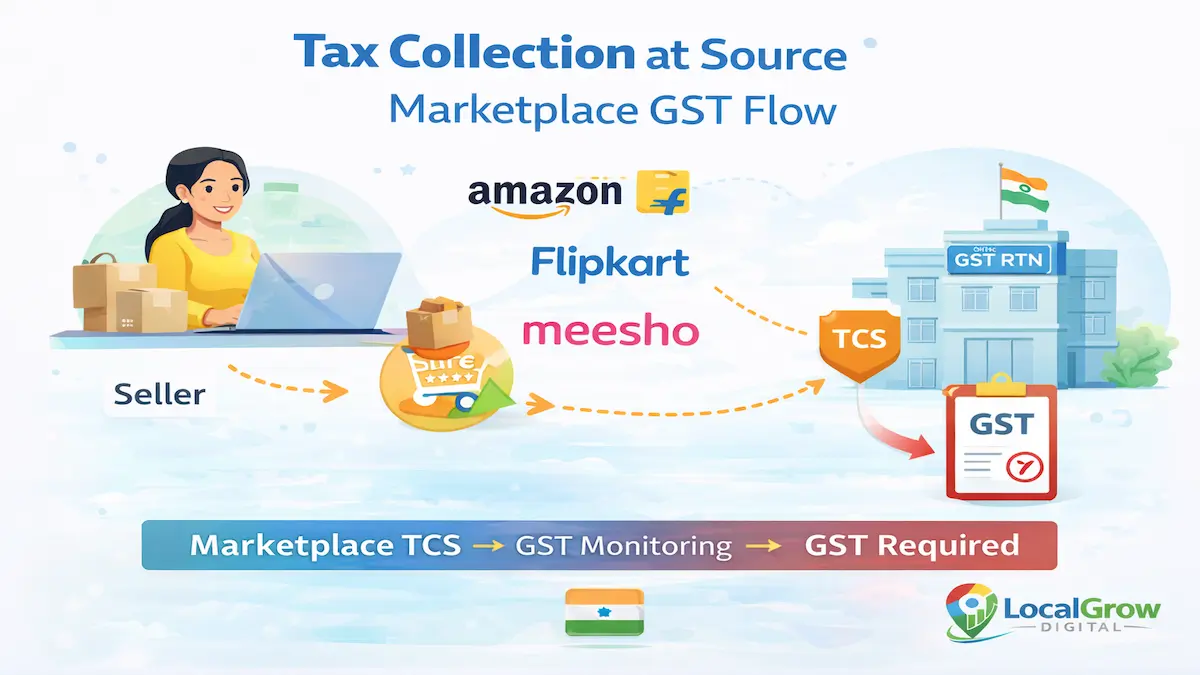
Tax Collection at Source (TCS) is collected by e-commerce operators on seller transactions. This mechanism strengthens compliance monitoring and often necessitates GST registration for marketplace sellers.
Marketplace TCS provisions fall under gst compulsory registration ecommerce triggers, making GST registration essential for many sellers despite turnover exemptions.
TCS provisions allow GST authorities to track marketplace transactions, increasing compliance enforcement and reducing threshold exemption applicability.
What Happens If You Sell on Amazon Flipkart Meesho Without GST
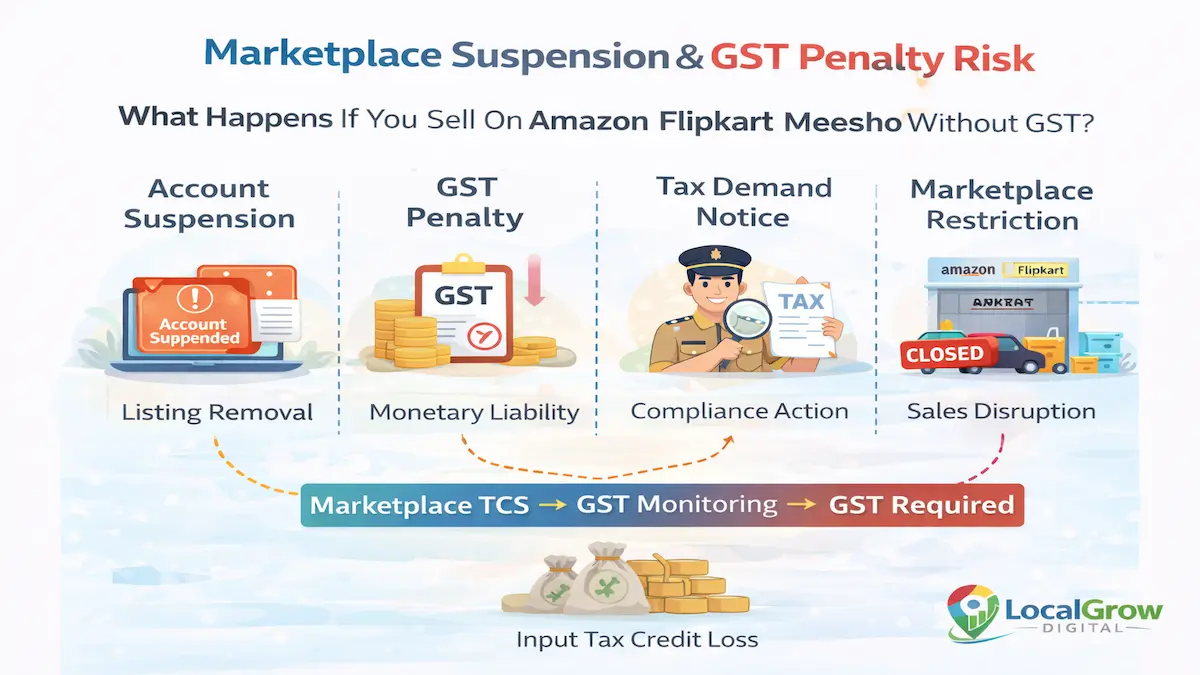
Selling without GST when registration is mandatory may lead to account suspension, penalty exposure, tax demand notices, and compliance disputes with marketplace operators.
| Risk | Impact |
|---|---|
| Account suspension | Listing removal |
| GST penalty | Monetary liability |
| Tax demand notice | Compliance action |
| Marketplace restriction | Sales disruption |
| Input tax credit loss | Financial impact |
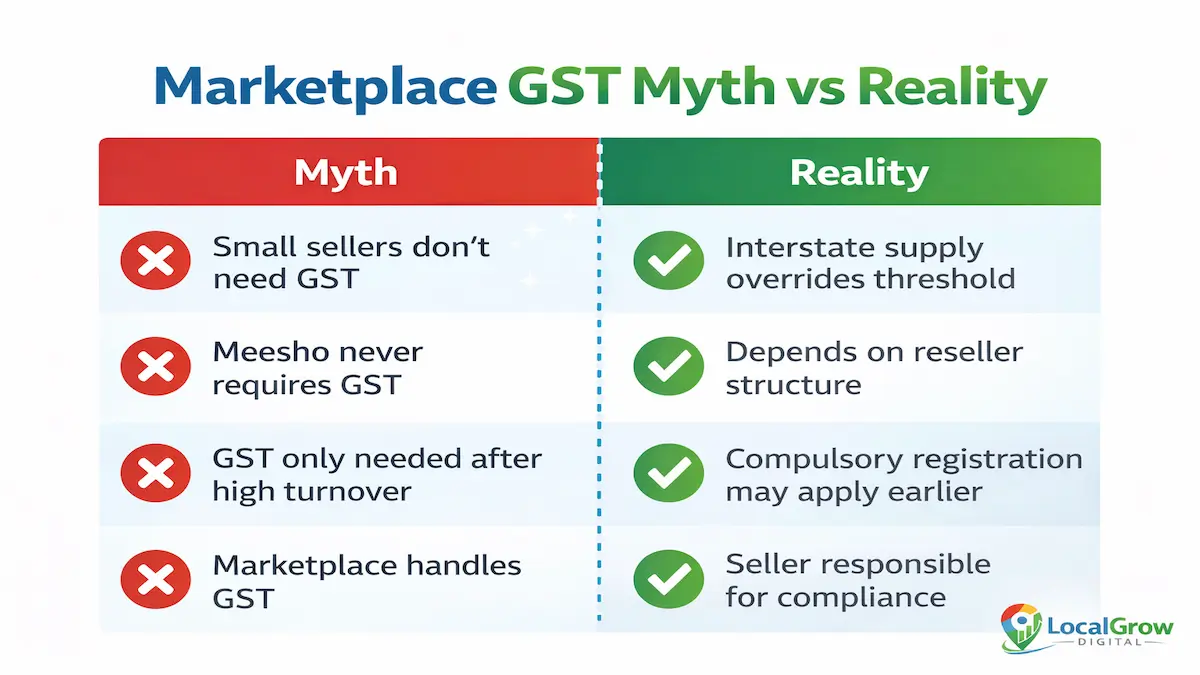
Common Myths About Selling Online Without GST (Myth vs Reality)
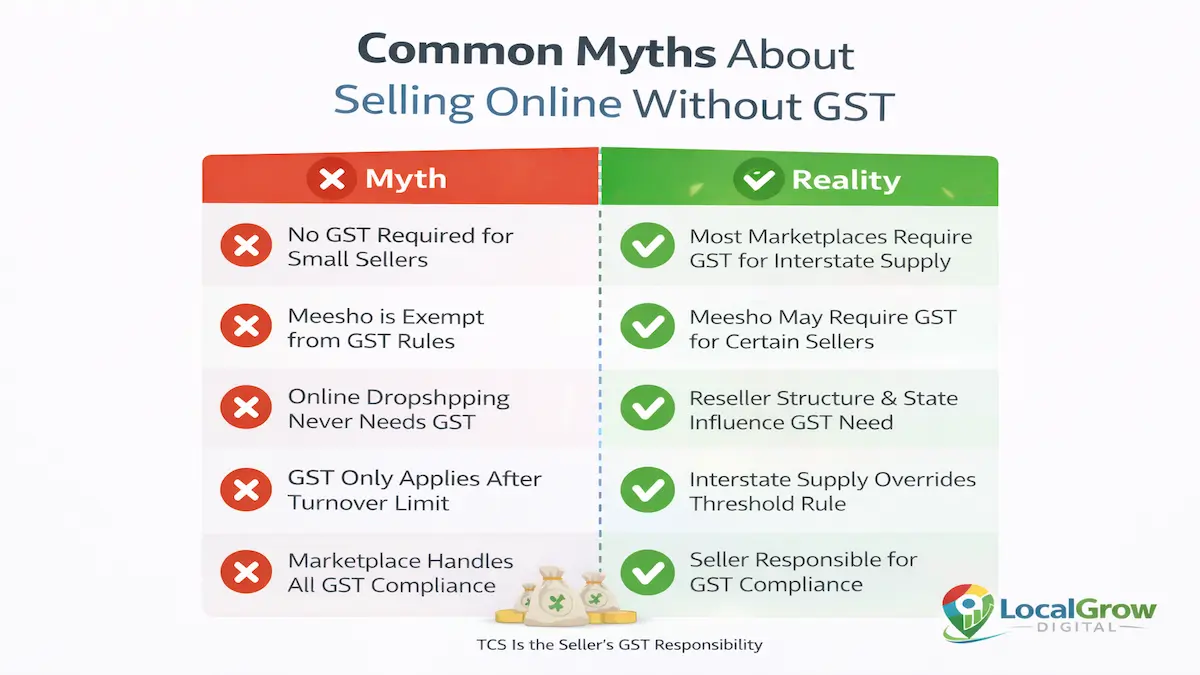
| Myth | Reality |
|---|---|
| Small sellers don’t need GST | Interstate supply overrides threshold |
| Meesho never requires GST | Depends on reseller structure |
| GST only needed after high turnover | Compulsory registration may apply earlier |
| Marketplace handles GST | Seller responsible for compliance |
Decision Tree: How to Know If You Can Sell Without GST on Marketplaces
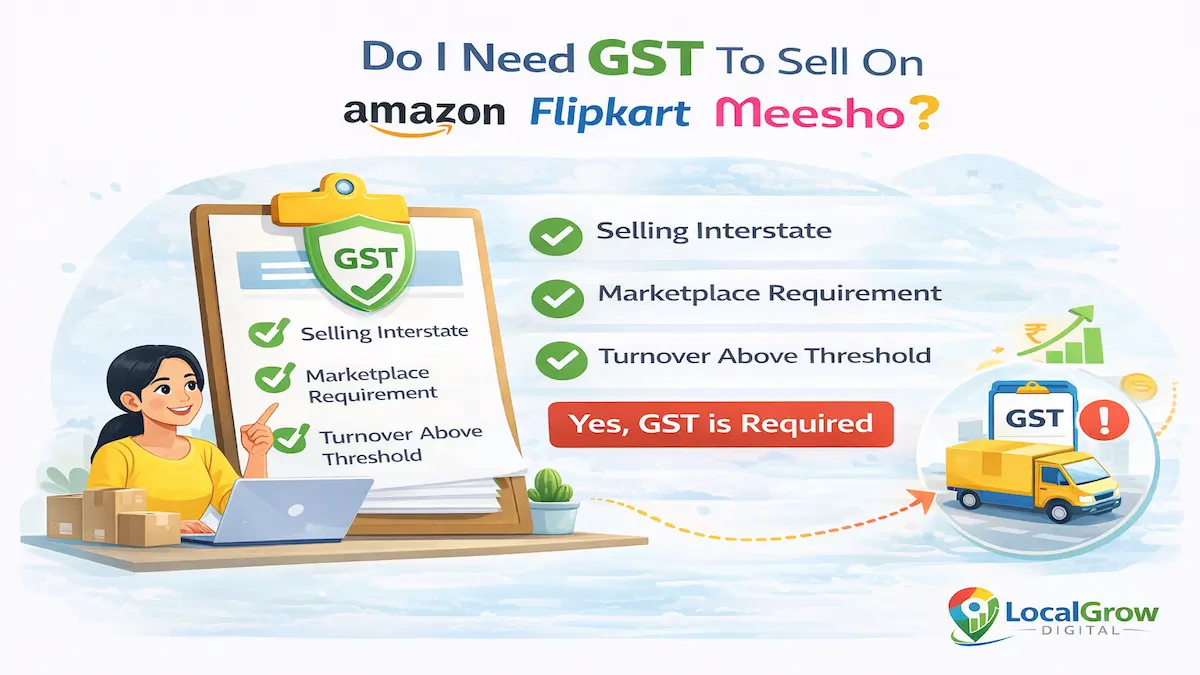
Determining GST eligibility requires evaluating supply structure, seller category, turnover threshold, and compulsory registration triggers before marketplace onboarding.
| Question | If Yes | If No |
|---|---|---|
| Interstate supply? | GST required | Check threshold |
| Selling via marketplace? | Likely GST required | Threshold applies |
| Turnover exceeds limit? | GST required | Possible exemption |
| Using warehouse logistics? | GST required | Conditional |
Many sellers ask: Can I sell online without GST legally? Is GST mandatory for ecommerce sellers below threshold? Does Meesho allow GST exemption? These questions highlight the need to evaluate supply structure before marketplace onboarding.
Understanding threshold limitations, interstate supply triggers, and marketplace TCS provisions enables sellers to make accurate GST decisions and avoid compliance risks before starting online selling operations.
Can Marketplace Sales Be Tracked by GST Authorities?
GST authorities can track marketplace sales through TCS reporting, banking trails, logistics movement records, and platform transaction analytics. This data visibility significantly increases compliance monitoring and strengthens compulsory registration enforcement for marketplace sellers.
What Penalties Apply If You Sell on Amazon Flipkart Meesho Without GST Registration
Selling on marketplaces without GST when compulsory registration provisions apply may trigger financial penalties, platform suspension, and tax recovery proceedings under GST compliance rules.
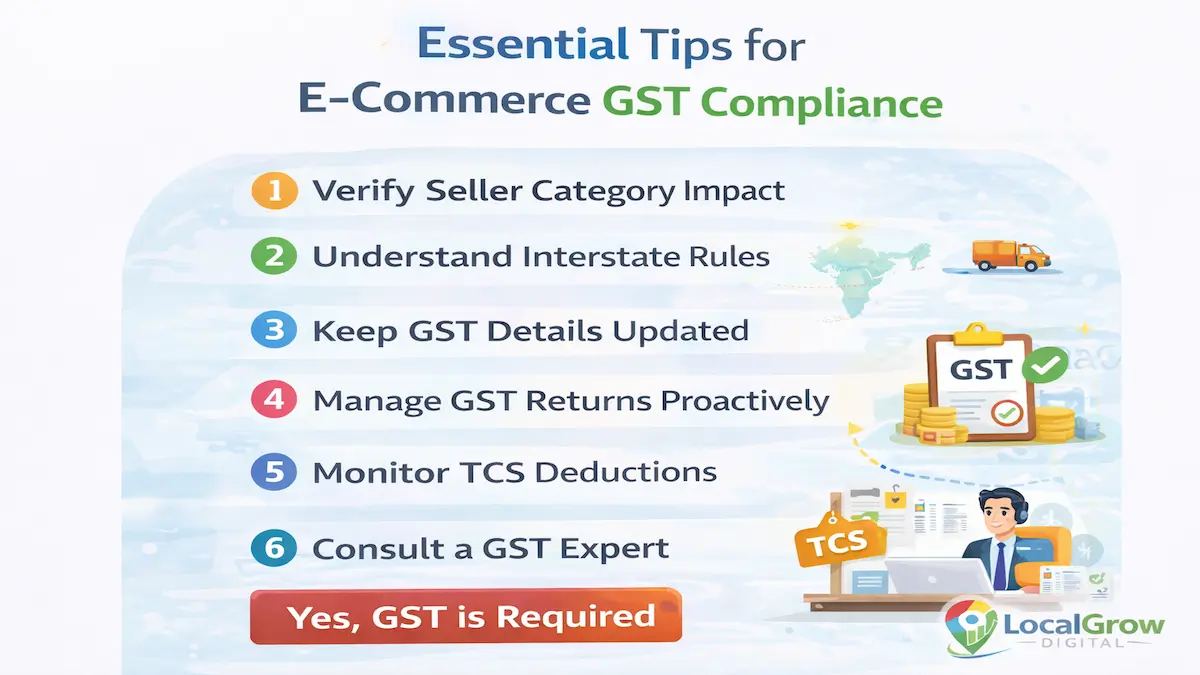
| Risk Category | Impact |
|---|---|
| Monetary penalty | ₹10,000 or tax amount |
| Marketplace suspension | Listing removal |
| Tax recovery notice | Interest + liability |
| Compliance audit | Verification action |
| Input credit loss | Financial impact |
Operating without mandatory GST may lead to legal exposure explained in penalty for not registering GST in India complete guide for marketplace sellers.
Operating without mandatory GST registration may attract penalties and tax demand notices, particularly when marketplace transactions are traceable through TCS reporting mechanisms.
— LocalGrow Digital Compliance Desk
How GST Officers Detect Sellers Operating Without GST on Marketplaces
GST authorities leverage marketplace TCS data, banking trails, logistics records, and transaction analytics to identify sellers operating without GST registration despite compulsory registration triggers.
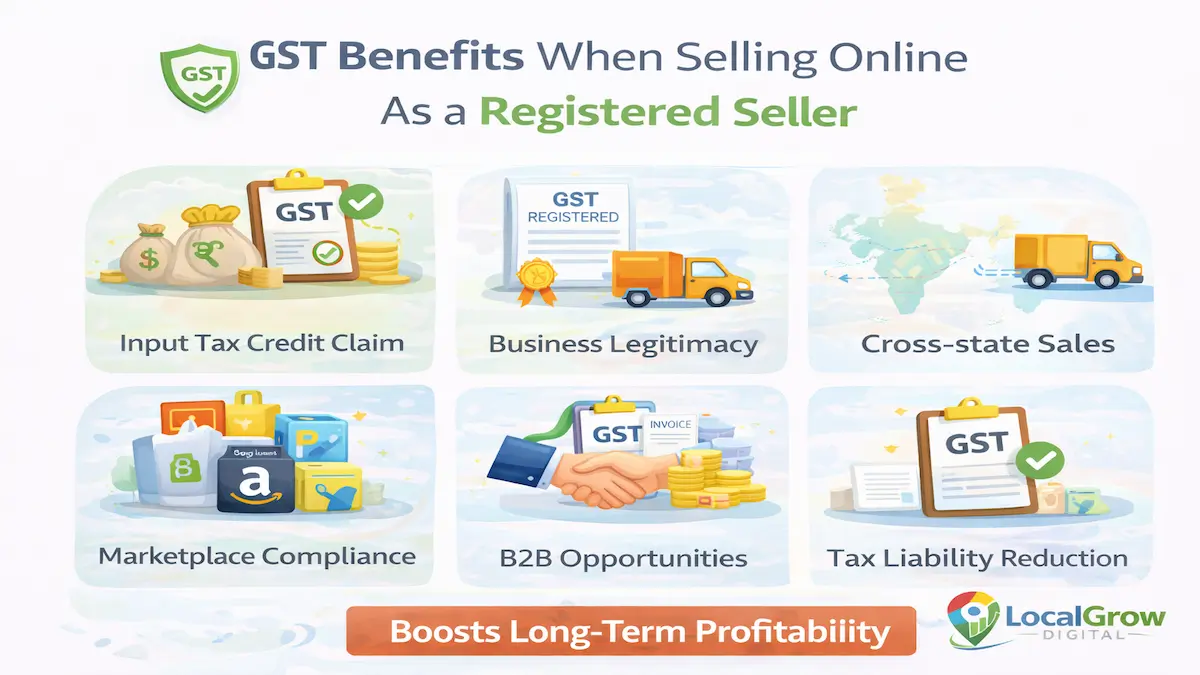
- TCS transaction tracking
- Marketplace seller reporting
- Banking transaction analysis
- Logistics movement data
- Cross-state delivery patterns
- AI risk scoring models
GST Officer Verification Psychology: Why Some Sellers Get Flagged Faster
GST officers prioritize verification for applications and marketplace sellers showing inconsistent documentation, suspicious transaction patterns, or classification mismatches.
GST verification decisions are driven by authenticity signals, documentation consistency, and transaction transparency rather than turnover alone.
— LocalGrow Digital Verification Research Team
Marketplace Account Suspension Triggers Linked to GST Non-Compliance
Marketplace platforms enforce strict GST compliance rules. Sellers failing verification or lacking valid GST details may face account restriction, listing removal, or delayed payouts.
If GST onboarding fails during marketplace verification, sellers should review GST registration rejected in India reasons and fix guide to avoid repeated rejection.
Compliance Strategy: How to Sell Online Without GST Safely (Where Allowed)
Certain selling models may operate without GST when threshold exemption applies and compulsory registration triggers are absent. However, sellers must evaluate supply structure and platform requirements carefully.
| Scenario | Safe Without GST |
|---|---|
| Intrastate handmade selling | Possible |
| Low turnover local supply | Possible |
| Marketplace warehouse selling | Risky |
| Interstate marketplace delivery | GST mandatory |
| Dropshipping cross-state | GST mandatory |
Expert Compliance Strategy to Avoid GST Risk While Scaling Marketplace Sales
Structured compliance planning helps sellers scale marketplace operations without suspension risk, penalty exposure, or GST disputes.
Marketplace GST compliance impacts seller profitability, tax credit optimization, platform payout stability, ecommerce compliance cost, and long-term online business scalability.
DIY Risk
- Policy misinterpretation
- Threshold confusion
- Suspension exposure
- Penalty risk
- Compliance gaps
Expert Strategy
• Eligibility verification
• Marketplace policy alignment
• Documentation audit
• Compliance planning
• Suspension prevention
Marketplace growth becomes sustainable only when GST compliance strategy is aligned with platform logistics and interstate supply realities.
— LocalGrow Digital Marketplace Strategy Team
Sellers planning GST registration should also understand cost expectations explained in GST registration fees in India government vs consultant cost comparison before applying.
Understanding penalty exposure, officer verification behavior, and marketplace compliance rules empowers sellers to make accurate GST decisions while avoiding suspension and legal risk during online selling.
Real Case Scenarios: When Sellers Can and Cannot Sell Without GST on Amazon Flipkart Meesho
Marketplace GST applicability varies significantly based on seller model, supply structure, turnover threshold, and logistics network. Real scenarios help clarify when GST becomes mandatory and when exemption may apply.
| Seller Scenario | GST Required |
|---|---|
| Handmade seller shipping within state | Possibly not |
| Dropshipping cross-state orders | GST required |
| Meesho reseller local delivery | Conditional |
| Amazon FBA warehouse selling | GST required |
| Manufacturer selling interstate | GST required |
| Low turnover direct local selling | Possible exemption |
Does Dropshipping Require GST on Amazon Flipkart Meesho (Deep Compliance Explanation)
Dropshipping models often trigger interstate supply because products are shipped from supplier location directly to customers across states. This interstate nature frequently activates compulsory GST registration requirements.
Many queries around dropshipping gst india marketplace arise due to misunderstanding of supply origin versus seller location, which can create compliance exposure if not evaluated correctly.
Reseller Loophole Myths: Why Many Sellers Believe They Don’t Need GST
Reseller myths often stem from confusion around platform GST handling, threshold exemptions, and supplier GST usage. Marketplace compliance rules place responsibility on the seller rather than platform.
| Myth | Reality |
|---|---|
| Platform handles GST | Seller responsible |
| Supplier GST enough | Seller GST may still required |
| Low turnover = no GST | Interstate supply overrides |
| Meesho never needs GST | Depends on logistics model |
Sellers operating without commercial premises should understand verification rules explained in GST registration without business address in India eligibility guide.
Amazon vs Flipkart vs Meesho Exception Logic (Where GST Rules Differ)
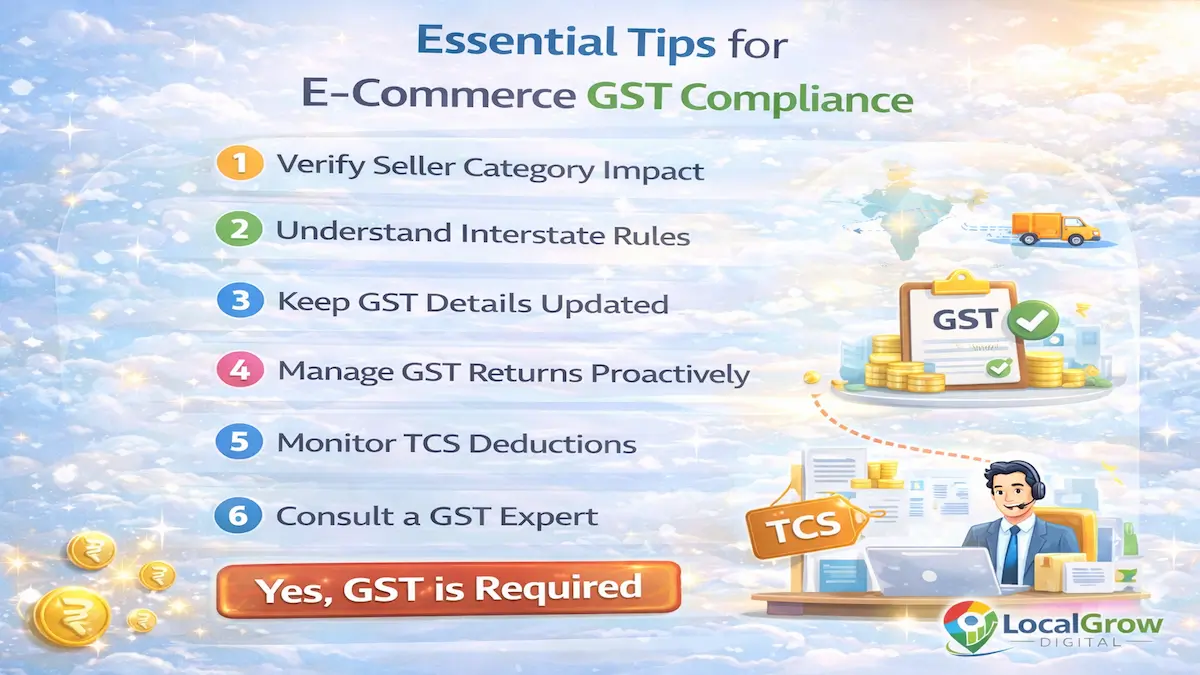
While GST law remains uniform, marketplace operational policies differ in logistics handling, warehousing, and seller onboarding requirements, influencing GST applicability perception among sellers.
| Platform | Key GST Factor |
|---|---|
| Amazon | FBA interstate logistics |
| Flipkart | Warehouse dispatch triggers |
| Meesho | Reseller model flexibility |
| All platforms | TCS tracking enforcement |
Marketplace GST applicability varies by seller category, explained in detail in GST for online sellers in India marketplace compliance guide.
Expert Decision Engine: Should You Register GST Before Selling Online
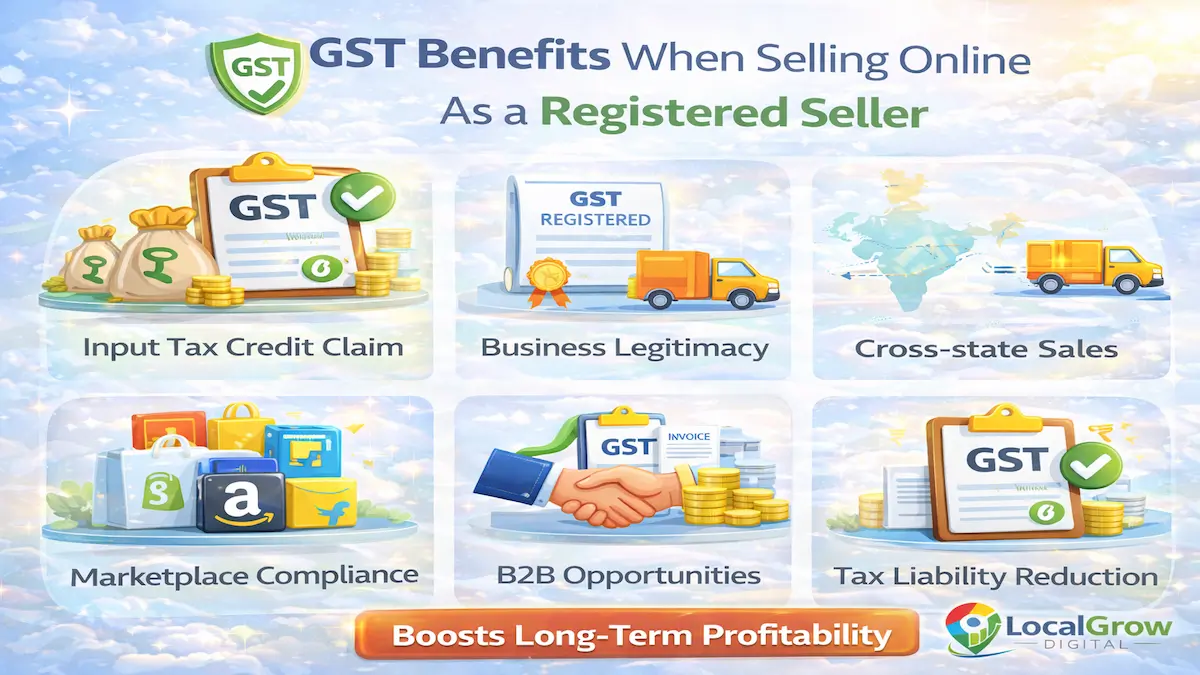
GST decision requires evaluating turnover, interstate supply, logistics model, marketplace policy, and business expansion plans before starting marketplace sales.
| Question | Action |
|---|---|
| Interstate shipping expected? | Register GST |
| Warehouse logistics used? | Register GST |
| Low turnover local selling only? | Check exemption |
| Dropshipping model? | Likely GST |
| Scaling plans? | Register early |
Sellers ready to register GST should follow the structured steps explained in how to apply for GST registration online in India step-by-step guide.
Special Scenario Matrix: Marketplace GST Rules for Different Seller Categories
| Seller Category | GST Risk Level |
|---|---|
| Handmade sellers | Low |
| Local resellers | Medium |
| Dropshippers | High |
| Manufacturers | High |
| Export sellers | GST required |
| Multi-state sellers | GST required |
Sellers restructuring business models should understand procedures explained in cancel GST registration in India step-by-step process before transitioning.
Marketplace GST compliance should be evaluated based on supply structure rather than turnover alone, as interstate logistics frequently override exemption thresholds.
— LocalGrow Digital Marketplace Compliance Team
Understanding real scenarios, dropshipping implications, and platform exception logic helps sellers make informed GST decisions while preventing suspension risk and compliance disputes.
Final GST Eligibility Checklist for Marketplace Sellers
| Question | If Yes | If No |
|---|---|---|
| Interstate shipping expected | GST required | Check threshold |
| Using marketplace warehouse | GST required | Conditional |
| Dropshipping model | Likely GST | Evaluate supply |
| Low turnover intrastate selling | Possible exemption | Monitor threshold |
| Scaling multi-state sales | GST recommended | Evaluate strategy |
Frequently Asked Questions: Selling Without GST on Amazon Flipkart Meesho
Can I sell on Meesho without GST in India legally
Yes, certain Meesho reseller models may allow selling without GST if turnover remains below threshold and interstate supply is not triggered. However, logistics structure, supplier location, and marketplace shipping behavior must be evaluated carefully because interstate movement automatically activates compulsory GST registration requirements.
Is GST mandatory for Amazon sellers in India
GST is generally mandatory for Amazon sellers because marketplace logistics and warehouse dispatch frequently involve interstate supply. Amazon’s fulfillment infrastructure often triggers compulsory registration provisions even for low turnover sellers.
Can small sellers sell on Flipkart without GST
Flipkart sellers may operate without GST only when turnover exemption applies and interstate supply does not occur. However, warehouse logistics and platform compliance rules commonly require GST registration.
Why does GST become compulsory even below turnover limit for marketplace sellers
GST becomes compulsory when interstate supply, e-commerce operator selling, or TCS provisions apply. These triggers override threshold exemption and require registration regardless of turnover.
What is TCS in GST for marketplace sellers
Tax Collection at Source (TCS) is collected by e-commerce platforms on seller transactions. This mechanism allows GST authorities to monitor marketplace sales and enforce compliance requirements.
Can dropshipping be done without GST in India
Dropshipping often triggers interstate supply because goods ship from supplier location to customer across states. This interstate nature usually makes GST registration mandatory despite turnover exemptions.
Is GST required for handmade sellers on marketplaces
Handmade sellers may avoid GST if turnover remains within threshold and supply is intrastate. However, interstate delivery through marketplace logistics can activate compulsory registration provisions.
How do GST officers detect sellers without GST
GST officers rely on marketplace TCS data, banking transaction trails, logistics movement records, and cross-state shipping patterns to identify non-compliant sellers.
Can marketplace accounts be suspended for GST non-compliance
Yes, marketplaces may suspend seller accounts or restrict listings when GST verification fails or mandatory registration requirements are unmet.
Does Amazon require GST for all sellers
Amazon policy does not explicitly mandate GST for every seller, but operational logistics frequently create conditions requiring compulsory registration under GST law.
Is selling without GST illegal in India
Selling without GST is illegal only when registration is mandatory. Sellers falling within threshold exemption and without compulsory triggers may operate legally without GST.
Can reseller sellers use supplier GST instead of own GST
No. GST compliance responsibility rests with the seller. Using supplier GST does not exempt sellers from registration when compulsory provisions apply.
What happens if GST becomes mandatory after starting marketplace selling
Sellers must apply for GST registration immediately once compulsory triggers arise to avoid penalties, suspension, or compliance disputes.
Can low turnover sellers operate without GST on marketplaces
Low turnover sellers may operate without GST only when interstate supply and e-commerce compulsory registration provisions do not apply.
Is GST required for digital product sellers on marketplaces
Digital product sellers may require GST depending on nature of supply, interstate delivery, and platform classification rules.
Can GST exemption apply to Meesho resellers permanently
GST exemption is conditional and depends on turnover, logistics structure, and supply pattern. Scaling or interstate shipping may trigger mandatory registration later.
Do marketplaces verify GST before onboarding sellers
Most marketplaces verify GST details during onboarding or payout setup stages. Sellers lacking GST when mandatory may face restrictions.
Is GST required for export sellers on marketplaces
Export sellers typically require GST registration because exports fall under zero-rated supply category requiring compliance documentation.
How can I know if my marketplace selling triggers compulsory GST registration
Compulsory GST registration depends on multiple factors including interstate supply, warehouse logistics, TCS applicability, and business classification. Sellers should analyze supply origin, delivery geography, and platform shipping model before assuming threshold exemption eligibility.
Can GST registration reduce marketplace suspension risk
Yes. GST registration aligns seller compliance with platform verification requirements, reducing payout holds, listing restrictions, and account suspension risk during marketplace growth.
Is GST required before starting dropshipping on marketplaces
Drop shipping often triggers interstate supply due to supplier-to-customer shipping across states. Sellers should evaluate logistics flow before onboarding to avoid compliance violations.
Does selling through multiple marketplaces increase GST risk
Operating across multiple marketplaces increases transaction visibility and interstate logistics exposure, strengthening compulsory registration triggers.
Can GST registration improve marketplace credibility
GST registration improves trust with customers, suppliers, and platforms, enabling higher order value transactions and business expansion opportunities.
Is GST required for cash-on-delivery marketplace sellers
COD transactions are still taxable supplies. GST applicability depends on supply structure rather than payment method.
Can sellers switch from non-GST to GST model later
Yes. Sellers may initially operate without GST when eligible and register later once compulsory triggers arise. Early compliance planning prevents disruption during transition.
How does warehouse storage impact GST requirement
Warehouse storage frequently triggers interstate supply due to dispatch from fulfillment centers, making GST registration necessary for marketplace sellers.
Does GST apply to reseller commission income
GST applicability depends on classification of reseller activity and supply structure. Commission income may attract GST obligations in certain business models.
Can GST exemption apply to home-based marketplace businesses
Home-based sellers may claim threshold exemption if interstate supply is absent and turnover remains within limits. However, marketplace logistics may override exemption.
What GST risks arise when scaling marketplace business
Scaling often introduces interstate shipping, warehouse logistics, and increased transaction visibility, all of which strengthen compulsory registration triggers.
Does GST registration affect profit margin for sellers
GST registration may initially increase compliance costs but enables input tax credit claims, improving long-term financial efficiency.
Can GST registration help sellers expand to multiple states
Yes. GST registration enables interstate supply legally, allowing marketplace sellers to scale nationwide without compliance barriers.
Is GST required for low value products sold online
GST applicability depends on supply structure rather than product value. Interstate supply triggers compulsory registration even for low value goods.
Can GST be avoided by shipping locally through marketplaces
Local shipping may allow exemption if turnover threshold is respected and no interstate logistics occur. Sellers must verify platform dispatch structure.
Does GST registration improve input tax credit benefits
GST registration enables sellers to claim input tax credit on purchases, reducing tax burden and improving working capital efficiency.
What is the safest strategy to sell online without GST risk
The safest strategy involves evaluating supply geography, logistics structure, platform policies, and turnover thresholds before onboarding marketplaces, followed by structured compliance planning.
Start Selling on Amazon Flipkart Meesho With the Right GST Strategy
Selling on marketplaces without understanding GST requirements can lead to suspension, penalties, and compliance disputes. Structured eligibility analysis and compliance planning ensure smooth marketplace growth without legal risk.
Marketplace GST decisions should be based on legal triggers rather than myths, enabling sellers to scale ecommerce operations confidently while avoiding suspension and compliance risk.
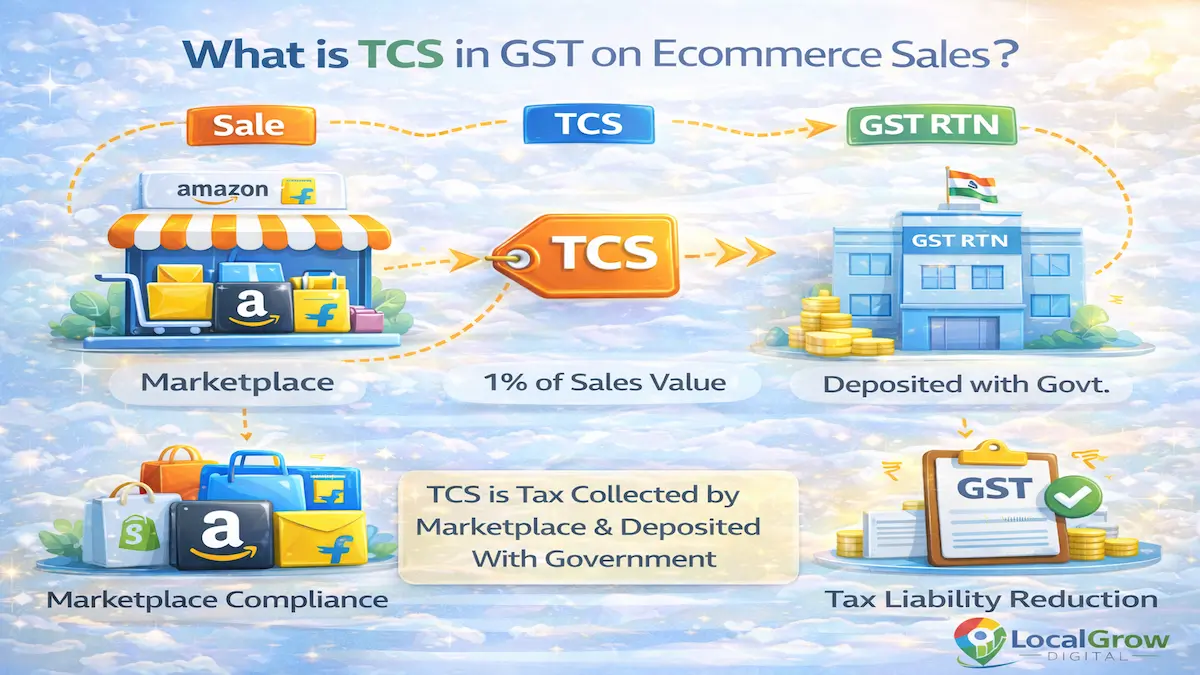
Structured GST eligibility evaluation helps marketplace sellers avoid suspension, penalty exposure, and compliance disputes while enabling safe scaling across Amazon, Flipkart, and Meesho ecosystems.